Families
These resources are for a single family: Use these math games, puzzles, activities, and instructions to enjoy playing with math together.
These resources are for a single family: Use these math games, puzzles, activities, and instructions to enjoy playing with math together.
These math events bring early math to a group of families.
These games, puzzles, and instructional materials are for use in the classroom.
These resources do not fit neatly into the family or educator categories.
These pages give you information about EFM, its mission, and ways we might collaborate.
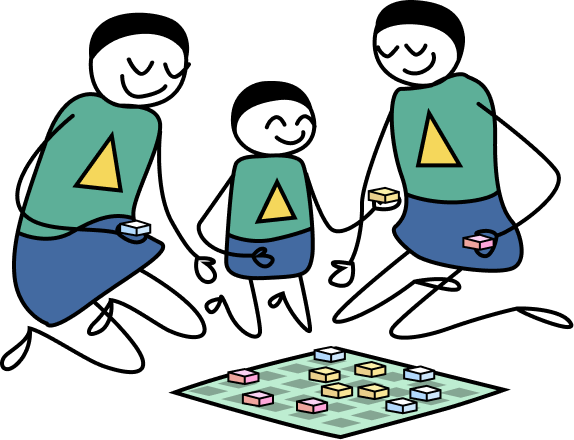

As described in the mission statement, we believe there is a huge amount to be done.
If you feel similarly, we welcome you to join us. We need people with many kinds of skills – graphic designers, writers, translators, web designers, mathematicians, educators, child development experts, and many more. Most importantly, we want your passion. Join our group (click on a photo to read the bio) and help make a difference!
The following people believe in the mission of EFM, and many of them are actively involved in developing our programs.
Dan Finkel and Chris Wright are the founders of EFM. The other current board members are Clarence Ames, Chris Batty, Erin Wahler-Cleveland, and Elita Yang.
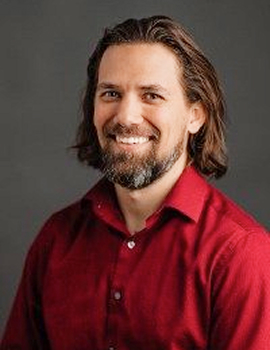
Meet Clarence Ames, your friendly guide to the world of curiosity and discovery!
By day, he’s the Research & Implementation Manager at the Utah STEM Action Center. Armed with a Master’s in Instructional Technology & Learning Sciences from Utah State University, Clarence’s journey started with evaluating the efficacy of educational programming and quickly spiraled into a math-filled adventure, masterfully blending education, innovation, and a sprinkle of magic to make learning fun for Utah families.
Passionate about cracking the code to success, he believes that math isn’t just about numbers; it’s the key to opening doors of opportunity. As the director of both the Americorps Math Mentors Program and the Math Introductions and Learning Opportunities Program, Clarence is on a mission to make sure those doors stay wide open for everyone.
When he’s not weaving educational wonders, Clarence unwinds by getting lost in the scent of ancient books (his passport to forgotten realms) or out in nature, roaming wild with his adventurous wife and two toddlers. He’s also a connoisseur of handcrafted wonders. There’s something magical about shaping life with your own two hands.
So, if you’re ready to embark on a journey where learning is an exciting adventure, and math becomes your trusty sidekick, join Clarence Ames on his quest to make the world a more curious, creative, and captivating place!
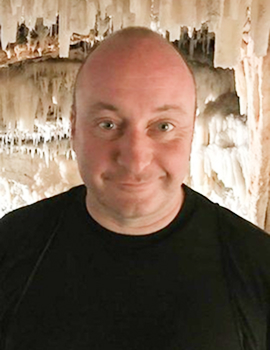
Chris Batty is a writer and editor, specializing in elementary mathematics teaching for the early years. He graduated from Cambridge University (Elementary Education B.Ed) and has since worked for publishers on a variety of math programs, encompassing print, digital, student, and teacher resources. Working in publishing for over 20 years, Chris has developed programs in the UK, USA, Africa, and the Caribbean. His interests are focused particularly on developing ways for making math concepts more accessible for young learners through the use of manipulatives, stories, games, and routines.
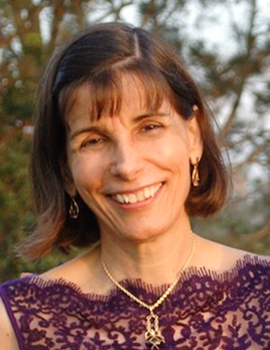
Natalie Bernstein was the elementary librarian for 25 years at the Paideia School in Atlanta, Georgia. She taught reading comprehension strategies to children and held reading workshops for teachers. Adults don’t always notice that when they read, they are mentally asking questions, making connections to prior knowledge, making predictions, creating mental images and drawing inferences. Verbalizing these strategies to children is essential for helping them understand the world of math. Early immersion in math through stories lays the foundation for children to engage with confidence in the practical world and in the world of ideas.
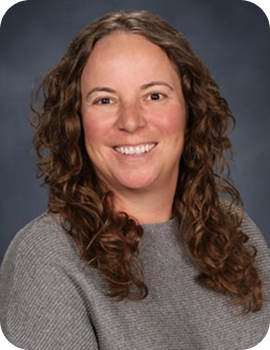
Alicia Burdess has been a teacher, assistant principal, and math coach with Grande Prairie and District Catholic Schools since 2005. Alicia’s passion is teaching through problem solving in a Thinking Classroom; she enjoys working with students and teachers implementing Peter Liljedahl’s research and framework. She wants everyone to experience the joy, confidence, and flow of solving big, beautiful problems and has recently published The Dragon Curve: A Magical Math Journey, a Children’s book to share the beauty of math in English and in French.
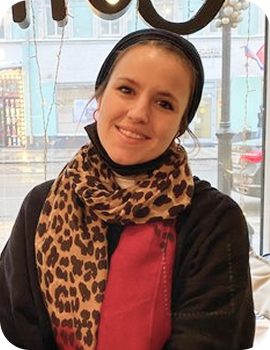
She is currently pursuing her master’s degree in Mathematics Education (M.Ed.) at the University of Manitoba in Canada. With six years of teaching experience spanning diverse elementary, middle, and secondary settings, she is actively involved in research concerning children’s mathematics and game-based learning. She firmly believes in the power of interactive and engaging learning experiences to kindle a love for mathematics among students. Her path in mathematics education is driven by an intense enthusiasm for the subject and a dedication to making math teaching and learning a joyous and meaningful experience for everyone. She is eager to keep exploring innovative methods to inspire and educate the upcoming generation of mathematicians.

Margarita is a graduate of the University of Minnesota and is currently working as an Embryologist at a fertility clinic in Minneapolis. She immigrated to the USA from Russia when she was 6 years old. Back then, she was learning both English and Russian and her mom had to rely on libraries, their church community, and friends and family in order to acquire Russian learning materials for her. When she found out about EFM, she was reminded of her experience and how much she would have valued having learning materials more accessible to her. Translating for EFM has given her the opportunity to expand access to math education by providing resources for her community.
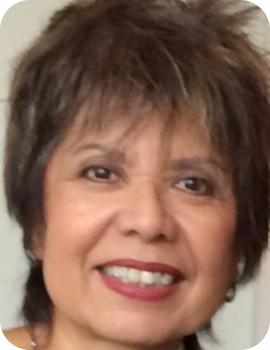
Diana De La Rosa has spent over 40 years in public schools as a teacher and principal in elementary and middle schools. She is currently a doctoral candidate at the University of Houston – Clear Lake. Now retired, she still commits much of her time to help build opportunities for students in communities that are underserved as a consultant and volunteer. In working with parents, teachers, and school leaders, she emphasizes the importance of contextual learning to help make learning meaningful and fun.

After searching for ways to make professional learning more meaningful, in 2020 Michaela Epstein founded Maths Teacher Circles in Australia. Since then, over 800 primary and secondary teachers and school leaders have come together to share expertise and uncover new maths teaching ideas.
Michaela has taught maths at schools in rural and urban areas, served as President of the Mathematical Association of Victoria and on the Council of the Australian Association of Mathematics Teachers. She has also completed Masters research and presented internationally on the intent of the mathematics curriculum.
At heart, Michaela is an avid learner and maths enthusiast. Her aim is to help primary and secondary teachers reignite their own curiosity for mathematics and develop strategies that will enable all students to become confident mathematical thinkers.

Dan Finkel is the Founder of Math for Love, a Seattle-based organization devoted to transforming how math is taught and learned. Dan develops curriculum, leads teacher workshops, and gives talks on mathematics and education nationally and internationally. Dan’s curriculum has been used by thousands of students, and is known for its combination of rigor and play. The math games he co-created with his wife, Katherine Cook, have won over 20 awards. They include Prime Climb, the beautiful, colorful, mathematical board game, and Tiny Polka Dot, the colorful math game for children.
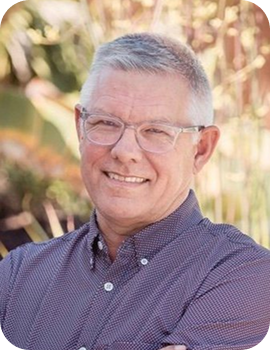
Renowned math education consultant
23 years in teaching and math education
Curriculum and teacher resource author
Former district math specialist and school administrator
Research Emphasis: Researched teachers’ beliefs about mathematics learning and teaching and how these beliefs require us as instructional leaders to re-imagine how we can effectively identify “starting points” for professional development as a catalyst for continued learning for all learners.
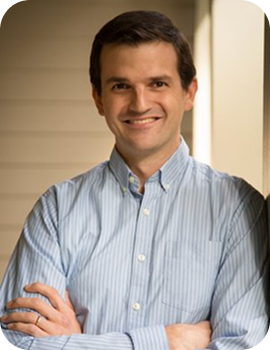
Kent Haines is an instructor at the University of Alabama at Birmingham. Before that, he spent 9 years as a middle school math teacher. Kent is a 2016 Heinemann Fellow and has helped develop curriculum for A+ College Ready and Mathalicious.
As a parent of three young kids, Kent discovered that classic games such as Sorry and Connect Four provided wonderful opportunities for mathematical conversations with his kids. Since that time, he has been eagerly reading research on how young children learn through play. He’s excited to share what he’s learned, and to hear from you about the conversations you’ve been having with your kids.
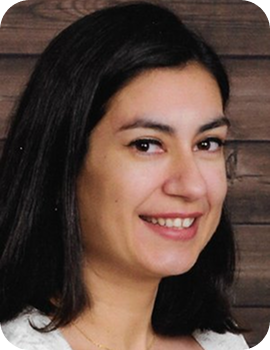
Gaby Jones was a bilingual elementary educator for 15 years in Texas. She recently completed her Translation Skills coursework at Austin Community College and is currently pursuing a Master of Library Science Degree at Texas Woman’s University. Originally from Mexico, she is passionate about promoting Spanish literacy and ensuring students have access to quality materials in their native language. She currently reviews translations of elementary curriculum materials because she knows first hand that acquiring a second language takes time and the learning of Math and other subjects does not have to be “paused” until a child is proficient in that language. Additionally, quality translations also ensure that every member of the family is able to participate in the learning process.
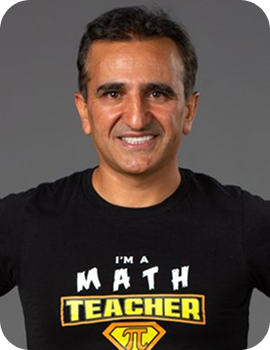
Sinan Kanbir earned his Ph.D. in Mathematics Education from Illinois State University. Currently, he teaches preservice teachers at the University of Wisconsin-Stevens Point. Sinan creates math materials for K-12 students, organizes math circles, and contributes to local and national contests. He is passionate about introducing math to younger students and emphasizes incorporating algebra and algebraic thinking in the early grades. At the heart of his approach is a commitment to teaching math with excellence, equity, and enthusiasm.
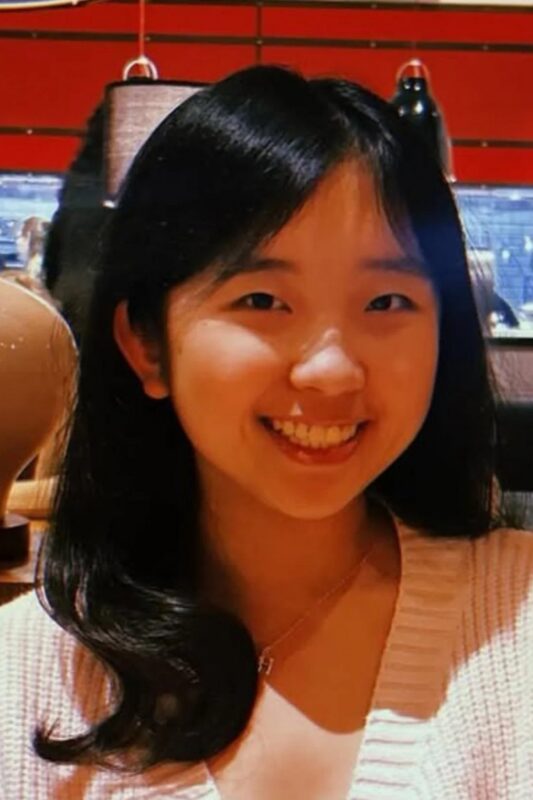
Hannah Kim is a junior at Radnor High School in Radnor, Pennsylvania. She volunteers as a Korean translator for Early Family Math, where she supports bilingual families by helping make early childhood math resources more accessible. Beyond her work in education, Hannah is deeply involved in service and research, as she is the founder of Hearts of Melody, a nonprofit offering free music lessons to underserved children, and she conducts biology research through the University of Pennsylvania. She also leads advocacy initiatives through her school’s Liberty in North Korea chapter, promoting inclusion, awareness, and community engagement. Hannah believes that early math development, like music or scientific inquiry, can begin at home through simple counting games, playful problem solving, and curiosity. Through her efforts, she hopes to help children build confidence in math from the very beginning.
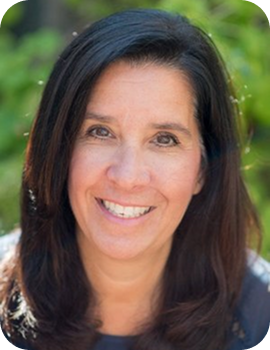
As a new teacher, Dr. Sue Looney became aware that her fifth grade students had significant gaps in understanding mathematics. Thus began Sue’s journey to understand how children learn mathematics. Inspired by the work of author Jonathon Kozol (Savage Inequalities, 1991) she became particularly interested in the most vulnerable and under-represented populations and supporting the teachers that day in and day out serve these students with compassion, enthusiasm, and kindness. She obtained her doctorate in Curriculum and Instruction with a specialty in Mathematics from Boston University, where she was part of a research team that created the preschool program Big Math for Little Kids. As a result of that experience, Sue gained a deep respect and appreciation for early childhood mathematics, and has made it her mission to share her passion speaking both nationally within the USA and internationally.
Sue is the founder of Looney Math Consulting, creator of the website www.samebutdifferentmath.com, and author of Ying and the Magic Turtle. She serves on the board for MathKind where she supports a global effort to transform mathematics education. She is forever curious, still learning, and has a deep respect for all educators.

My foray into teaching was intended as a two-year act of public service through Teach for America. That little excursion has now become a long journey and my favorite job. My passion for early childhood math and deeper understanding of math literacy was developed when teaching elementary school for two years. The opportunity to implement a theme-based curriculum and freedom to teach students with the latest techniques showed that ALL children can learn math.
I have now been in classrooms over 10 years and have taught elementary, middle, and high school math. Outside of the classroom, I have worked with teacher training through the College Board’s Pre-AP program and as a Math Coach with the National Math and Science Initiative (NMSI). No matter how I am engaged with math and math learning, my primary preoccupation is thinking about why some learners enjoy learning and others don’t.
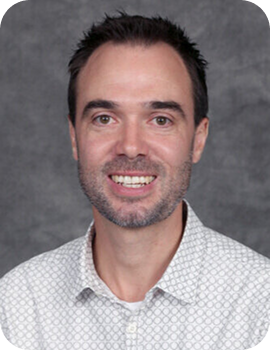
Michael Minas is the director of Love Maths (www.lovemaths.me), an educational consulting business based in Australia. He has worked in education for over 20 years and his areas of interest include problem solving and student engagement. In 2018, Michael’s ability to shape learning was recognised when he won a CHOOSE MATHS Teaching Excellence Award. He presents at conferences around Australia and also provides consultancy services to the Mathematical Association of Victoria. Michael was the editor of Prime Number from 2019 to 2021 and he has contributed to a range of other international publications, including the Maths300 website.

Anshuman is a UI/UX designer and developer from India. He has 10+ years of professional IT experience. He also possess experience in back-end, software, database and mobile apps development. He loves working on UX problems in day to day life. Anshuman is passionate about designing and helps non-profit organizations in his free time. Anshuman holds a bachelor degree in Computer Science & Engineering. He likes to play chess and is an avid traveler, exploring different places and cultures.
He loves maths and is a person to whom if you present a math problem, he will leave everything else and start solving it just for fun. He is saddened to see that most children do not share this enthusiasm or interest, and he wants to spread the benefits of Early Family Math. He also believes that Maths is at the root of many solutions and the foundation for most of the high tech activities of today like AI, Data Science, Data Engineer, Database, Machine Learning, Finance and Fintech. The earlier we all can learn maths, the more we can do wonders!
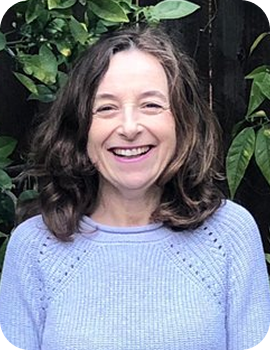
Yana Mohanty is an educator, mathematician and inventor. She is the founder of Imathgination LLC, whose award-winning product Geometiles has gained popularity in schools, universities and math festivals all over the United States. A former mathematics lecturer at the University of California in San Diego, she has also taught at Math Circles and coached children of age 10 and up in school math clubs.
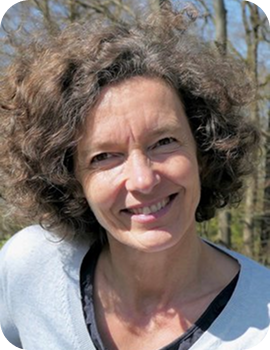
Marion Mohnhaupt lives in northern Germany. She works as an Integrative Learning Therapist with a focus on learning numbers, arithmetic, and math. She offers consultations with regards to math learning and Dyscalculia as well as math learning interventions. She is also the author of “Tina’s Aha Moments! Math can be learned. Just let your brain go for it.”
Her passion is to encourage children, parents, and teachers to adopt a modern, positive, and more helpful way of thinking about math and to practice real mathematical thinking. She has been inspired by numerous scientists in the field of mindset, neurology, learning, and is incredibly grateful for their insights into learning pathways. As a mother of school children and a learning therapist, Marion sees that in many cases math problems could be avoided and that math learning could be more successful with a more joyful and engaging approach.
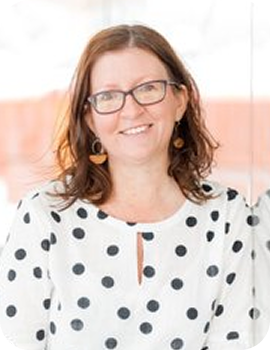
Janice is currently a district K-12 teacher consultant in Richmond, BC, Canada where she supports the professional learning of teachers in the areas of mathematics and numeracy. She is also an adjunct professor at the University of British Columbia where she teaches elementary math methodology courses. Her graduate studies focused on problem-solving and inquiry with young children. As a former preschool, kindergarten and primary teacher and mother to two sons, early mathematics has always been an area of interest. In her district role, Janice enjoys hosting a “Math Play Space” in schools and at community events to invite families to engage playfully with materials and ideas.
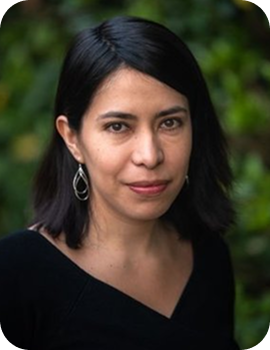
Ingrid M. Padilla Espinosa obtained a Ph.D. in Nanoengineering from North Carolina A&T State University, and is currently working as a Postdoctoral Researcher in the Mechanical Engineering Department at the University of California, Merced. Her interest in engineering derived from her love for mathematics, curiosity about the world and its surroundings, and from the knowledge that with ingenuity, devices that benefit hundreds of people could be developed.
Her career path started early in her life, thanks to her parents and sisters who guided her towards critical thinking, math, and reading. Her family’s influence is why she believes that early education in math and science is essential and should be available for everyone, regardless of their background or differences in learning abilities. She is confident that family activities not only introduce children into learning from an early age but also helps to create deep connections between all family members.

Brooks Park is a secondary science teacher with over 25 years of experience. He uses math every day in teaching his classes and hopes to inspire an appreciation for both the practicality as well as the pure beauty of math. One of his favorite questions from students is “When are we ever going to use this?” He believes that everybody has the potential to be “a math person” and that cultivating a positive relationship with numbers and fluency in math at an early age is critical to developing STEM talent in the next generation.
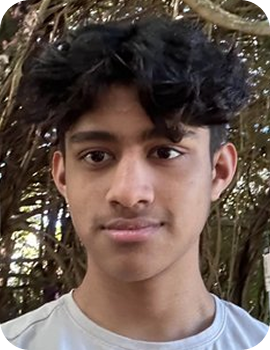
Abishek Prabakar is a high school student at The Gwinnett School of Mathematics, Science, and Technology (GSMST) in Lawrenceville, Georgia. He is interested in getting students passionate about mathematics, and to view it as more than just homework assignments. Recognizing that many students lack quality access to math education, Abishek joined Early Family Math to ensure that every student has the opportunity to discover the joy in math.
Alongside Andrew Zeng, Abishek hopes to connect students from his school with the mission of Early Family Math through their Mu Alpha Theta chapter. As president of the chapter, he hopes to work alongside chapter peers by creating engaging math puzzles and games to foster an enjoyable learning environment in the household.
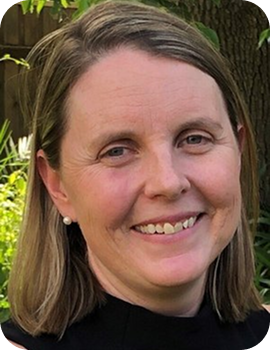
Dr Ange Rogers lives in Melbourne with her 4 children and started her career as a Primary School (Elementary) Teacher. She enjoyed every moment she spent working in classrooms with students, but particularly loved teaching mathematics. While on maternity leave with her first daughter, she completed a PhD in maths education and now works part-time as a University Lecturer for pre-service teachers at RMIT University. Ange is very passionate about improving the teaching and learning of maths throughout Australia. She works with teachers through her consultancy business ‘Simply Maths’ and her online mentoring program the ‘Numeracy Teachers Academy’. However, her other passion is helping parents. Over the years, Ange has met many parents who have expressed feelings of helplessness when it comes to working with their children at home in maths. Comments like “I can read to them, but I have no idea what to do with maths” are common. Ange loves helping parents support their children to develop confidence and find enjoyment in Maths in simple, practical, ways. You can find her on Instagram: @numberdoctors, Facebook: @number_doctors or at www.numberdoctors.com.au
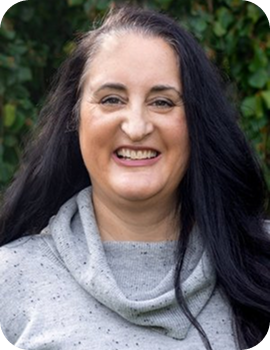
Heidi Sabnani is always surprised that she works in math education. She developed math anxiety as a young student and spent much of her school life and early career avoiding math. After teaching English in the United States and Guatemala, and earning her MA in World Literature, she found herself in the uncomfortable position of working in math classrooms as a school improvement consultant. Once she realized that her life was going to involve math, Heidi decided to relearn math in the ways she wished she had learned the first time around.
Heidi’s doctoral research at Northeastern University focused on interventions for math anxiety in elementary teachers. She currently works as a consultant, speaker, and author. Heidi’s interest in early math began during her volunteer work as a children’s minister and with her own two children.

Since 2008, I’ve been on a mission to introduce kids and adults to the wonders of mathematics. In addition to Math Plus Academy, I also contribute my time and energy to the Columbus Math Teachers’ Circle, the Julia Robinson Math Festival, and I am a founding member of The Global Math Project. I believe EVERYONE can enjoy math, develop strong number sense, and become a perseverant problem solver.
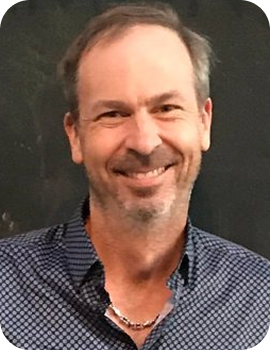
James Tanton earned his PhD in mathematics from Princeton University. He is an author, a consultant, and ambassador for the Mathematical Association of America in Washington D.C., and a founder of the Global Math Project, an initiative to transform the entire world’s perception of what mathematics can, and should, be. This program has now reached over 7 million students and teachers across the planet. James has taught mathematics both at university and high-school institutions. He advises on curriculum, consults with teachers, and gives demonstration classes, lectures, and professional development sessions across the globe.
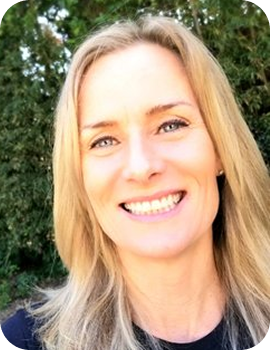
Wendy van Gastel was an elementary school teacher and administrator in the Netherlands and the US where she taught at both inner-city and private schools. Having experienced the disparity in education systems, she believes every child deserves an early start in math. She is convinced that when adults and children do math together in a playful way, math will not only develop children’s critical thinking but will also become a fulfilling part of their lives.
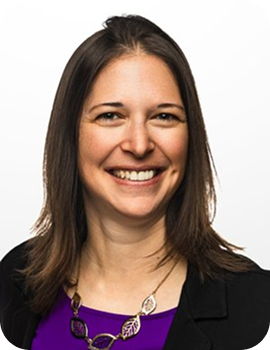
Erin Wahler-Cleveland is a math educator, consultant, and founder of Roots and Wings Math. As a middle school teacher in underserved communities for nearly two decades, she saw how many students struggled with math confidence and identity and how much more difficult this made new learning. Through her master’s coursework in teaching mathematics, she deepened her understanding of the nature of critical early numeracy even before formal schooling begins.
As a parent of two young girls, Erin has become fascinated with how the earliest components of numeracy emerge and how they can be fostered through everyday moments. With such a lack of societal emphasis on nurturing mathematical thinking and reasoning in early childhood, she is passionate about helping parents and educators learn how to build strong foundations and positive mindsets for lifelong math learning.
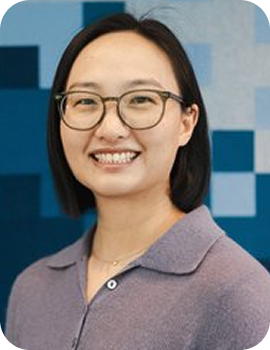
Meet Bingqian Wei, PhD in Math Education, a part-time Lecturer at the University of Colorado Denver, and a seasoned teacher educator with a passion for empowering families in math education. With a background as a high school math teacher and years of dedicated research in K-5 math education, I’ve come to understand the vital role mathematics plays within the family dynamic.
Through my experience working with parents of young children, I’ve recognized the transformative power of integrating math into everyday family life. My mission is clear: to equip parents with the tools and knowledge needed to instill confidence and joy in their children’s mathematical journey.
I firmly believe that every child—and parent—deserves access to top-tier math education, tailored to their individual needs and circumstances. This belief led me to found MathEmpowerFamily, where I offer professional math teaching and learning resources and services to families seeking support in math education at home.
As part of the EarlyFamilyMath team, I contribute my expertise to ensure that all tasks are accessible to diverse families, fostering a welcoming environment where math learning thrives. Join me in transforming math education within the family sphere, one empowered parent at a time.
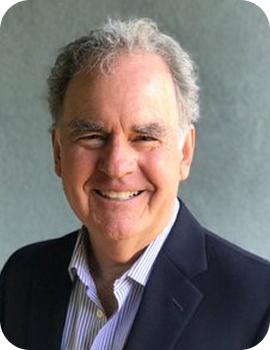
Chris Wright has had a passion for math education for most of his life, starting long before he earned his PhD in mathematics from Stanford University. In addition to tutoring and helping friends as a teenager, he homeschooled his son and has taught mathematics in middle school, high school, and university. Chris is the author of Dr. Wright’s Kitchen Table Math, a series of three books that help parents teach math to their children from the ages of 2 to 12. He is a big believer in play-based and problem-based learning in the classroom.
Chris started Early Family Math with the conviction that, by changing the relationship that families have with math, all children will have a home learning environment that lets them find the fun and beauty in mathematics, gives them an equal and strong footing when starting school, and allows them to grow up loving and being confident with math.
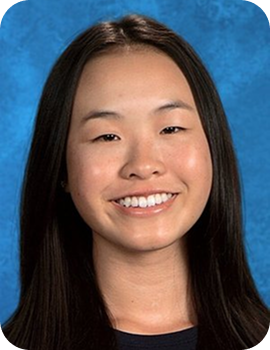
Elita Yang is a high school student at Pacific Ridge School in Carlsbad, California. She thoroughly enjoys math, as she has competed in math competitions such as Math Counts, Math Olympiad, and American Mathematics Contest (AMC). She believes building a foundation for comprehensive math education, at a young age, is beneficial and enjoyable for children. An early introduction to math can start at home; parents, in addition to reading with their kids, can engage in entertaining math games together.
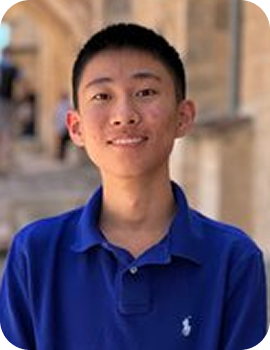
Andrew Zeng has had a love for mathematics ever since his first math competition in 3rd grade. Currently, he’s a high school student at The Gwinnett School of Mathematics, Science, and Technology (GSMST) in Lawrenceville, Georgia.
He’s competed in many math competitions, ranging from a small local college competition in elementary school, to MathCounts in middle school, to American Mathematics Contest (AMC) and various other state and national competitions. Through these competitions he’s qualified towards the American Invitational Mathematics Exam (AIME) and even represented Georgia in the American Regions Mathematics League (ARML).
Alongside Abishek Prabakar, Andrew hopes to connect students from his school with the mission of Early Family Math through their Mu Alpha Theta chapter. As vice president of the chapter, he hopes to work alongside peers to create mathematical puzzles and games to encourage mathematical fun in the household.