Number Shapes

Using something small, such as pieces of food, challenge your child to make shapes with a given number of pieces. These shapes can be rectangles, triangles, squares, or anything fun.
Making rectangles
Your child may notice that for some numbers, such as 12, there are different shapes of rectangles that can be made, and that for other numbers, such as 7, only flat rectangles can be made. Numbers such as 5 and 7 are called prime numbers because there is no way to break them into normal rectangles.
Even and Odd
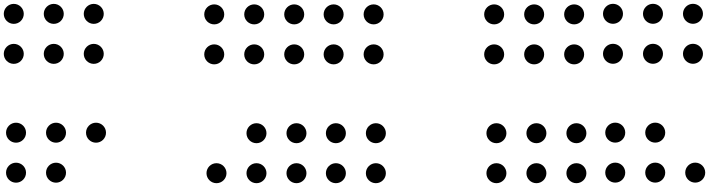
Investigate even and odd numbers using number shapes. For a given number, ask your child to put the pieces into two equal rows. You would do this if you were splitting food fairly between two people. For which numbers does it work out evenly?
Adding Evens and Odds
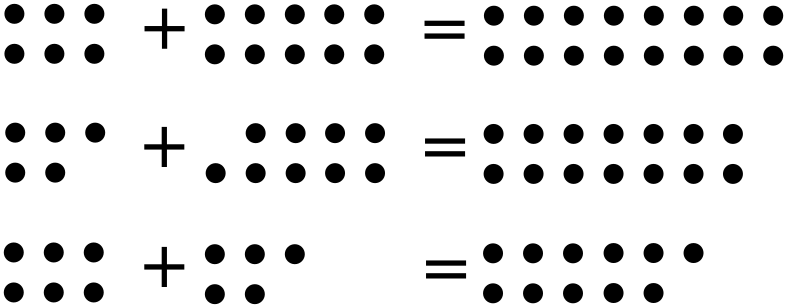
Representing even and odd numbers this way makes it easy to see why: Even + Even = Even, Odd + Odd = Even, and Even + Odd = Odd.
Adding up odd numbers
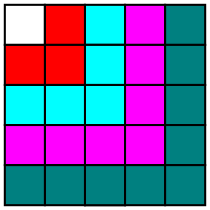
Once your child knows what an odd number is, investigate adding up the first few odd numbers as shown in this diagram. Amazingly, the sum of the first odd numbers is always a square number.