Cat and Dog and the Butterfly

by

Illustrated by
content-image
content-image

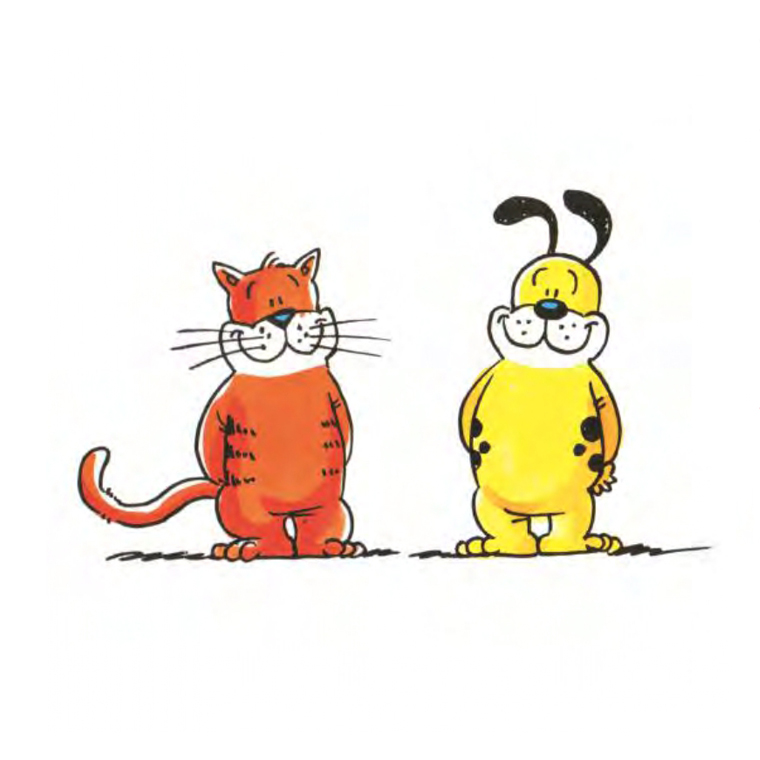
This is Cat.

This is Dog.

  1. Which one has stripes and which one has spots? How many stripes and how many spots?
  2. Which one has whiskers we can see? How many whiskers?
  3. Which one is red and which one is yellow?
content-image

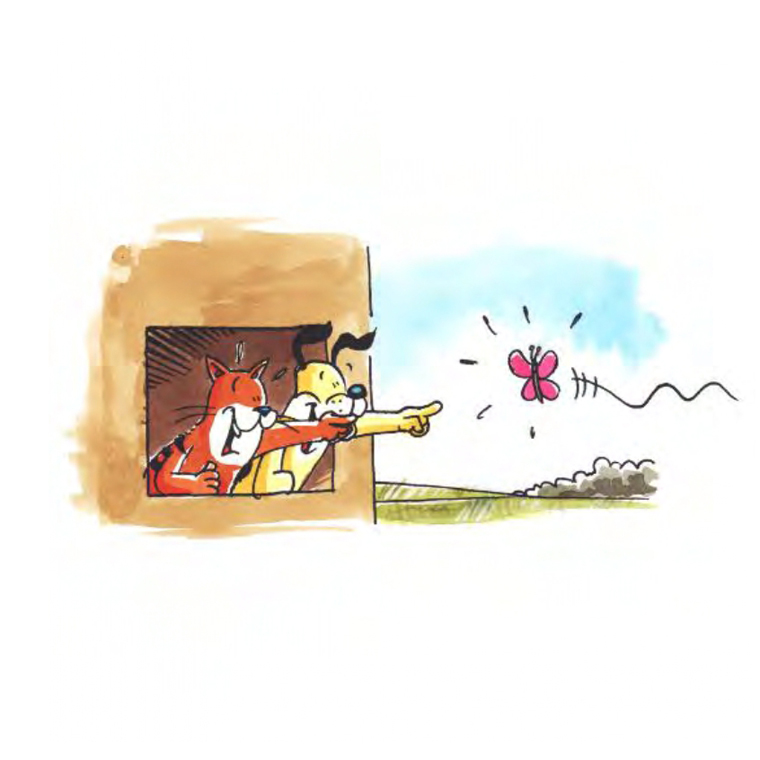
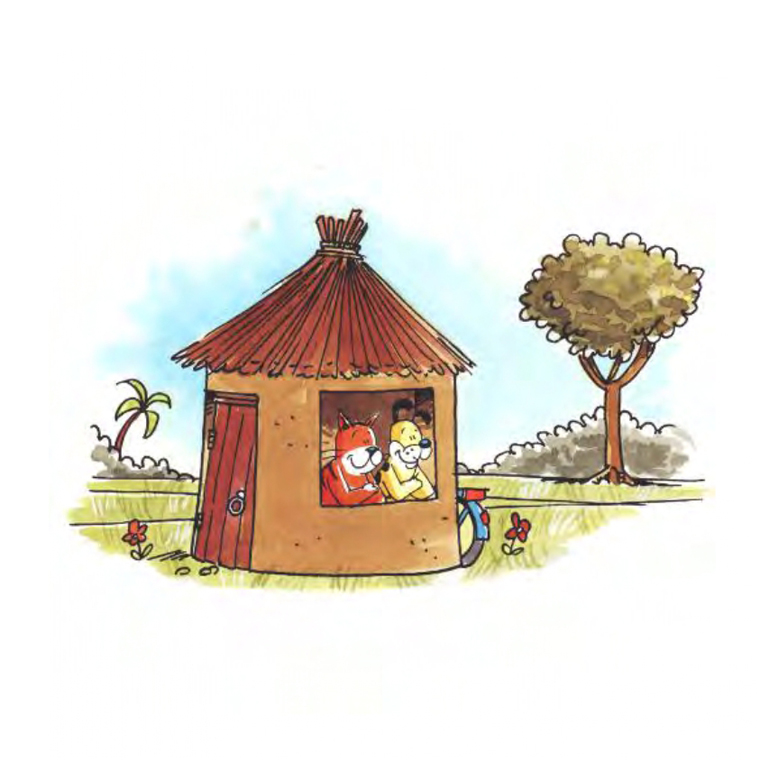
Cat and Dog look through the window.

They look through the window.

  1. How many times does it say that they are looking through the window? The writer repeats it to tell us that Cat and Dog have nothing to do.
  2. Do Cat and Dog look bored?
  3. Count together the number of trees.
content-image

Then Cat and Dog see a butterfly!

The butterfly is pink.

  1. Why were Cat and Dog so excited to see a butterfly? Were they looking for one?
  2. Point at and count the wings on the butterfly.
  3. Point at and count the short lines going away from the butterfly. They show the butterfly is alarmed.
content-image

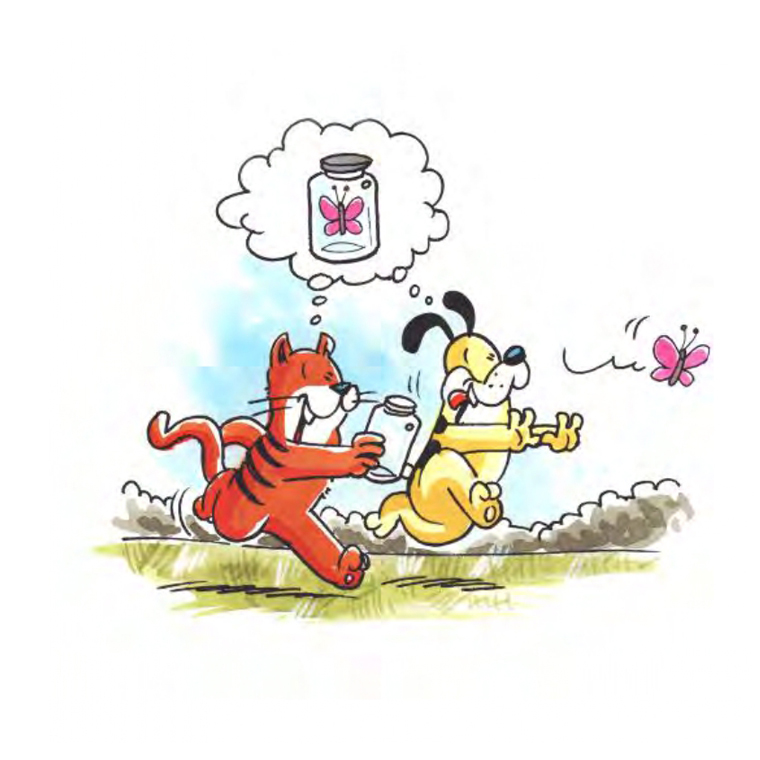
Cat and Dog want to catch the butterfly.

Cat and Dog follow the butterfly.

They follow the butterfly.

  1. Does the butterfly want to be caught?
  2. Is it mean of Cat and Dog to want to catch the butterfly?
  3. When is it fun to be chased and when is it frightening?
content-image

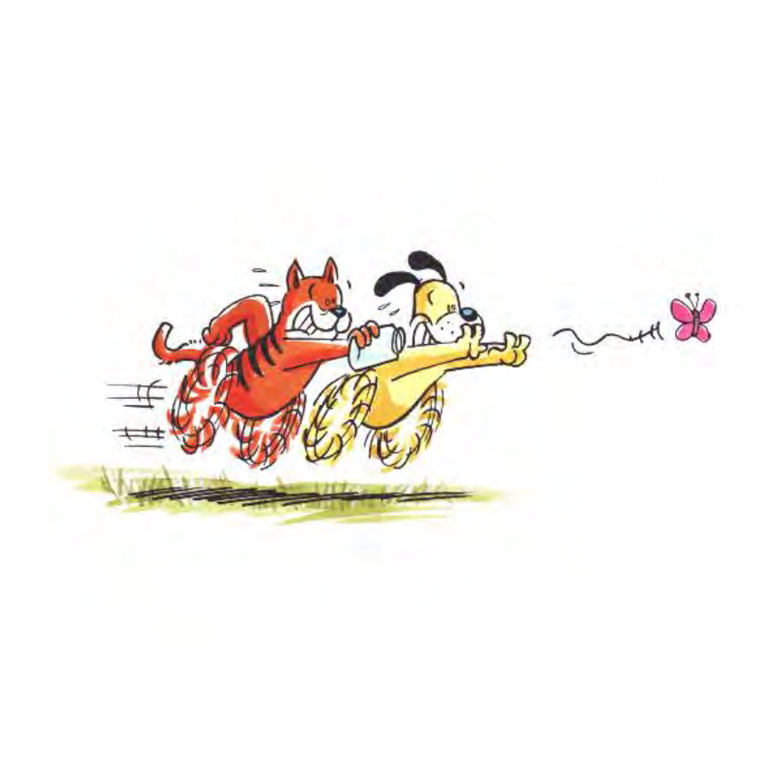
Cat and Dog follow the butterfly by foot. They walk after the butterfly.

But the butterfly is fast. The butterfly is too fast and Cat and Dog are slow. They are too slow.

  1. Which animal is going the fastest?
  2. Can you go faster or slower than Cat and Dog?
  3. Point out that their feet are drawn going in circles to indicate they are running fast.
content-image

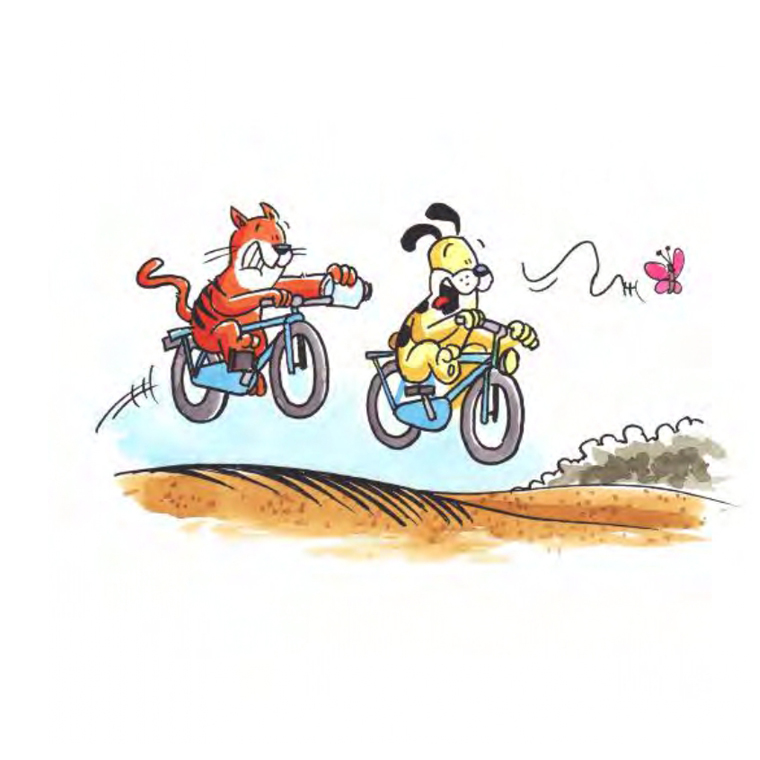
Cat and Dog follow the butterfly by bike. They ride after the butterfly.

But the butterfly is fast. The butterfly is very fast, and Cat and Dog are slow. They are very slow.

  1. Can butterflies fly faster than a bike can go?
  2. Can cats and dogs ride bikes?
  3. Do you think you could catch a butterfly while riding a bike?
content-image

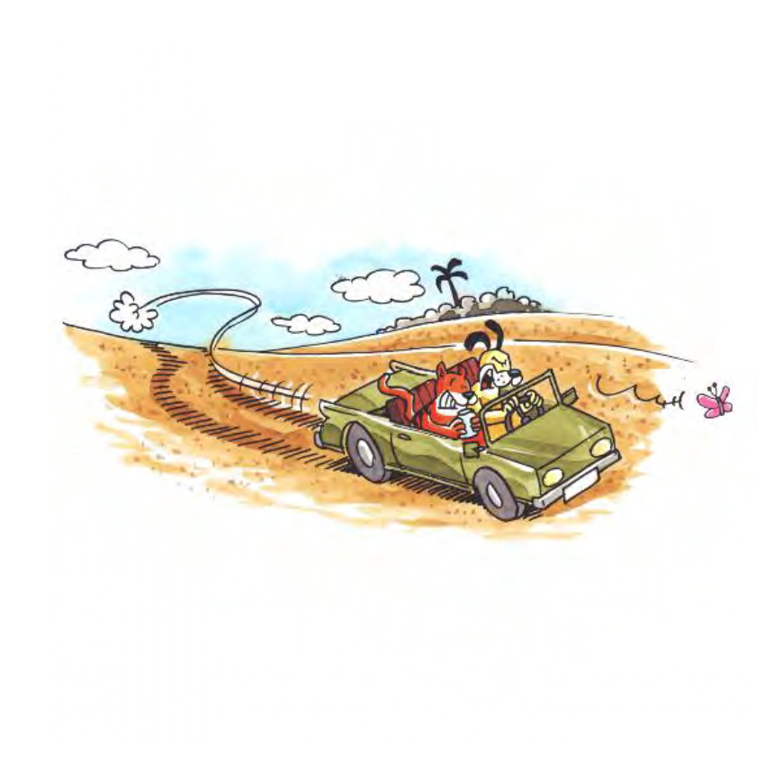
Cat and Dog follow the butterfly by car. They drive after the butterfly.

But the butterfly is fast. The butterfly is still too fast, and Cat and Dog are slow. They are still too slow.

  1. Can a butterfly or a bird fly faster than a car?
  2. Can a real dog drive a car?
  3. Count together the clouds in the sky.
content-image

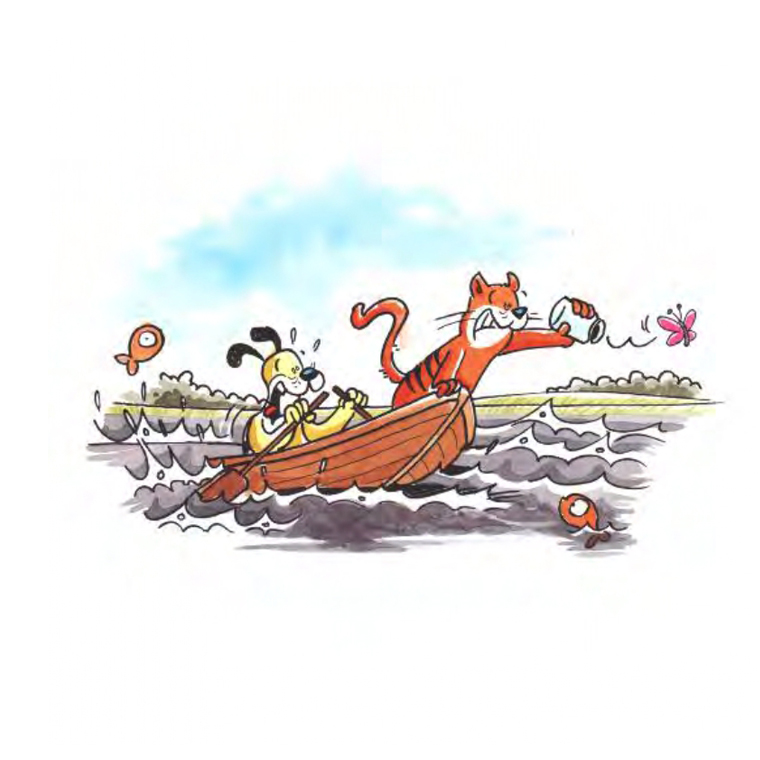
Cat and Dog follow the butterfly by boat. They float after the butterfly.

But the butterfly is fast. The butterfly is super-fast, and Cat and Dog are slow. They are still super-slow.

  1. Count the number of fish.
  2. Including Cat and Dog, count the number of animals.
  3. The fish look surprised. Why are they surprised?
content-image

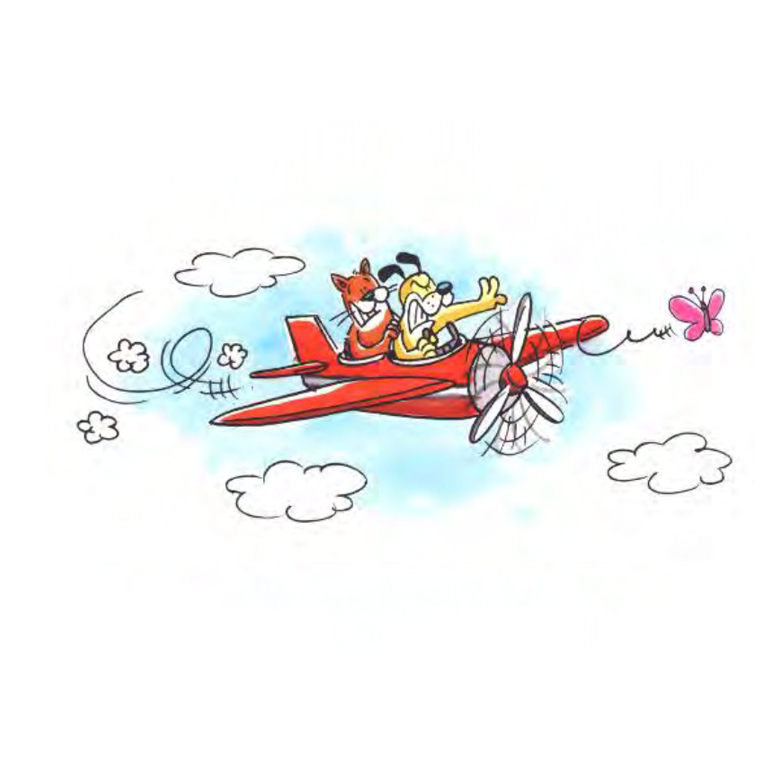
Cat and Dog follow the butterfly by plane. They fly after the butterfly.

But the butterfly is fast. The butterfly is still super-super-fast, and Cat and Dog are slow. They are still super-super-slow.

  1. Do you think a dog can fly a plane?
  2. Which of cars, boats, and planes is the fastest and which is the slowest?
  3. They are up very high. Count together the clouds where they are.
content-image

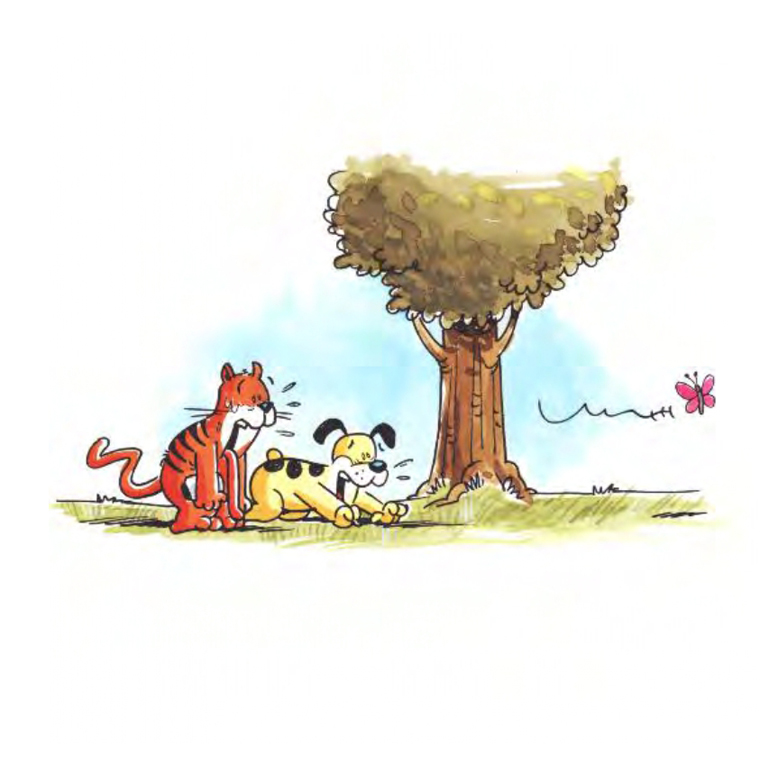
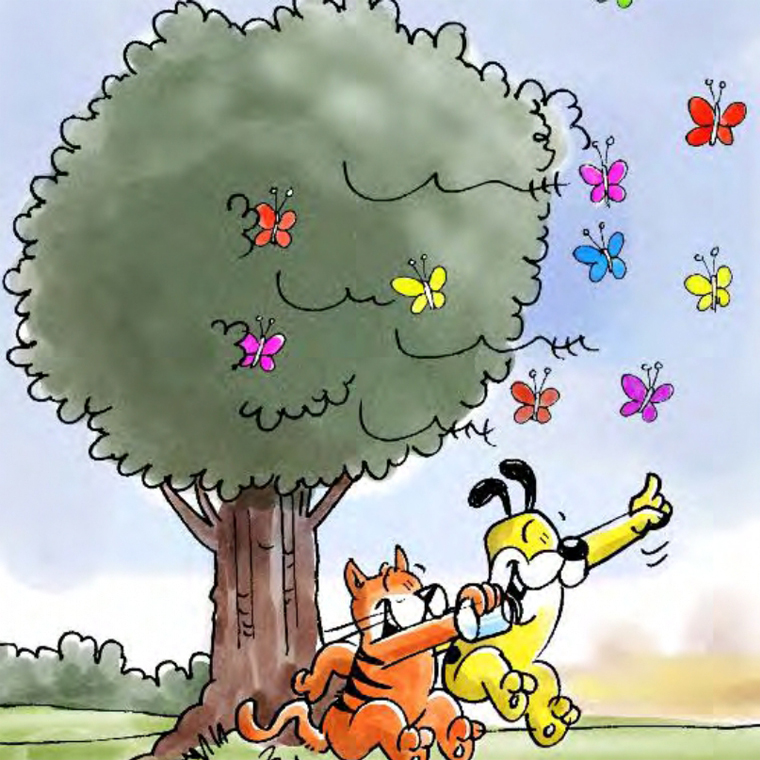
The Cat and Dog stop. They stop and sit down. They sit down at a tree.

They sit down at a big tree.

But then ….

  1. Which is longer, Cat’s tongue or Cat’s legs?
  2. Do you think cats have tongues that long?
  3. Are their tongues hanging out because Cat and Dog are tired?
content-image

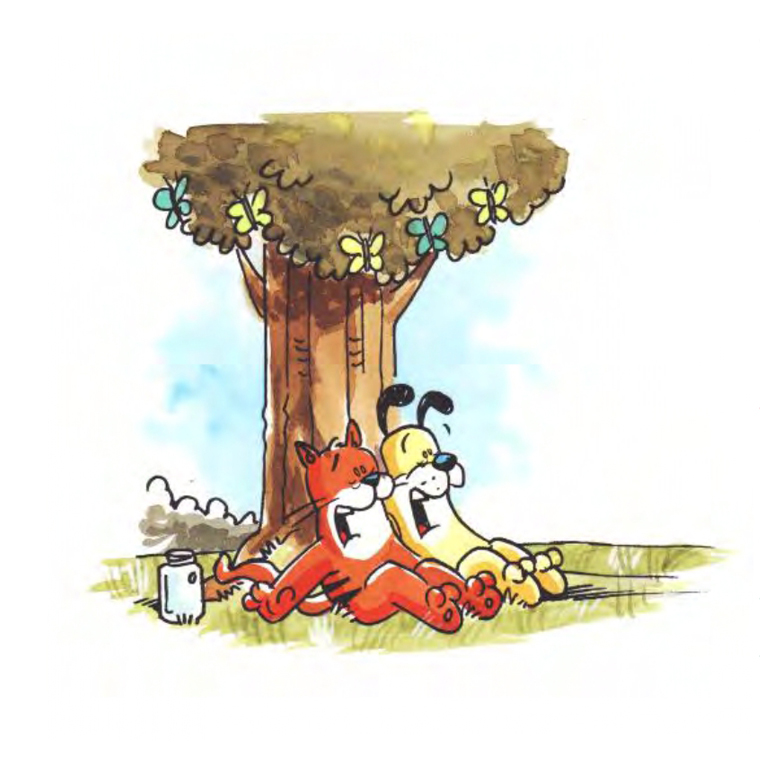
They see one butterfly in the tree.

They see two butterflies in the tree.

They see three butterflies in the tree.

  1. Count together the butterflies you can see in the tree.
  2. Do you think you can see all the butterflies?
  3. There are three types of living things in the picture: trees, Cat and Dog, and butterflies. Which group is the largest and which is the smallest?
content-image

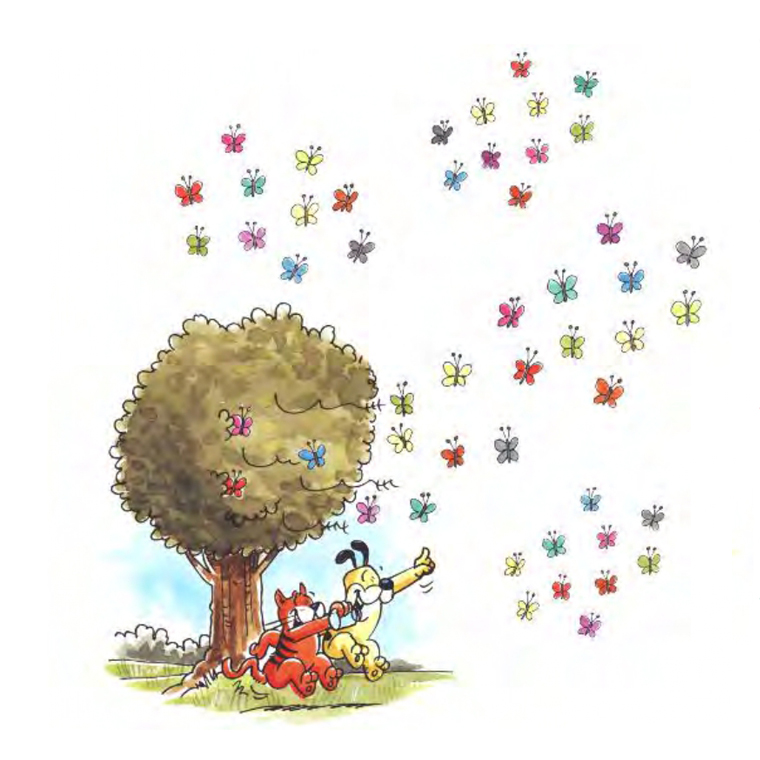
They see a hundred butterflies!

  1. How many butterflies can you count? Are there too many for you to count?
  2. How many different colors of butterflies are there?
  3. For which color of butterfly is there the most?
content-image

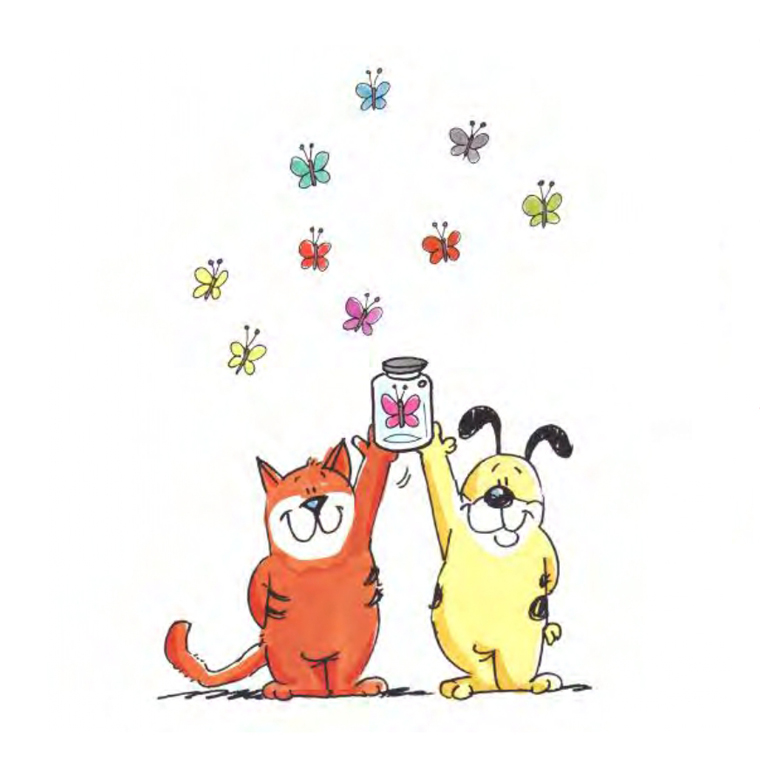
Bye bye Cat.

Bye bye Dog.

Bye bye butterflies.

  1. Are you happy or sad that Cat and Dog caught a butterfly?
  2. In the picture, who do you think is happy and who is sad?
  3. How long do you think a butterfly can live in a jar?

I would love to help the whole world to read and there is still so much to do” Aagje van Heekeren, Biblionef Director 2004-2012

Thanks to Aagje’s enthusiasm the Cat and Dog booklets could be made. As a tribute they will be reprinted to mark her departure as Director of Biblionef.

Cat and Dog
Concept, text, illustrations and design: Elke and René Leisink
Publishing: Biblionef
Printing: Studio/Drukkerij pk84
Copyright: 2014
ISBN: 978 90 8147 671 3

Sponsors & Support

This book could be published thanks to the generous support of

  • pater eusebius kemp stichting
  • stichting casterenshoeve
  • family leisink
  • family bongaerts

About Biblionef
We all want children to become readers – to have empathy for characters, big vocabularies and imaginations, and to be able to immerse themselves in another world through a book. Biblionef places a strong emphasis on reading for pleasure; we believe children should have a sense of fun as they read. It should not be a chore, but an exciting activity, something to look forward to.

To achieve this, children need to be exposed to books with great stories. Books which help with children’s literacy development, give access to information and education, and teach them to think for themselves – to make good decisions.

Biblionef’s goal is to make a profound impact on the lives of children and we are deeply committed to giving all children access to books. Biblionef foundations provide new books to library projects for children who have no access to books. Books containing stories they can relate to and learn from.

Website: www.biblionef.org

About Cat and Dog
Cat and Dog books are funny and easy to read. Learn only 200 words and start reading the books.

Website: www.cat-and-dog.org

You are free to download, copy, translate or adapt this story and use the illustrations as long as you attribute in the following way:

Cat and Dog and the butterfly
Author — Elkeand René Leisink
Illustration — Elkeand René Leisink
Language — English
Level — Firstparagraphs
© African Storybook Initiative 2017
Creative Commons: Attribution 4.0
Source www.africanstorybook.org

Prev
Page 1 of 15
Next