Cat and Dog Draw and Color

by

Illustrated by
content-image
content-image

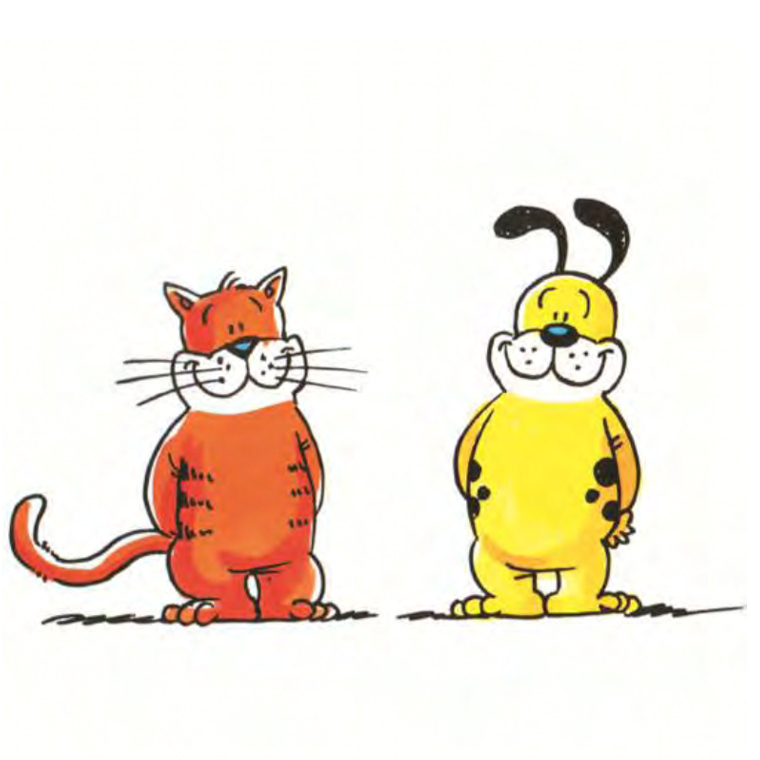
This is Cat.

This is Dog.

  1. These two are a pair of friends. Point out all the pairs and groups of three you can find in this picture.
  2. Cats and dogs are mammals. Mammals have fur (or hair), they give birth to babies (not eggs), and the mother feeds her baby milk. Can you think of other animals that are mammals (don’t forget yourself!)?
  3. Describe some ways that Cat and Dog are similar, and some other ways that they are different.
content-image

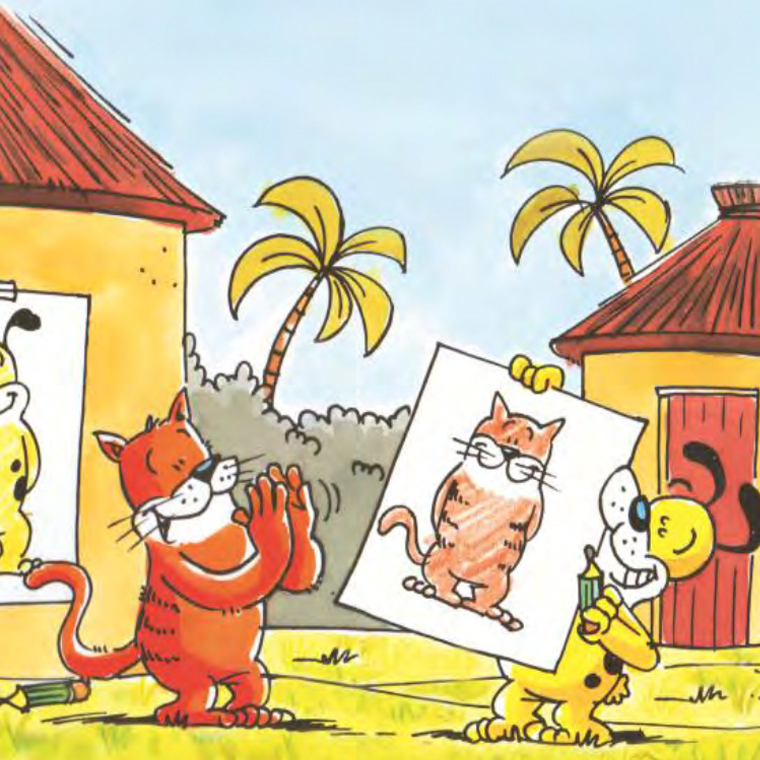
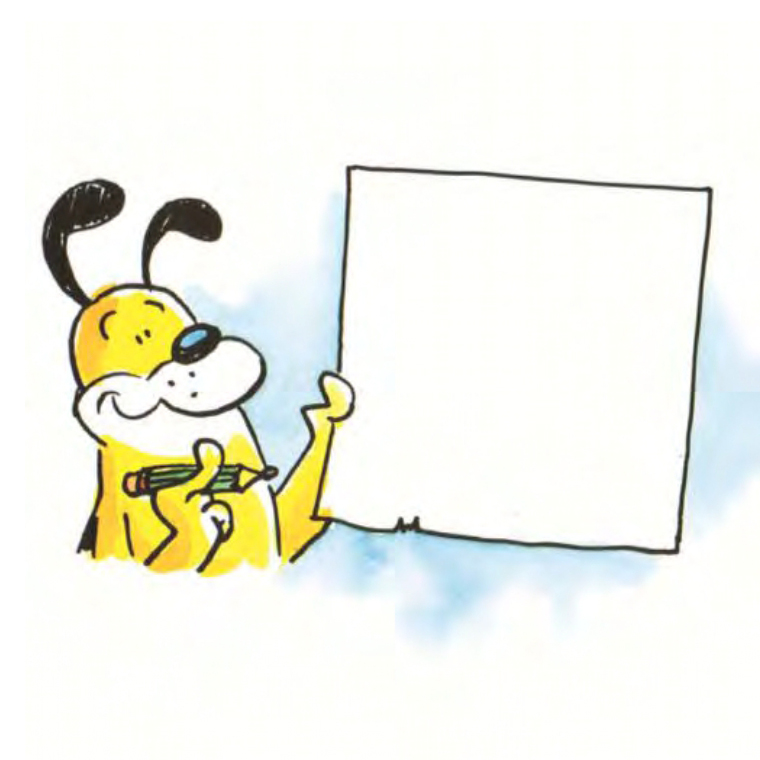
Cat and Dog want to draw.

Cat and Dog want to color.

Cat and Dog want to make art.

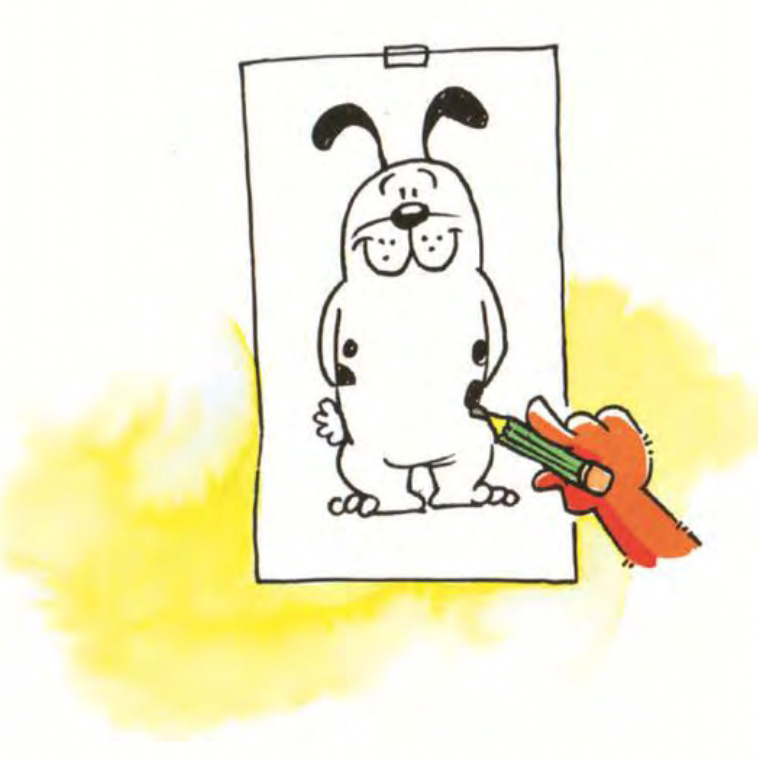
Dog starts.

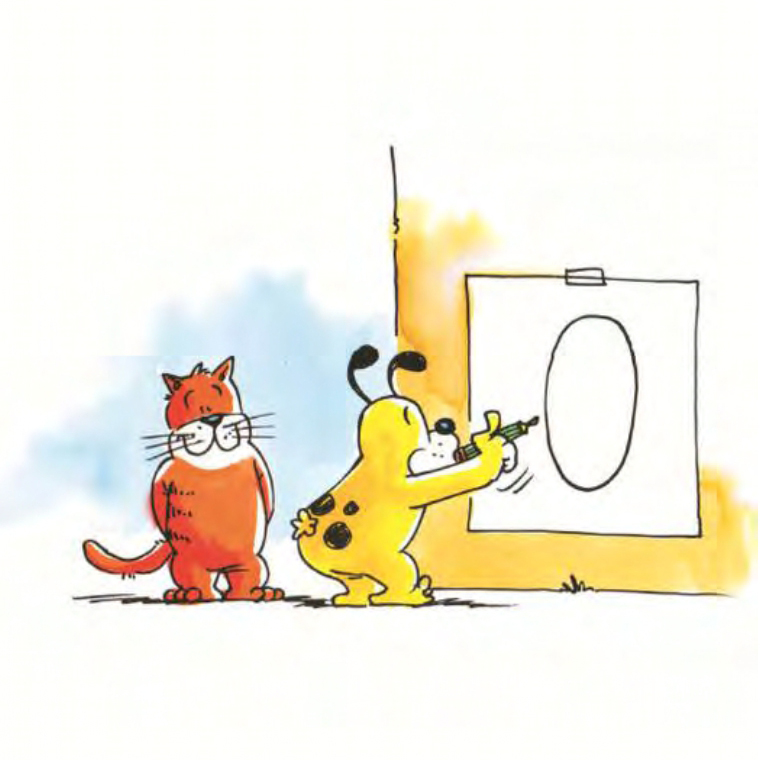
He takes a pencil and he takes a paper. The paper is a square.

  1. A rectangle is a shape with four straight sides, like this page. A square is a rectangle with four equal sides. Point out some squares where you are now.
  2. Sometimes when we draw, we know exactly what we want to draw. Other times, we have to think and think. If you drew something right now, what would you draw?
  3. Dog is holding the pencil in his right paw. When you write or draw, which hand do you use?
content-image

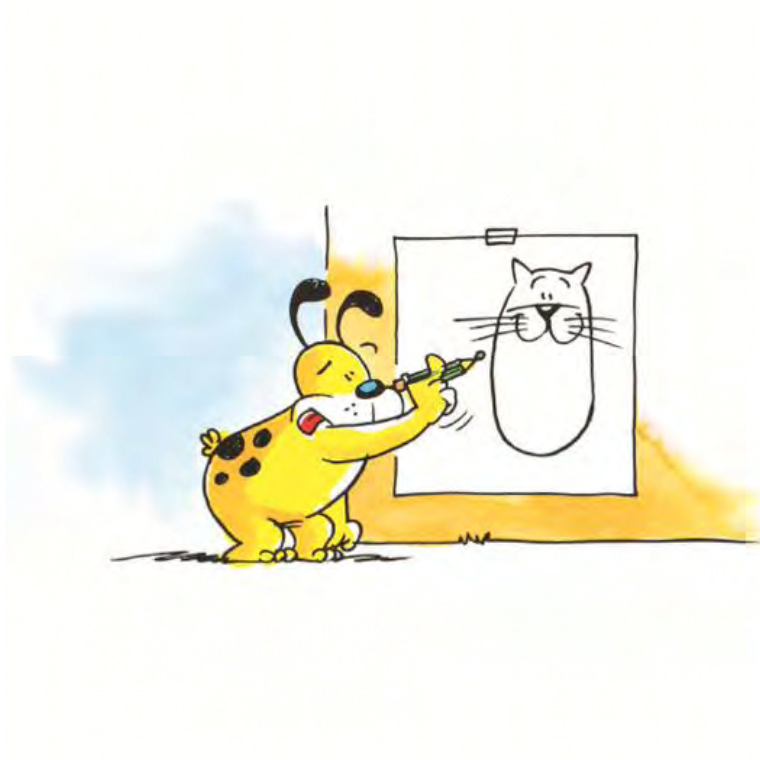
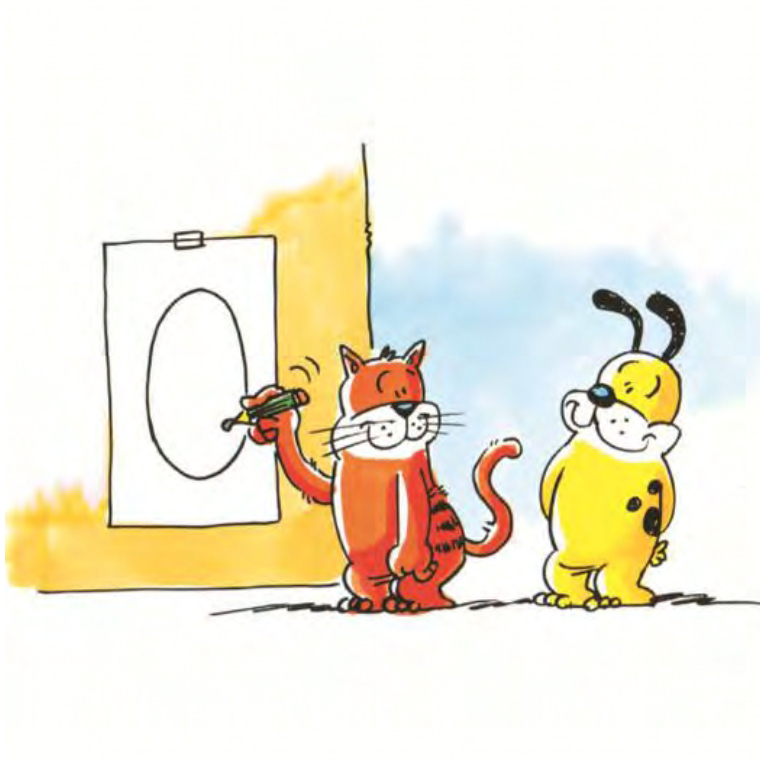
First, Dog draws an oval.

The oval is the body of Cat.

Wow, that is simple!

  1. An oval is like a squished or pulled circle. Ellipses are also ovals. Look for some ovals around where you are.
  2. Look at the tails for Cat and Dog. Describe how they are similar and how they are different.
  3. Dog draws Cat one step at a time. Which part of Cat do you think Dog will draw next?
content-image

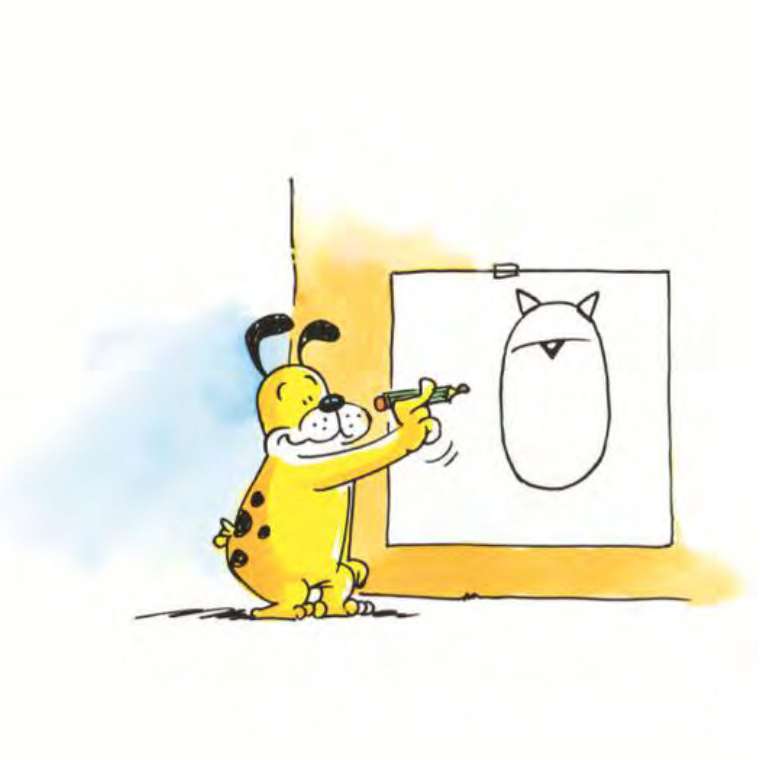
Then he draws two triangles on top of the oval.

The two triangles are the ears of Cat and he draws a black triangle in the oval.

The black triangle is the nose of Cat and he draws a line above the nose.

  1. An arc is part of a circle. Point to each part of this drawing and name the shape (oval, triangle, arc).
  2. Look around where you are and see how many of the shapes you can name.
  3. Notice the line above the nose. That is a surprising line. See what happens to this line in the next two pages.
content-image

Now he draws the eyes and the eyebrows of Cat.

The eyes are two dots.

The eyebrows are two lines.

Wow, that is easy!

  1. That unusual line from the last page is the start of Cat’s muzzle. That line separates the muzzle from the rest of Cat’s face.
  2. The way people move their eyebrows can tell us what they are feeling. Can you move your eyebrows to show you are surprised? Angry?
  3. What do Cat’s eyebrows tell us about how Cat is feeling?
content-image

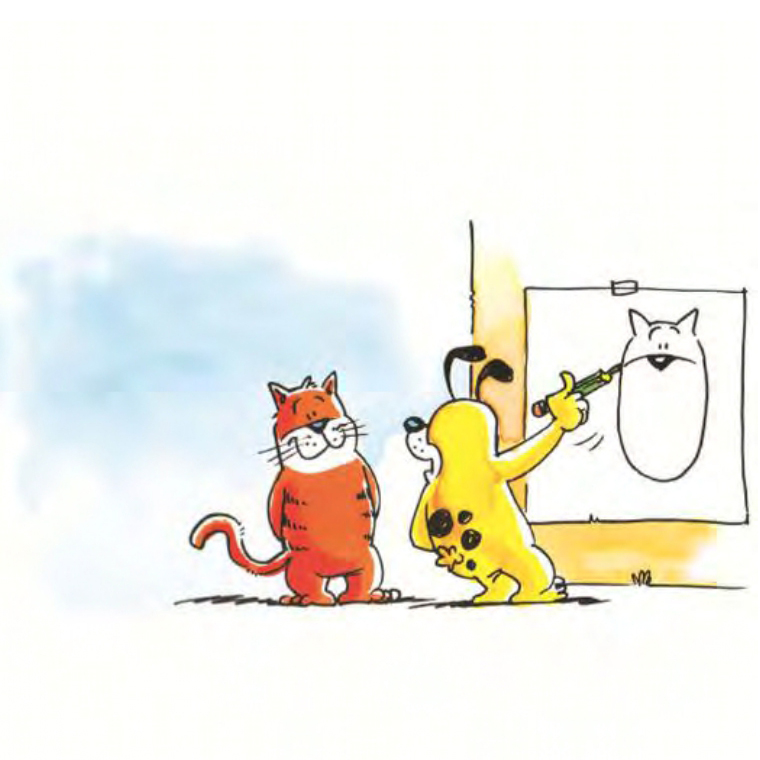
Then he draws the mouth of Cat.

The mouth is a line.

It looks like the letter ’w’ and he draws the hairs of Cat.

Three hairs on the left side and three hairs on the right side.

  1. The lines beside Cat’s nose are whiskers. They are very sensitive to touch. They help a cat sense things in the dark.
  2. This is the fourth step in the drawing. See if you can describe the steps in order, calling each one by its number.
  3. Think of something you do step by step. Perhaps it is getting dressed or going to the store. List as many of the steps in order that you can think of.
content-image

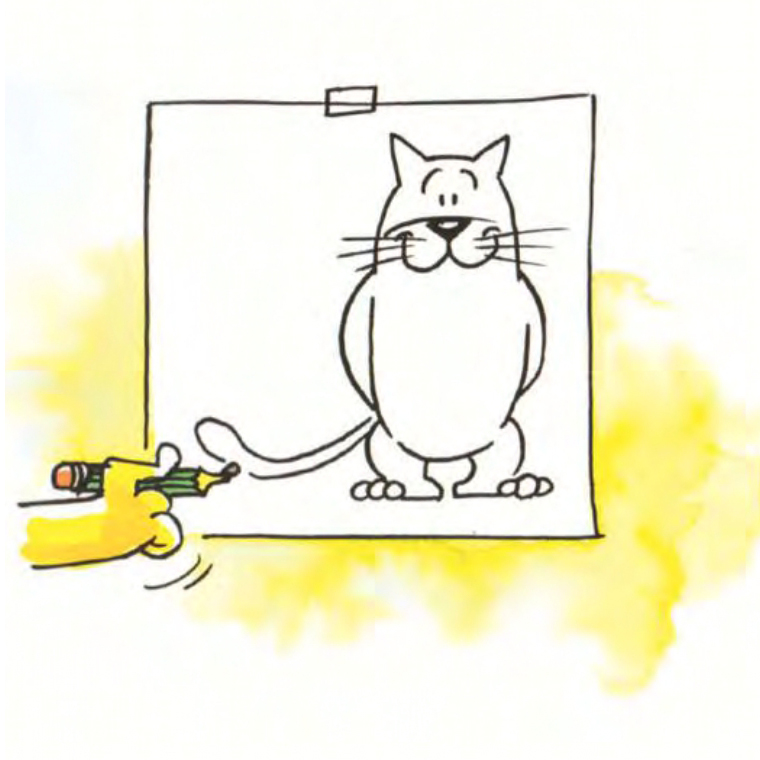
The drawing is almost finished.

He draws the arms and legs of Cat.

The arms and legs are lines and he draws the toes of Cat.

The toes are circles and he draws the tail of Cat.

The tail is a long line.

  1. Which details still need to be added to this picture?
  2. Skip count by 3’s to count how many of Cat’s toes you can see (3 + 3).
  3. Cats usually have 4 toes on a back leg. How many toes would that make? How many more toes would that be than 3 + 3?
content-image

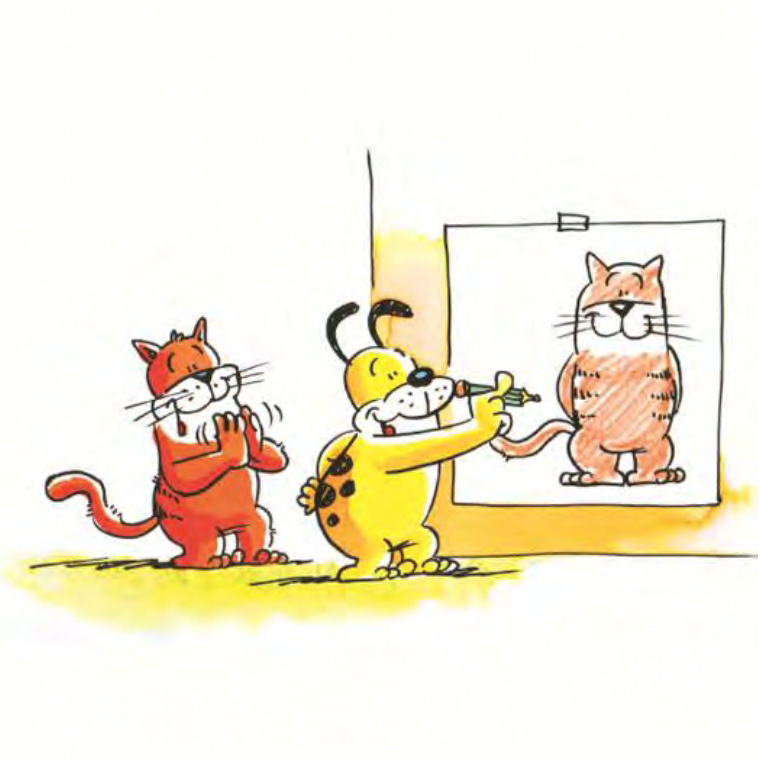
At last he draws some stripes on the body of Cat and colors the body orange.

The drawing is finished.

Wow, that is beautiful!

  1. Describe what Cat and Dog are each feeling by looking at their faces.
  2. There are lots of groups of 3 in the picture now. Can you skip count by 3’s to count them all?
  3. Notice that one side of Cat is the mirror image of the other side. That is called mirror symmetry. Many things in the world have that symmetry. Look around you and find a few.
content-image

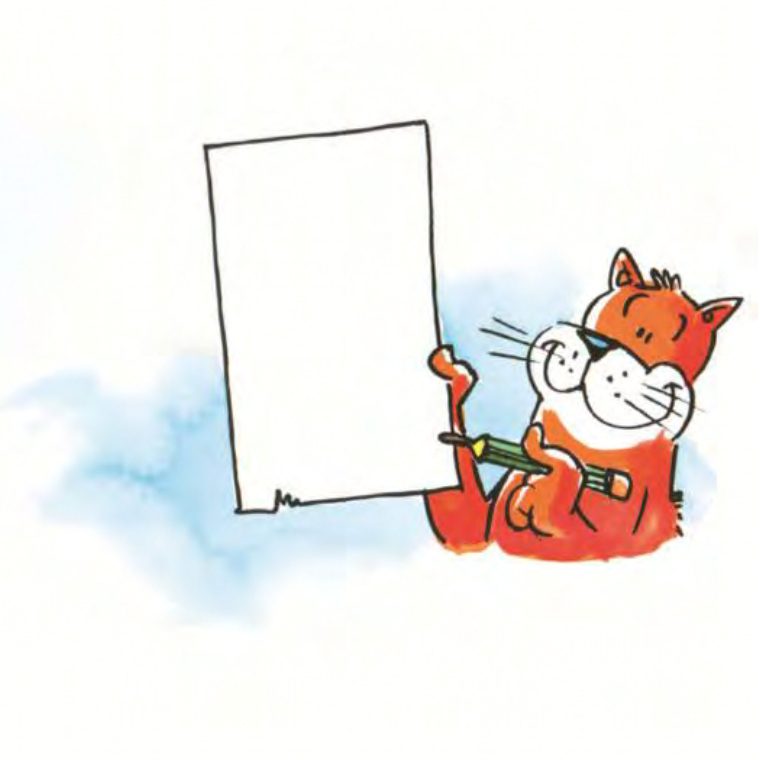
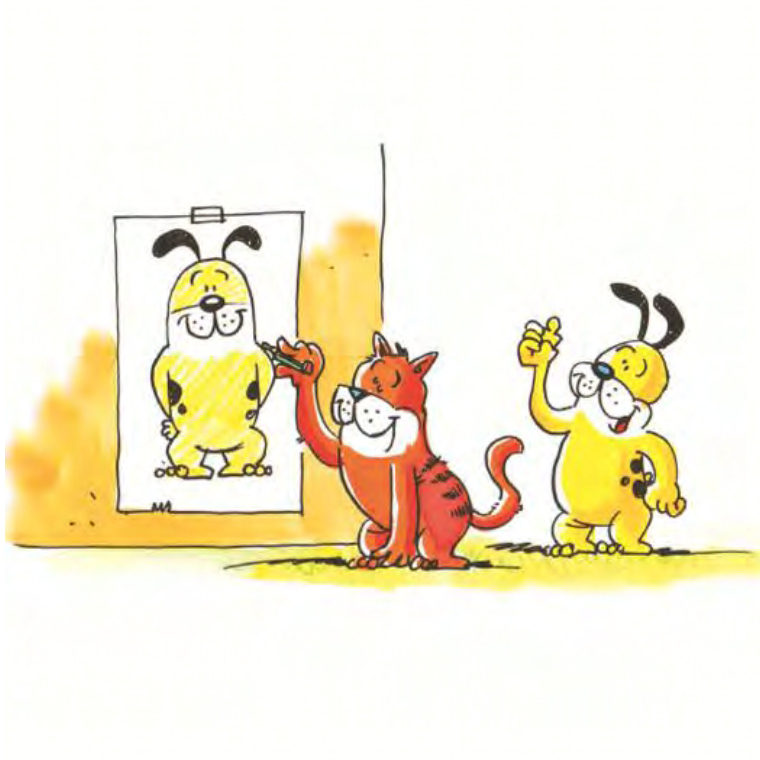
Now it is Cat’s turn.

He takes a pencil and he takes a paper.

The paper is a rectangle.

  1. Which paw is Cat holding the pencil in?
  2. Cat’s piece of paper is a rectangle which is not a square. Describe why it is not a square.
  3. Keep an eye on that little tear on the bottom of the piece of paper as the story goes forward.
content-image

First, Cat draws an oval.

The oval is the body of Dog.

Wow, that is good!

  1. Cat is now drawing with the other paw. Cat is probably right-handed (or is that right-pawed).
  2. Cat is starting the drawing with the same first step. Predict what the next two steps will be.
  3. Look at the bottom of the rectangular sheet of paper. Something has changed!
content-image

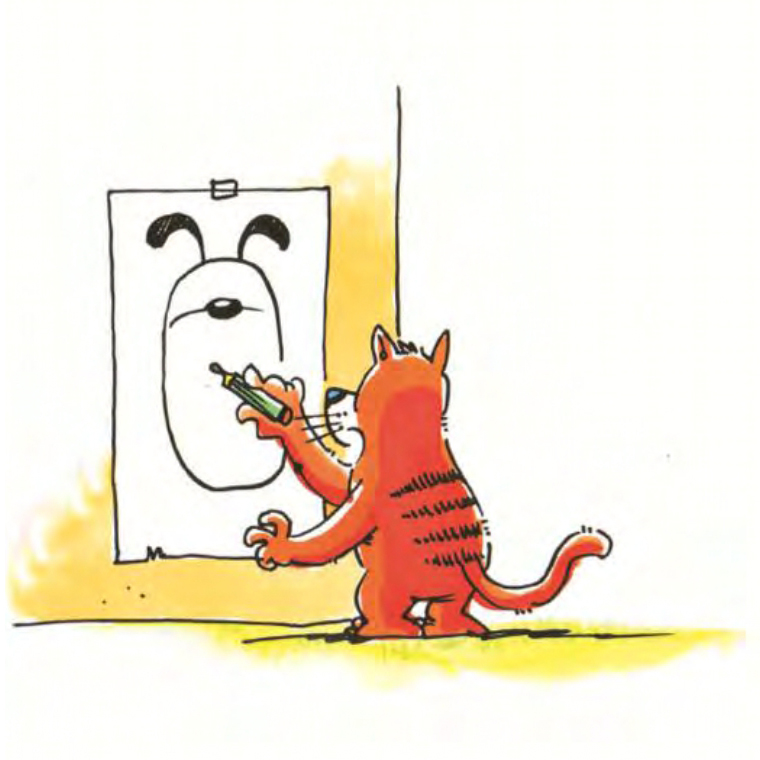
Then he draws two black forms on top of the oval.

The two black forms are the ears of Dog and he draws a black circle in the oval.

The black circle is the nose of Dog and he draws a line above the nose.

  1. Cat’s nose and Dog’s nose are two different shapes. What are the shapes and how are they different?
  2. The picture doesn’t look like Dog yet. Use your imagination to think of what else the drawing might become. Perhaps a ladybug, or a water bottle squirting water, or a space alien?
  3. Have you noticed what came back on the rectangular piece of paper?
content-image

Now he draws the eyes and the eyebrows of Dog.

The eyes are two dots.

The eyebrows are two lines.

Wow, that is perfect!

  1. Do you see any rectangles in addition to the piece of paper? There are probably many rectangles where you are. How many can you find?
  2. Cat and Dog aren’t talking to each other in this story. They are communicating without words. What are they doing to communicate?
  3. Which things come in pairs and which come in 3’s in this picture?
content-image

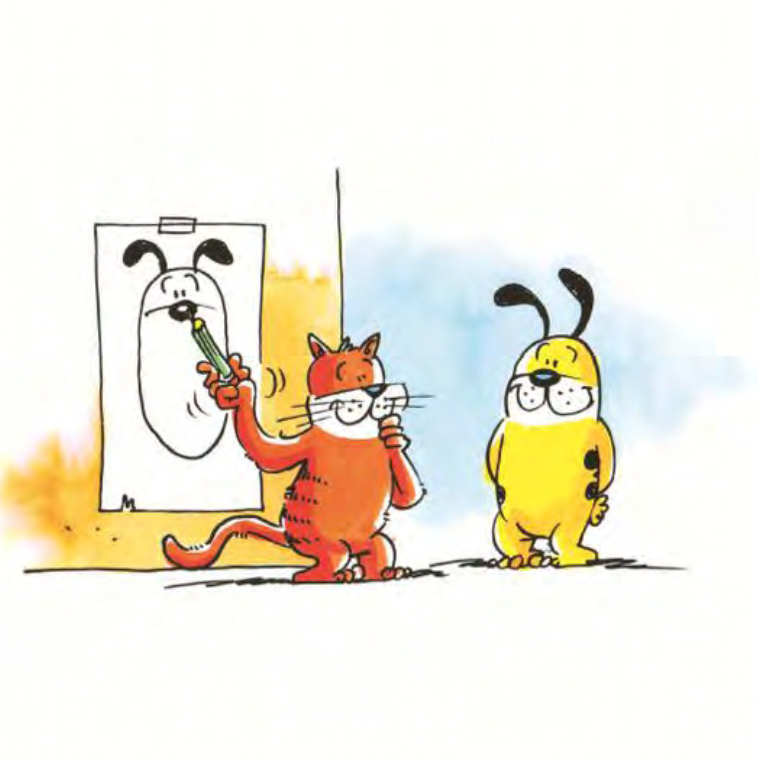
Then he draws the mouth of Dog.

The mouth is a line.

The shape is again the letter ’w’ and he draws some dots around the mouth of Dog.

Three on the left side and three on the right side.

  1. Lines can be straight or curved. Other than their mouths, what are some other curved lines in this picture?
  2. Cat and Dog have 3 dots on each side of their face. Skip count by 3’s to count the total number of dots.
  3. They have very different ears. Describe the shapes. How are they similar and how are they different?
content-image

The drawing is almost finished.

He draws the arms and legs of Dog.

The arms and legs are lines and he draws the toes of Dog.

The toes are circles and he draws the tail of Dog.

The tail looks like a flower.

  1. Dogs have the same number of toenails as toes. Skip count by 3’s to find the total number of toes and toenails.
  2. This picture has many things that come in pairs. Count them all by skip counting by 2’s.
  3. Suppose you had five pairs. You could skip count them by 2’s five times or skip count them by 5’s two times. Why do you get the same answer both ways?
content-image

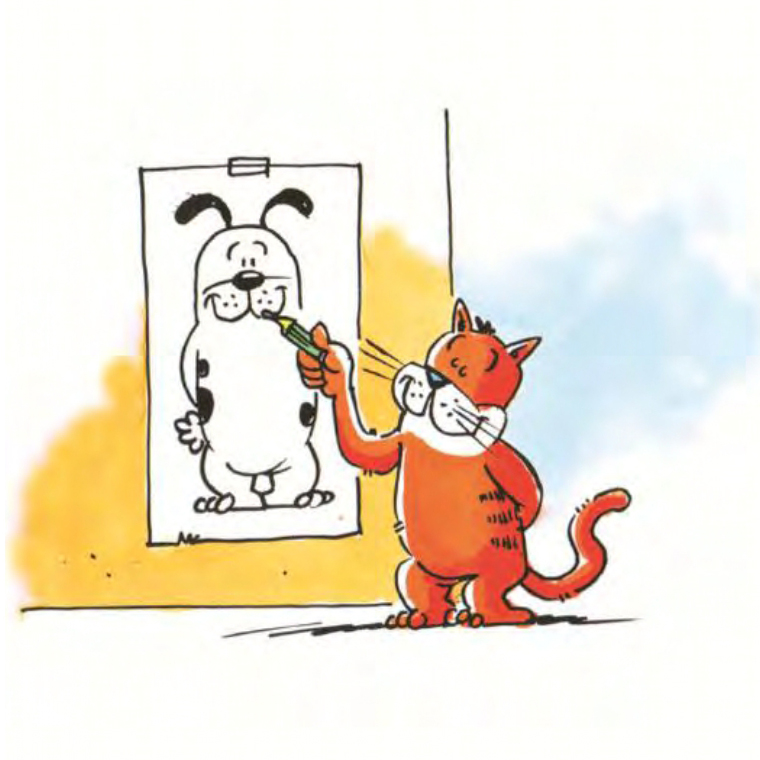
At last he draws some black circles on the body of Dog and he colors the body yellow.

Then the drawing is finished.

Wow, that is wonderful!

  1. How many steps did this drawing take? Was it the less than, the same as, or more than the number of steps for the first drawing?
  2. In this drawing, you don’t see Dog’s mouth. Even still, you can tell Dog is happy in the drawing. How can you tell?
  3. Have you ever seen cats and dogs stand on their back two feet? Some can do it for a short time, but it is unusual.
content-image

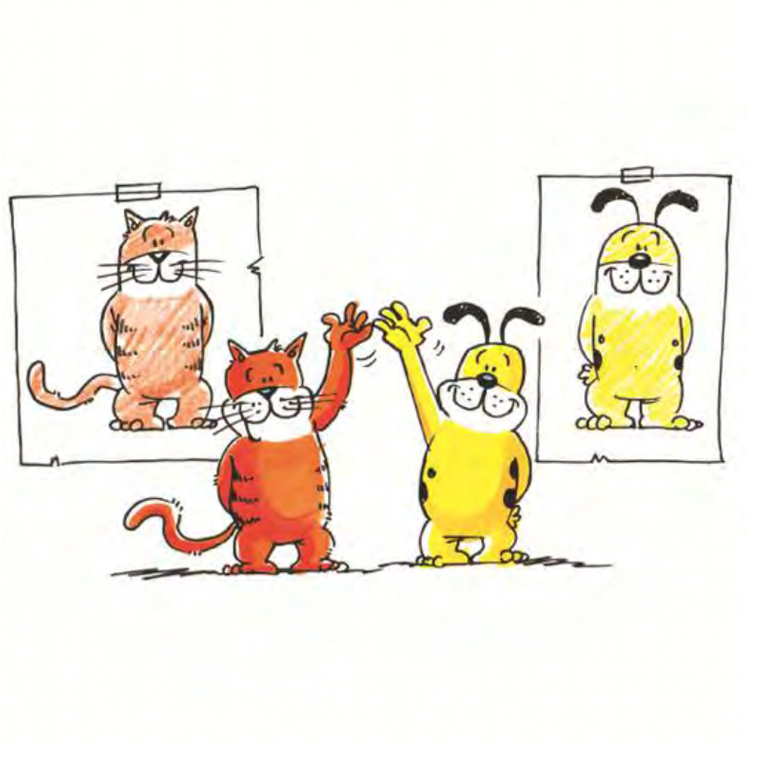
Bye bye Cat.

Bye bye drawing of Cat.

Bye bye Dog.

Bye bye drawing of Dog.

  1. In which ways does this picture have mirror symmetry and in which ways does it fail?
  2. When you draw a picture of someone it’s called a portrait. Have you ever drawn a portrait of someone? How did it turn out?
  3. Drawing a picture of yourself is called a self-portrait. If you drew a self-portrait where would you start? Would you use an oval for your body, or would you start somewhere else?

I would love to help the whole world to read and there is still so much to do” Aagje van Heekeren, Biblionef Director 2004-2012

Thanks to Aagje’s enthusiasm the Cat and Dog booklets could be made. As a tribute they will be reprinted to mark her departure as Director of Biblionef.

Cat and Dog
Concept, text, illustrations and design: Elke and René Leisink
Publishing: Biblionef
Printing: Studio/Drukkerij pk84
Copyright: 2014
ISBN: 978 90 8147 671 3

Sponsors & Support

This book could be published thanks to the generous support of

  • pater eusebius kemp stichting
  • stichting casterenshoeve
  • family leisink
  • family bongaerts

About Biblionef
We all want children to become readers – to have empathy for characters, big vocabularies and imaginations, and to be able to immerse themselves in another world through a book. Biblionef places a strong emphasis on reading for pleasure; we believe children should have a sense of fun as they read. It should not be a chore, but an exciting activity, something to look forward to.

To achieve this, children need to be exposed to books with great stories. Books which help with children’s literacy development, give access to information and education, and teach them to think for themselves – to make good decisions.

Biblionef’s goal is to make a profound impact on the lives of children and we are deeply committed to giving all children access to books. Biblionef foundations provide new books to library projects for children who have no access to books. Books containing stories they can relate to and learn from.

Website: www.biblionef.org

About Cat and Dog
Cat and Dog books are funny and easy to read. Learn only 200 words and start reading the books.

Website: www.cat-and-dog.org

You are free to download, copy, translate or adapt this story and use the illustrations as long as you attribute in the following way:

Cat and Dog draw and colour
Author — Elke and René Leisink
Illustration — Elke and René Leisink
Language — English
Level — Longer paragraphs
© African Storybook Initiative 2017
Creative Commons: Attribution 4.0
Source www.africanstorybook.org

Prev
Page 1 of 18
Next