Drum

by Owino Ogot

Illustrated by Salim Kasamba
content-image
content-image

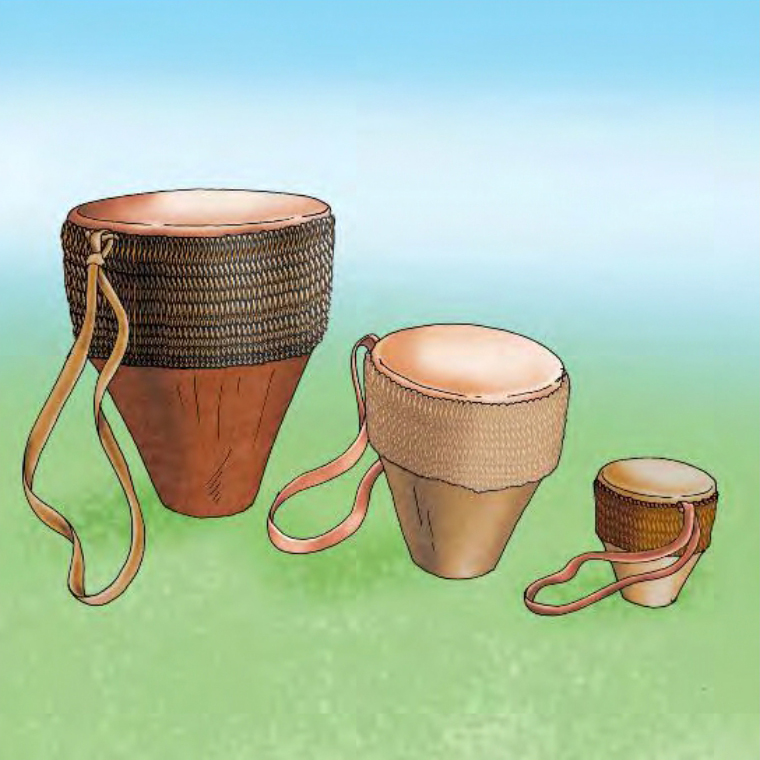
The drum has always been an important musical instrument in our community. We love drums!

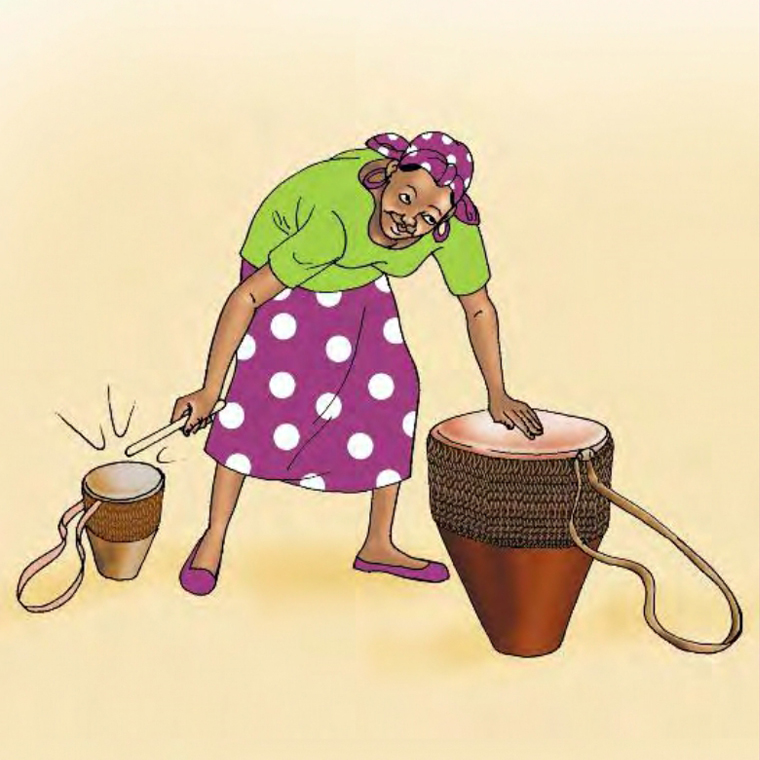
We have drums of different sizes: big, medium-sized, and small.

  1. Think of things that have the same shape with different sizes. Perhaps one big and one small, or three with big, medium, and small.
  2. Think of stories about three things. Some examples are: The Three Little Pigs and Goldilocks.
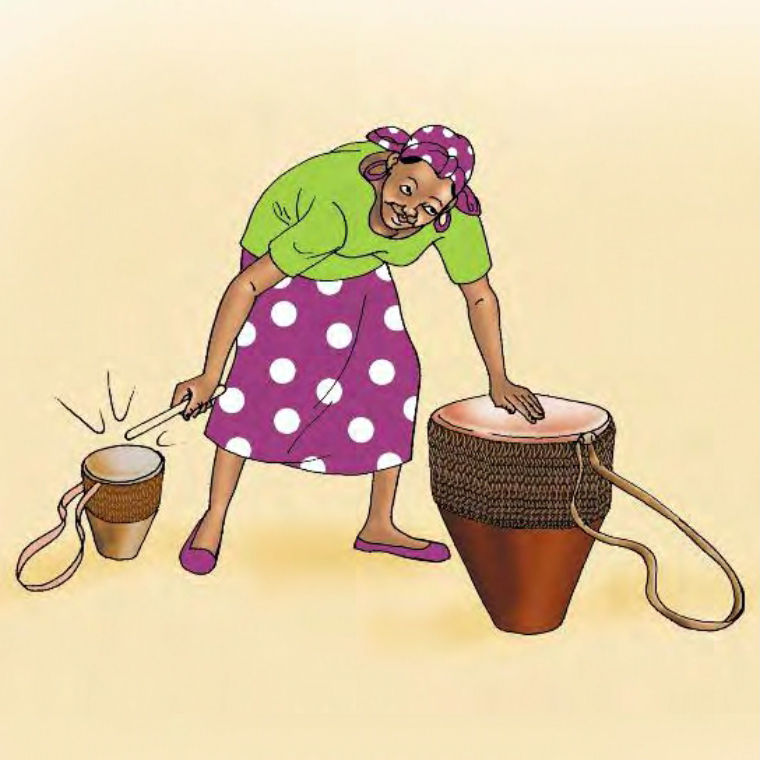
  3. Have you ever beat on a drum? Which of these three would you choose?
content-image

We play drums using beaters, or with our fingers.

We play drums for various reasons: We play drums with songs and dances, for feasts, and in bad times.

  1. People use drums to make rhythms. Make up your own rhythm and count it. For example: (clapping for each number) "1, 2, pause, 3, 1, 2, pause 3."
  2. How do you suppose a beater sounds different than using fingers?
  3. How does the small drum sound different than the large one?
content-image

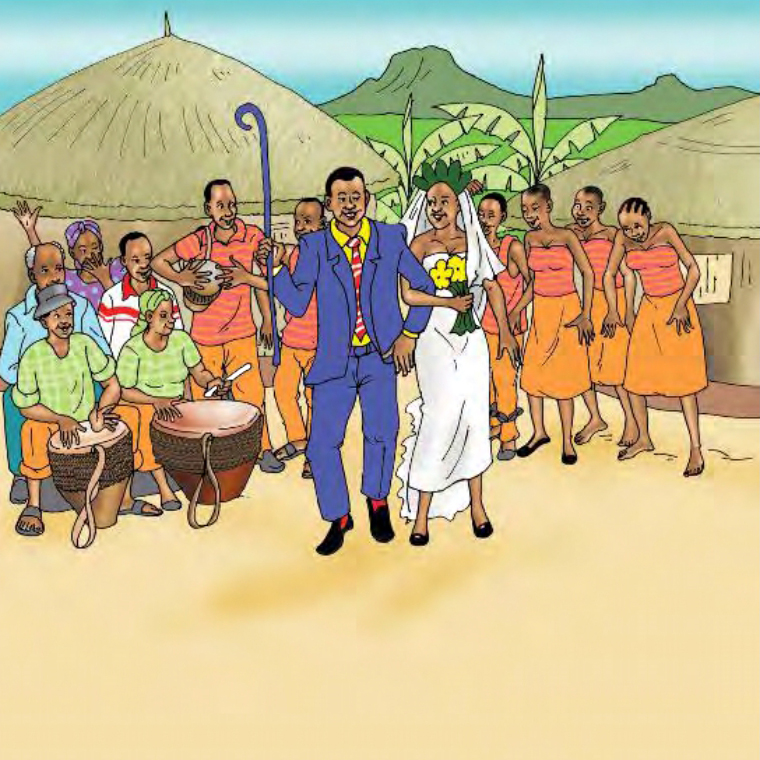
Drums enrich songs and make people want to dance. Drums make ceremonies colorful.

We play drums during ceremonies for marriage and child naming. We play drums when celebrating a new harvest or a twin birth.

  1. People are wearing special wedding clothes. Count together the people wearing orange.
  2. Which color are the drummers wearing?
  3. Count together all the people at the wedding. Can you count that high?
content-image

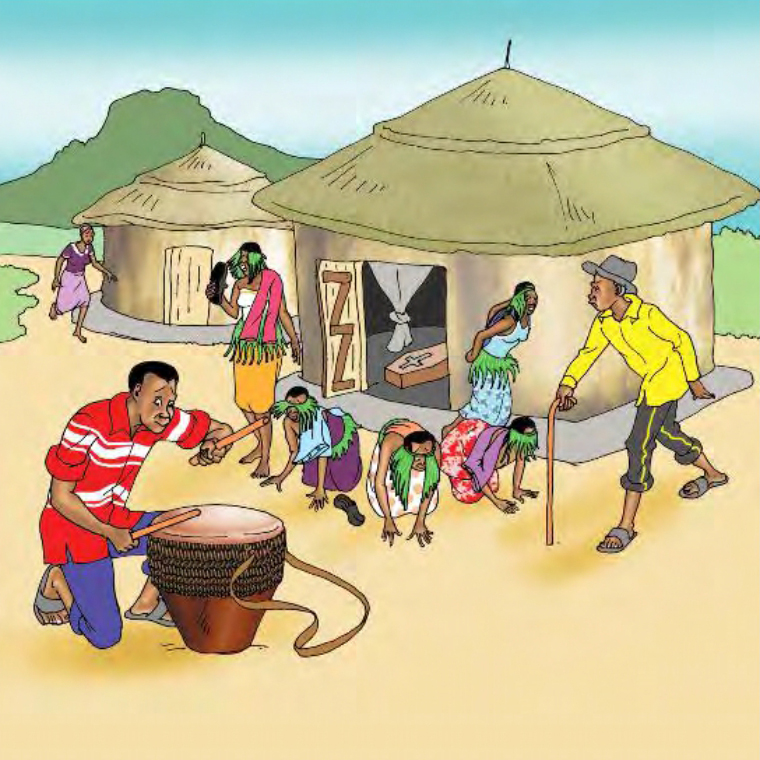
We sound drums to announce grief and call people when death occurs.

  1. What does sad drumming sound like? Can you make a soft, sad rhythm with your hands?
  2. There are many kinds of drumming, such as soft background rhythms or fast loud rhythms. Which kinds of drumming have you heard?
  3. Does a drumbeat make you want to dance?
content-image

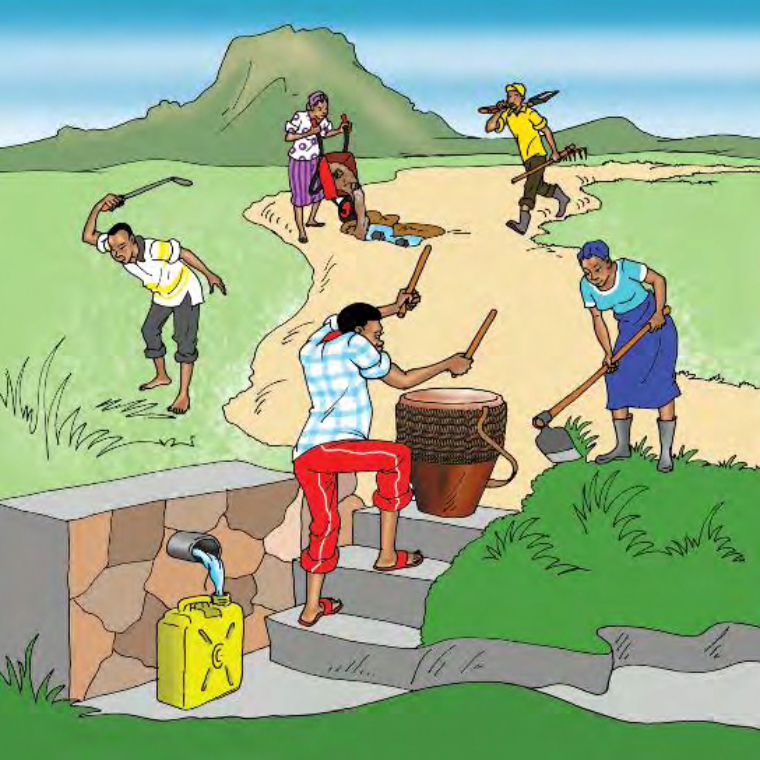
We sound drums to call people to clean wells, clear roads, or to build a hut for a needy old person.

We sound drums to call people when cattle are stolen in our village.

  1. Where you live, what sound or method do people use to call people together for food, school, or special events?
  2. Would you rather beat the drum or do the work?
  3. Count together the number of tools people are using in this picture.
content-image

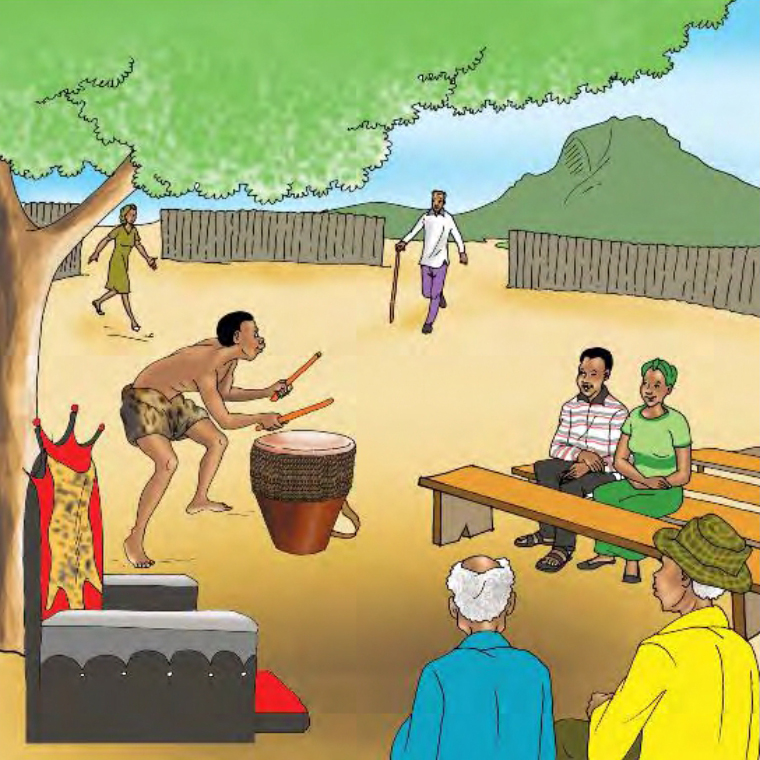
We sound drums to gather for meetings at our chief’s palace.

  1. What is something in this picture that shows this is a special place?
  2. How many people are gathering in this picture?
  3. Where do you think the chief will sit?
content-image

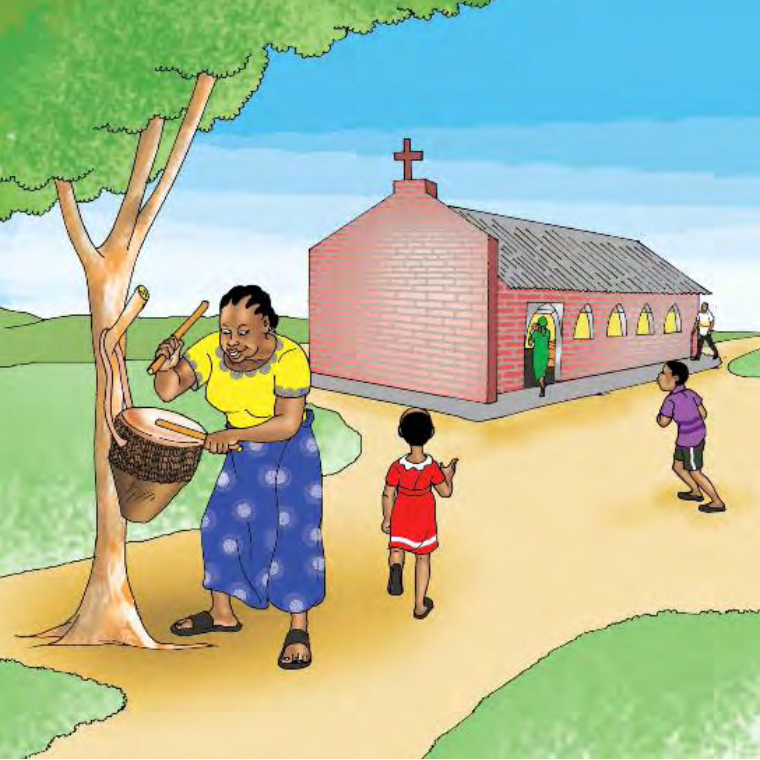
Drums call people to go to church for prayers on Sundays and other prayer days.

We also play drums to enrich songs when singing in churches.

  1. Items made from wood come from trees. Which items in this picture are made of wood?
  2. Which things are made of wood where you are?
  3. There are straps on the drums in each picture. Why are the straps useful?
content-image

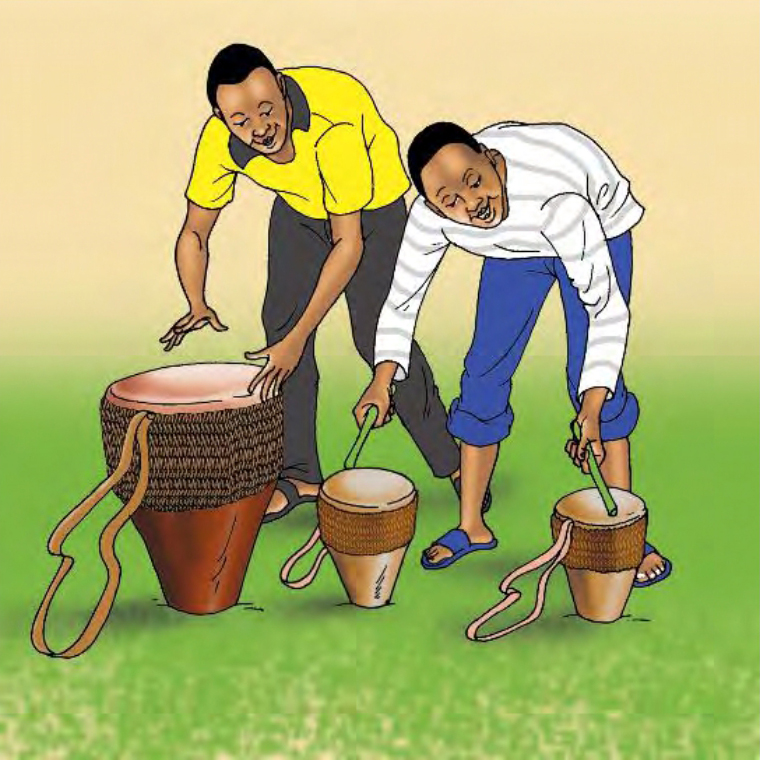
The big drum sounds, “An a bul mba, an a bul mba, an a bul mba-mba-mba-mba bul.”

The small drums sing in their high pitches, “Tindiri, tindiri tindiri ti.”

Together they chorus, “Tindiri mba, tindiri mba, tindiri mbamba-mba-mba, tindiri ti!”

  1. A duet is when two instruments are played together. Have you sung duets with your family or friends?
  2. Make up a clapping duet. One person starts with a clapping pattern, and then the other person creates a clapping pattern that goes well with it.
  3. When you hear music, listen for the instruments that create the beat.

You are free to download, copy, translate or adapt this story and use the illustrations as long as you attribute in the following way:

Drum
Author — Athieno Gertrude
Translation — Owino Ogot
Illustration — Salim Kasamba
Language — English
Level — First paragraphs
© African Storybook Initiative 2017
Creative Commons: Attribution 4.0
Source www.africanstorybook.org

Prev
Page 1 of 9
Next