Sizwe’s Smile

by

Illustrated by
content-image
content-image

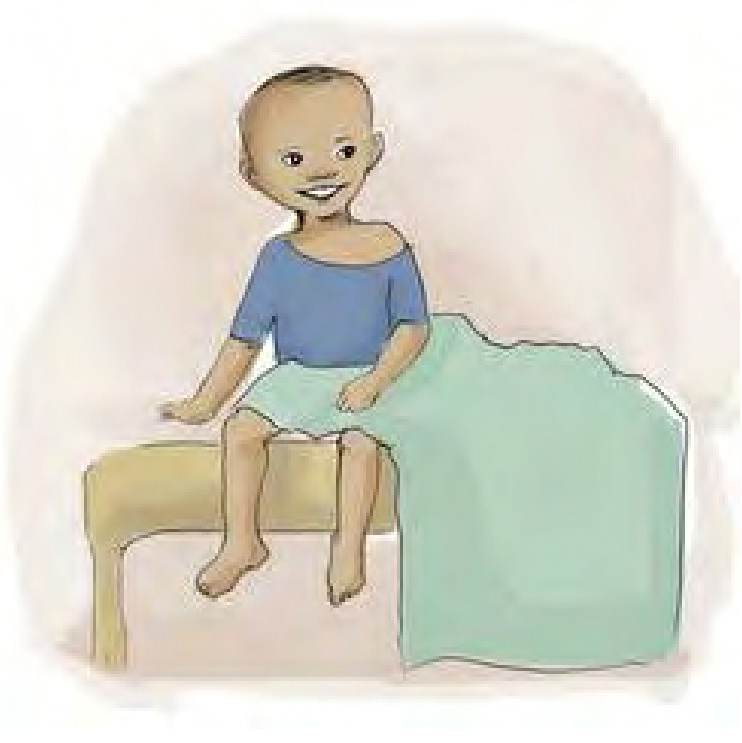
It had been raining for days, and everyone was grumpy. Everyone except Sizwe, who woke up with a smile every morning. “Yoh! Sizwe! That smile is magic!” said Gogo. “Is it for me?” Sizwe clapped his hand over his mouth. “But it’s MY smile, Gogo,” he whispered.

  1. The colors on this page are muted, they are not very bright. How do muted colors make you feel? The muted colors are in strong contrast to Sizwe’s bright smile, and they help us notice the smile.
  2. There are lots of shapes here. A rectangle is a 4-side figure shaped like this page. Though it is a bit rounded, the side of his bed is a rectangle. His eyes are circles. The neckline of his shirt is a partial circle, which is called an arc.
  3. Point out all the arcs in this picture, don’t forget the small ones, and then look around where you are to find some more arcs.
content-image

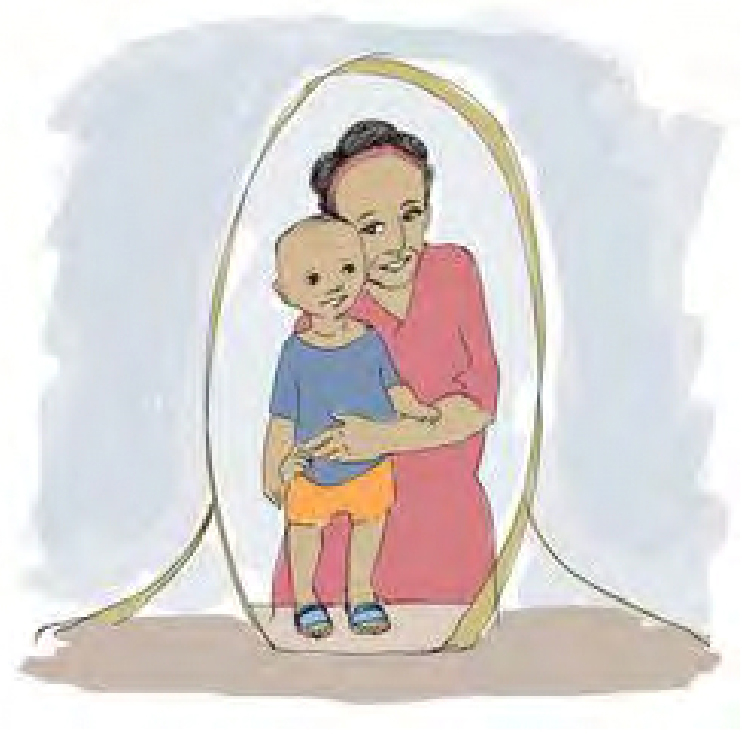
His mother laughed. “Sizwe! A smile is something you can give away without losing it. Look!” She lifted him up to the mirror. There was his smile, just as bright as before.

  1. The colors on this page are a bit brighter. Which colors on this page are the brightest?
  2. The mirror is round, but it is not a circle. A circle that is stretched or squished is called an oval or an ellipse. Look around you. Do you see rectangles, circles, arcs, and ovals?
  3. A smile is something you can give away without losing it or using it up. Can you think of other things like this?
content-image

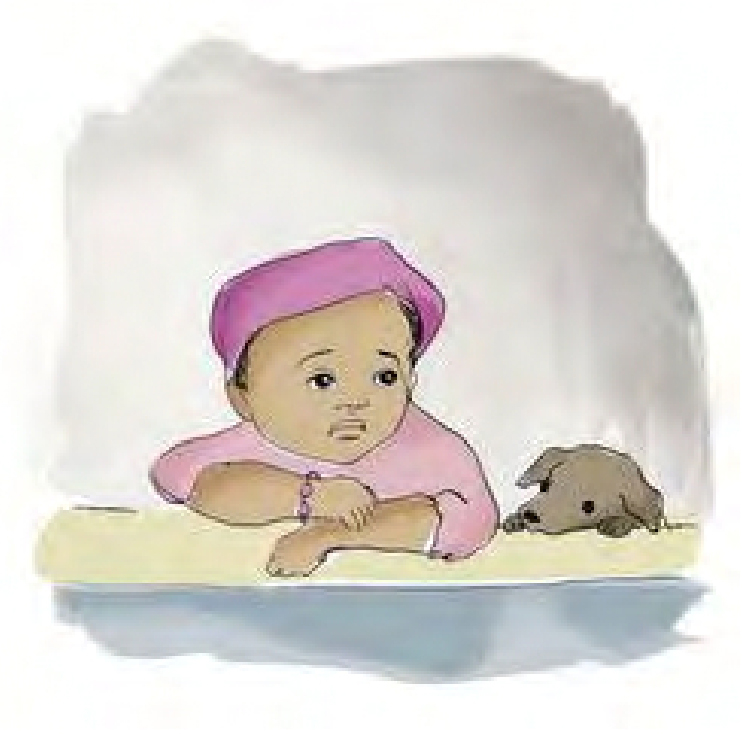
It was time to go out. Mama buttoned up Sizwe’s raincoat, and off they went, through the rain, to the library. Down the street, Sizwe’s best friend Zanele stood at the window of her house, looking sadly at the rain. Sizwe felt his smile creeping, creeping up. Before he knew it, his smile LEAPT out, and flew across the garden to Zanele.

  1. How does Zanele feel? How can you tell from the picture that Zanele feels that way?
  2. Zanele’s dog looks concerned about Zanele. Do you have an animal or person who is good at noticing when you are sad? Do they try to cheer you up?
  3. Notice how the arcs of Zanele’s mouth, eyes, and eyebrows are all turned down and sagging. Describe how these arcs change when someone is happy and smiling.
content-image

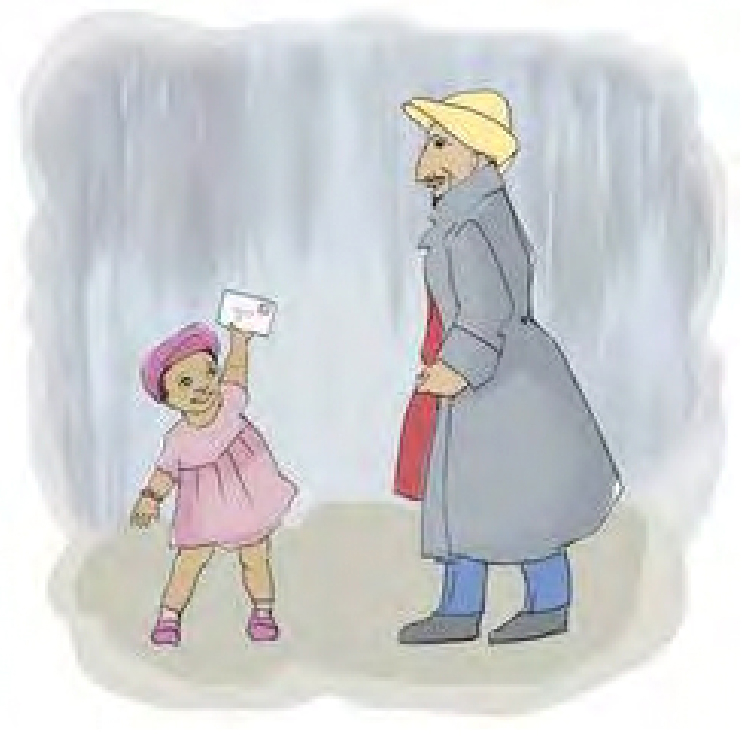
Zanele held on tightly to the smile – it was far too precious to let it get away. As Sizwe walked away to the library, Zanele’s doorbell rang. It was the postman, with a letter from
her favorite cousin. Zanele was so happy, that the smile bounced up, and beamed out at the postman. “Thank you, Mister Postman!” she said.

  1. How does it make you feel when you get a message from someone you like? Do you ever send messages to people you like to cheer them up?
  2. What are the bright colors in this picture? On grey days, it can take a little extra effort to find bright colors and celebrate them.
  3. It looks like the Postman is about twice as tall as Zanele. We could say he is two Zaneles in height. People sometimes measure things in terms of people. They will say that it is 100 steps to get somewhere or that ocean waves are waist high.
content-image

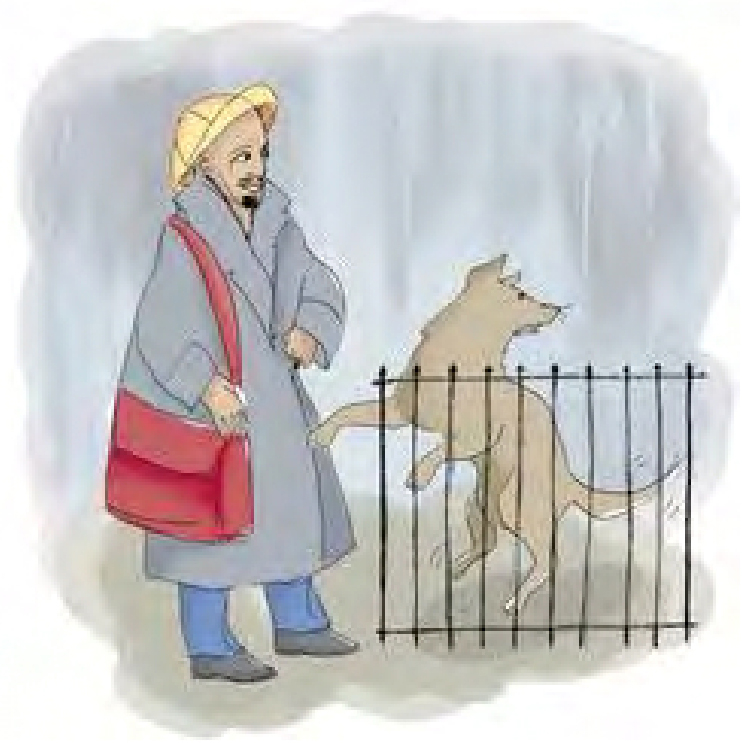
Zanele’s smile was the brightest thing the postman had seen all morning. It kept him warm as he trudged off through the rain. He came to a big house. Inside the gate, a dog was spinning around in circles, barking, barking, barking. He was so silly that the postman couldn’t help smiling. The smile bounced through the gate with glitter of glee.

  1. Zanele’s smile was a wonderful gift to the postman, and from there it became a happy gift to the dog. Is the smile getting worn out, or is it just as powerful as when it started with Sizwe?
  2. What shapes do you see on this page? There are lots of rectangles, and there are quite a few interesting curves.
  3. Counting the rectangles here can be tricky because you get a new rectangle when you put two rectangles side by side. There are over 20 rectangles if you count them all!
content-image

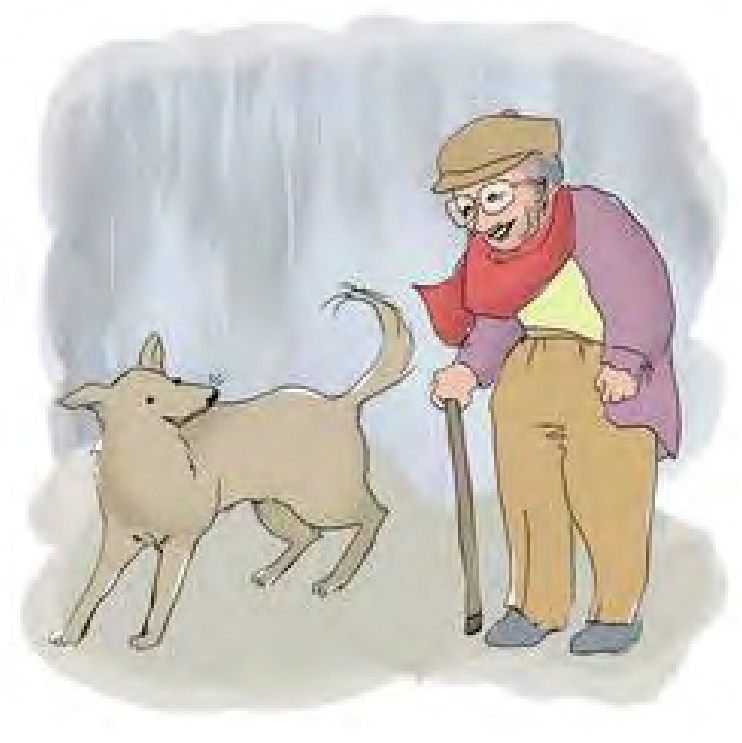
The dog stopped barking. He pricked up his ears and wagged his tail. Then he turned and ran back to the house with the precious, warm smile. A bent old man opened the door. “Oh, no! You can’t come inside. You’re all wet!” he told the dog. But right away, the smile beamed up at the old man.

  1. It is amazing how much more people like to do nice things when they are feeling happy. Do you notice it’s easier to be thoughtful and kind when you are feeling good?
  2. The world would be a much better place if everyone could feel happy all the time. Do you think that is possible?
  3. The light vertical lines going up and down show us that it is raining. These lines are all going in the same direction. A family of lines like this are said to be parallel. Parallel lines never meet, no matter how far out they go!
content-image

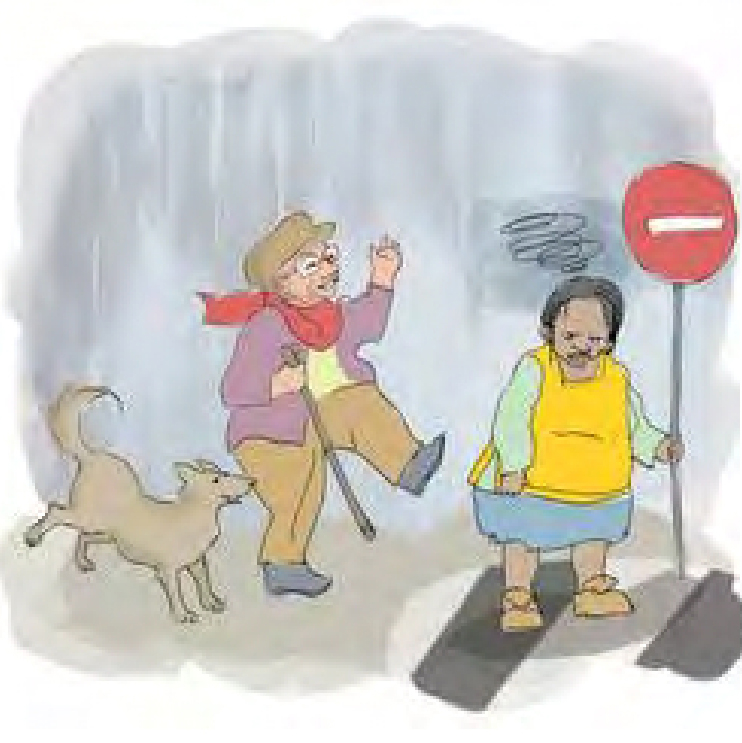
The old man stood a little straighter. “Eish,” he said, “Who cares if it’s raining? Let’s go for a walk, boy!” And off they went, splashing in the puddles. There, at the zebra crossing, stood grumpy Mrs. Makabela, the traffic cop. She looked cold, and wet, and miserable. The old man knew just what to do. “Morning, Mrs. Makabela!” he called, and smiled his biggest, brightest smile. But Mrs. Makabela did not smile back.

  1. Some people avoid puddles on rainy days. However, it’s a lot more fun to splash in them! Do you like to do that?
  2. What things in this picture show us how Mrs. Makabela is feeling?
  3. Which shapes do you see in this picture? Are there any new ones here?

Standing in the rain for days can make a face sad, sad, sad. But a smile is a magical thing and, by now, the smile was so strong, and so bright, that it was very hard to keep inside. It didn’t work right away, but bit by tiny bit, it began to creep out until, at last!

  1. There is no picture on this page to tell us what is going on. What do you think is happening in the story right now? What will happen next?
  2. How do you think the story will end? Will all the smiles get used up?
  3. Smiling and being happy is one emotion. Choose another emotion and make up a story about how someone with that emotion changed the lives of the people around them.
content-image

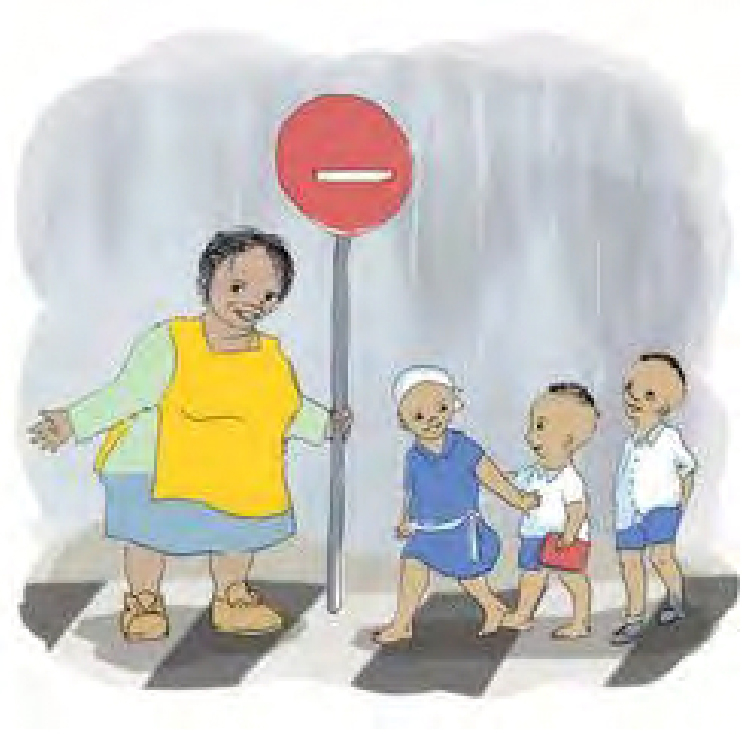
A great, big smile lit up Mrs. Makabela’s face! The school bell rang, and children ran to cross the road. Mrs. Makabela put up her sign, and smiled, and smiled, at each and every child.

  1. Look at how the stripes on the street are made from a series of alternating black and white rectangles.
  2. Ever wonder whether zebras are black with white stripes or whether they are white with black stripes (they are black with white stripes)? Most roads are black, so it’s very likely that these are white stripes on top of a black road.
  3. The story uses the two words "smiled" and "child" that sound alike – they rhyme. Having rhyming words makes the story feel cheery and fun. Say some rhyming words that you think are fun to hear together.
content-image

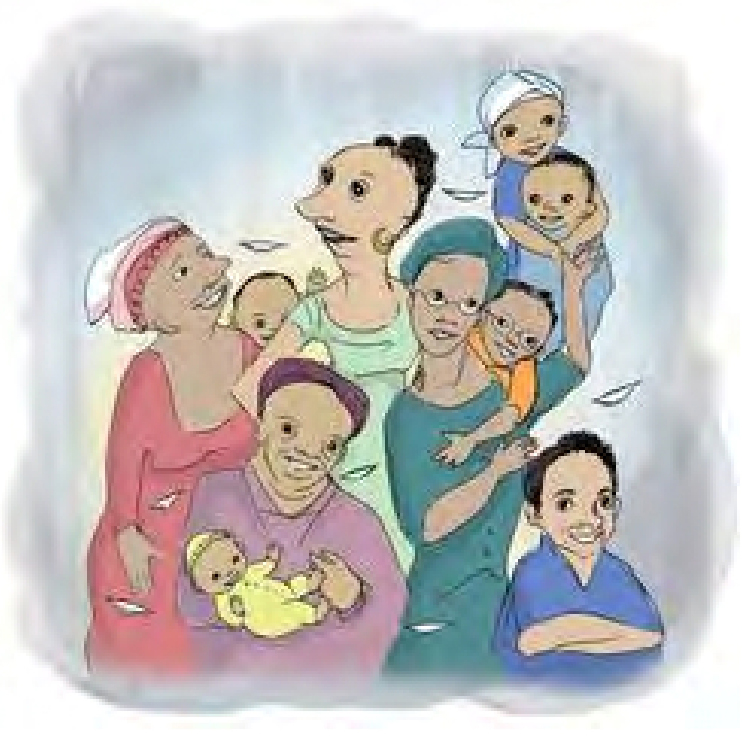
The children smiled at their moms and dads, and their gogos and tatas and brothers and sisters. They smiled at the bus driver and the greengrocer, and Mme. Makau, who went off to smile at her husband, who smiled at the mayor. The smiles leapt and rolled and beamed and gleamed until EVERYONE was smiling and giggling and laughing out loud in the rain.

  1. There is no limit to how much smiles can bounce around. How marvelous that all that smiling and laughing can happen on a rainy day.
  2. Sometimes rainy days can be fun. Do you enjoy rainy days and watching the rain come down?
  3. If one person can cause two new people to smile, consider how quickly this becomes a lot of people. 1 smiling person creates 2 more, who create 4 more, who create 8 more, and it keeps on doubling. How high can you keep this progression going? This is called exponential growth.
content-image

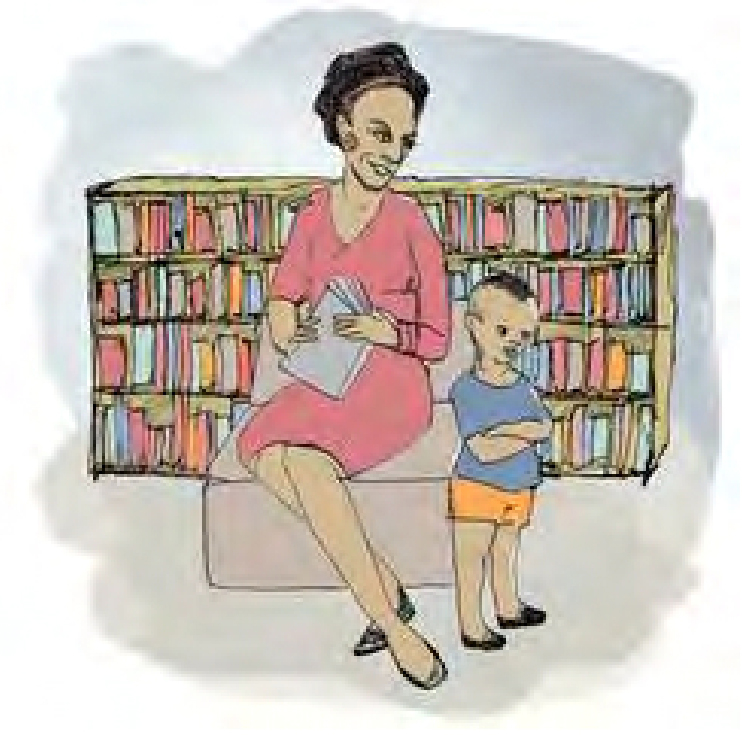
In the library, everything was quiet except for the sound of the rain. “It’s time to go,” said Sizwe’s mother, closing her book. “Aw, mom!” said Sizwe, who had run out of smiles.

  1. There are lots and lots of rectangles in this picture. Can you count them all?
  2. When it is difficult to count a large number of things, we can make an estimate, which is our best guess, for that number.
  3. Play the estimation game with a friend. Take a quick look at a group of things and then both of you make an estimate for how many things there are. Then count the things and see who was closest. With practice, you will get much better at making estimates!
content-image

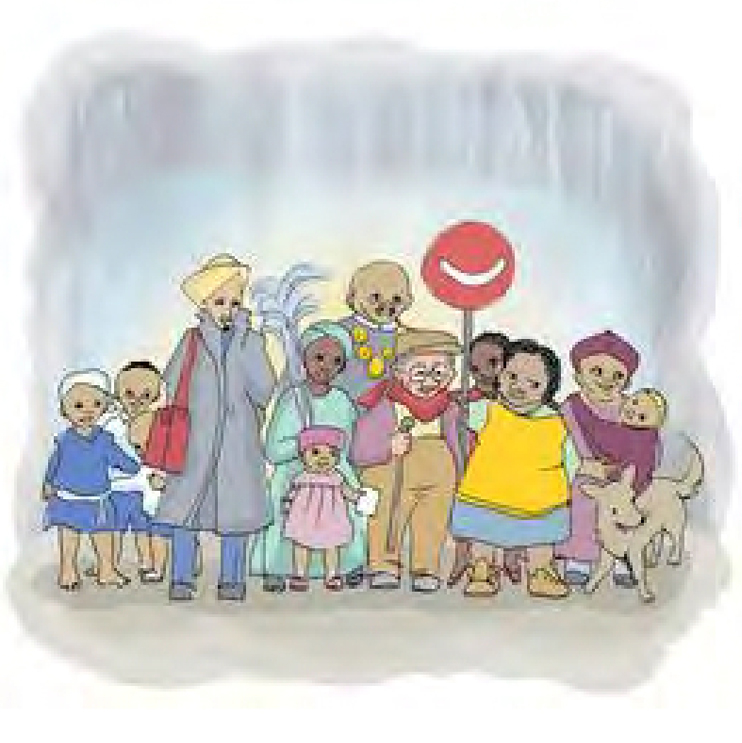
But as they stepped out into the street WHAT A SIGHT! Everyone in town was there! Everyone! And they were ALL smiling!

  1. One of the wonderful parts of helping make other people happy is that they can help make you happy in return!
  2. How has the red sign changed from earlier in the story? (The white rectangle turned into a white arc that looks like a smile.)
  3. That’s a lot of people! If you wanted to count their feet, you could count by 2’s. If you wanted to count their arms you could count by 2’s. What would you count by to count their limbs (arms and legs)? Would you count by 2’s or by 4’s?
content-image

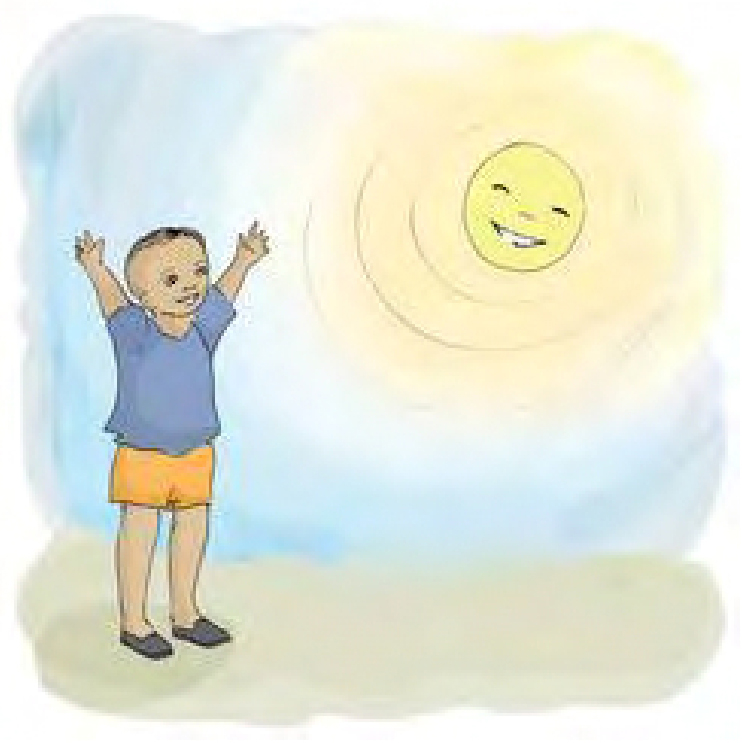
The smiles bounced around and beamed at Sizwe. They warmed him, and tickled him, and crept up, up, up from his toes to the TOP of his head. He was so full of happiness that the smile burst out, brilliant and beaming bright. And something changed. The dark, gloomy, rainy afternoon didn’t seem so dark anymore. Could it be? YES! The clouds parted, and the warm sun shone down on them, with the biggest, brightest, most brilliant
smile of all.

  1. What a difference one’s mental attitude can make! A happy person can often see difficult things in a positive way, and an unhappy person can choose to see good things in a negative way.
  2. Think of an example of something you could have been sad or unhappy about, but you chose to see it in a positive way. It’s a great talent if you can do it.
  3. Even the sun is smiling! This story has a very happy ending!

You are free to download, copy, translate or adapt this story and use the illustrations as long as you attribute in the following way:

Sizwe’s smile
Author — Vianne Venter
Illustration — Genevieve Terblanche
Language — English
Level — Longer paragraphs
© Vianne Venter, Genevieve Terblanche, Lauren Rycroft and Bookdash.org 2014
Creative Commons: Attribution 4.0
Source www.africanstorybook.org
Original source www.bookdash.org

Prev
Page 1 of 14
Next