The Dragon Curve: A Magical Math Journey

by

Illustrated by
content-image
content-image

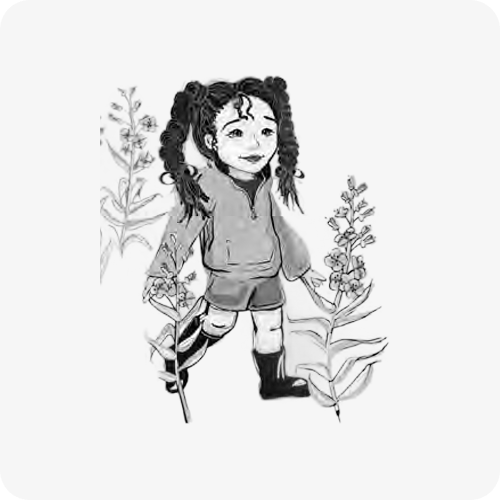
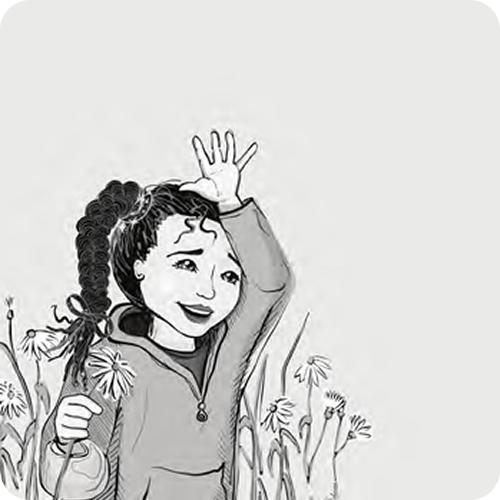
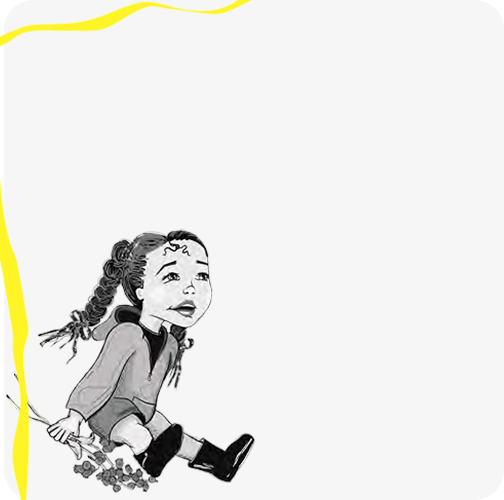
Aiyana was bored. Her mom always told her that only boring people stay bored. So, she went outside to look for something to do. Out of the corner of her eye, she spied a long, skinny strip of paper lying on the ground. “I wonder what that could be.” She picked it up …

  1. What are some times when you felt bored?
  2. What interesting things have you found on your walks?
  3. Do you like to take walks by yourself, or do you prefer having company?
content-image

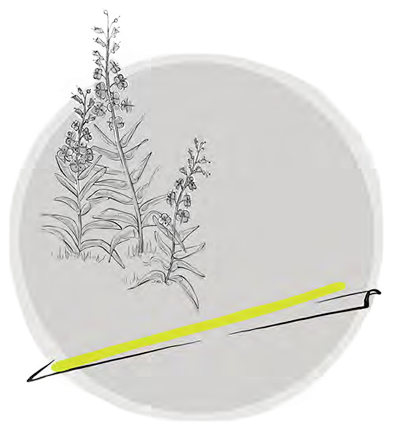
It looked like a road!

  1. A straight road looks like a straight line. What other things look like a straight line?
  2. Can you think of anything that continues going on straight forever?
  3. Short pieces of straight lines are great for creating shapes. You can make flat shapes such as triangles, rectangles (like this page), and octagons (like stop signs). What other shapes can you make this way?
content-image

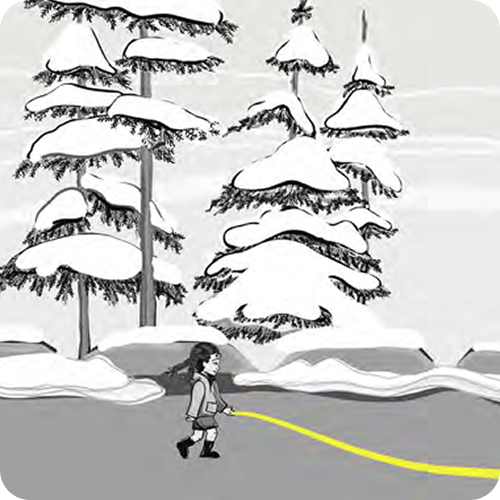
She followed the road.

  1. Do you think the yellow piece of paper is this long, or is she using her imagination?
  2. It’s fun to go exploring. Have you ever gone walking to new places you hadn’t seen before?
  3. It looks snowy and cold where Aiyana is. Do you live in a place where it snows?
content-image

Aiyana started off on her adventure, imagining warm sunshine and a spring breeze.

  1. Why do you suppose she was imagining being in a warm place?
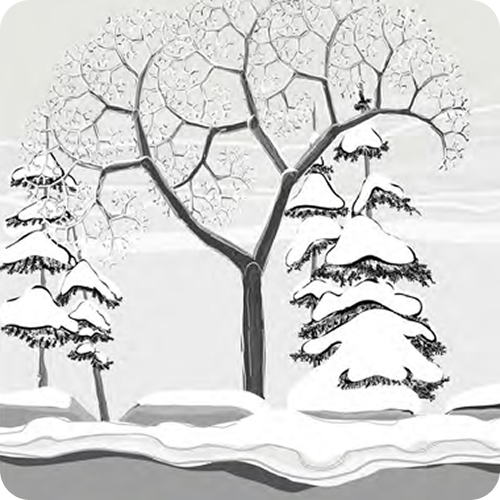
  2. Why do some of these trees have needles and others have bare branches?
  3. Where is Aiyana in this picture? Is she in a snow bank?
content-image

While she was walking, she grabbed both ends of her road and folded it in half, folding the left end over to the right. Then she opened it …While she was walking, she grabbed both ends of her road and folded it in half, folding the left end over to the right.

Then she opened it …

  1. When you have two lines that meet at a point, they form an angle there. If the angle is like the corner of this page, it is called a right angle.
  2. To fold along with Aiyana, use a very long, skinny strip of paper. Always fold the same way, from the left end over to the right, for example. When you open your folds, arrange the strip of paper standing on its edge with all the folds looking like floors or walls with right angles.
  3. Do you enjoy folding pieces of paper to make shapes? Have you ever made a simple paper airplane this way?
content-image

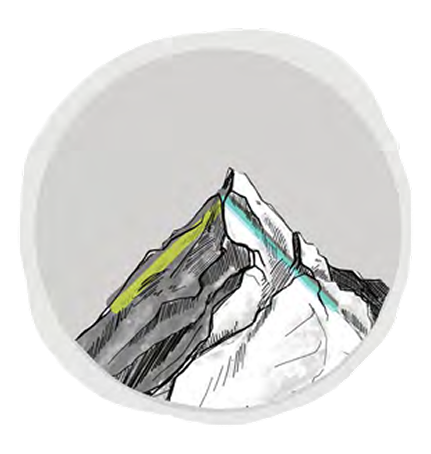
It looked like a mountain!

  1. Do you see things around you where two lines form a right angle? There are probably many of them– how many can you find?
  2. Rectangles are four-sided flat shapes with right angles at every corner. The page of this story forms a rectangle. Do you see rectangles near you?
  3. Squares are four-sided flat shapes with four right angles and four sides that are the same length. Can you find some rectangles around you that are not squares? Can you find some squares that are not rectangles? (there aren’t any– every square is a rectangle)
content-image

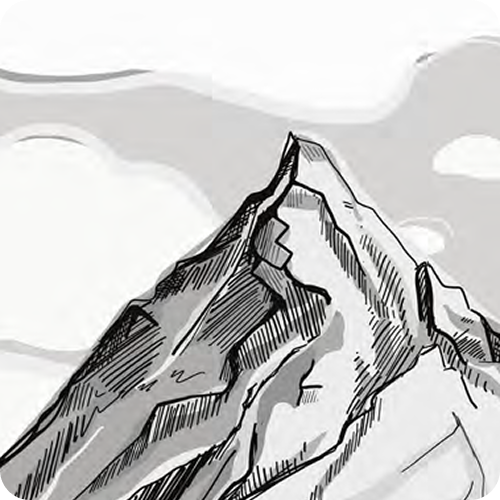
She followed the road and climbed the mountain

  1. How far up this mountain do you think the road goes?
  2. Do you think you could cliimb all the way to the top of this mountain?
  3. Do you live near mountains or do you live in a flat area?
content-image

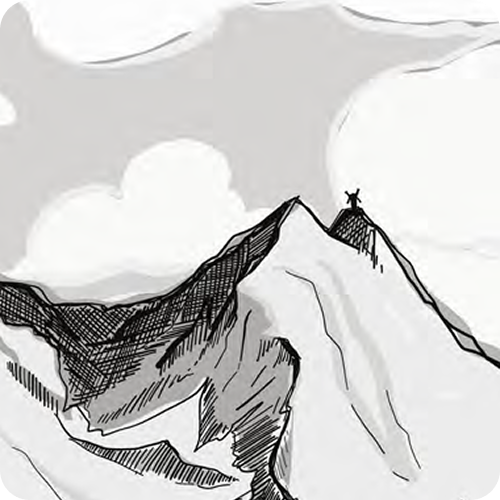
Aiyana could see a whole new world from the top of that mountain. “What would happen if I folded my paper again?”

  1. This illustration shows Aiyana standing on a mountain top. Can you imagine yourself standing on a mountain top?
  2. How far can you see from a mountain top? When you look around where you are now, what sorts of things get in the way to keep you from seeing far into the distance?
  3. These mountains have tops that come to a peak. Have you seen pictures of mountains with rounded tops? Why are some mountains rounded while others have sharp peaks?
content-image

She folded her mountain back up and folded it in half again, folding the left end over to the right. The she opened it …

  1. How many folds has she made so far? (2)
  2. Predict how many straight segments she has now? (4)
  3. What are some things that you fold up to put them away? How many times do you fold them? Do you always fold them in half, or do you sometimes fold them in thirds (three equal parts) or fourths (four equal parts)?
content-image

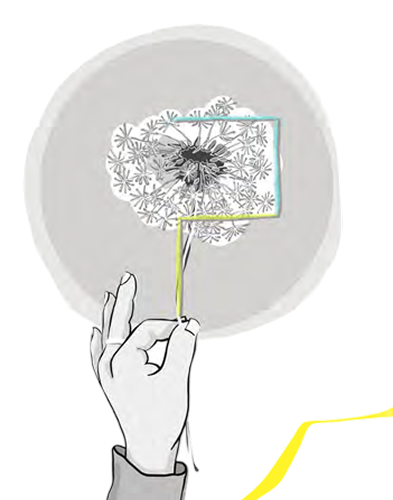
It looked like a flower!

  1. What other things look like the four line segments in the illustration? (A question mark is one.)
  2. An estimate is an educated guess. Without counting, make an estimate for how many smaller seeds are in this flower. Then count the seeds to see how close you are.
  3. Making estimates is a fun game to play with others. Make quick estimates when you see something, and then count to see who was the closest.
content-image

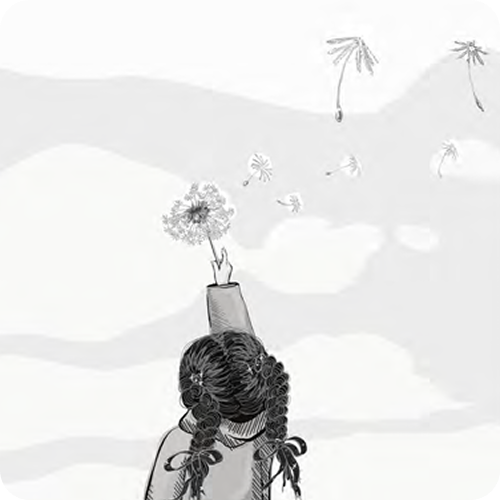
She followed the road, climbed the mountain, and held the flower high in the air.

  1. Can you tell which way the wind is blowing?
  2. Dandelions have seeds that look like this illustration. These flowers grow in many parts of the world. Do you have flowers like these near where you live?
  3. Plants like to spread themselves to new places. How does having seeds that can blow away help a plant to spread?
content-image

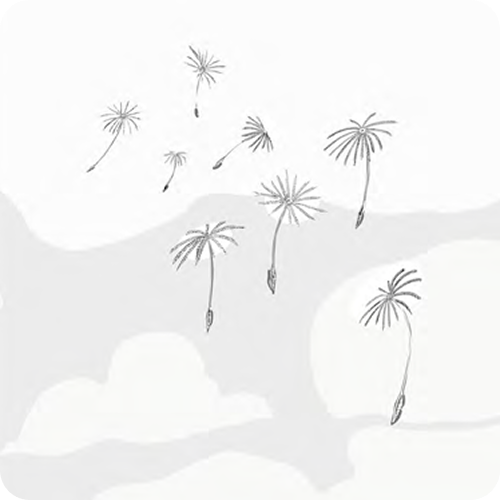
Aiyana watched the seeds drift away in the breeze, wondering where the winds would take them. She wasn’t bored anymore!

  1. How do you think she feels now? Why isn’t she bored any longer? What changed?
  2. When you get bored, do you let yourself stay bored, or do you try to find something interesting to do?
  3. Wondering where the seeds would go was one way to keep from getting bored. Can you think of other questions Aiyana might ask that would help keep her from being bored?
content-image

She folded her flower back up and folded it in half again, the same way as before.

Then she opened it …

  1. Predict what you think a flower folded in half will look like.
  2. Origami is a Japanese art form done entirely by folding paper. It typically uses one square piece of paper. Have you ever made a crane shape using origami methods?
  3. You might enjoy exploring some beautiful designs for folding napkins and pieces of cloth into animal and other shapes.
content-image

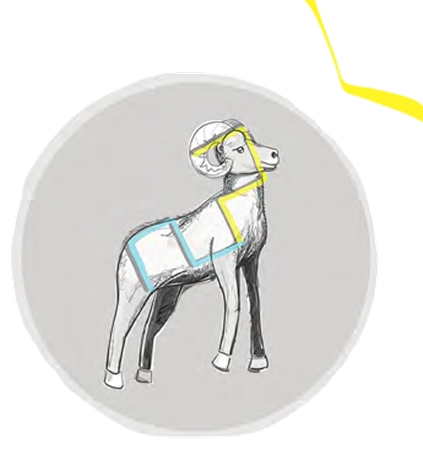
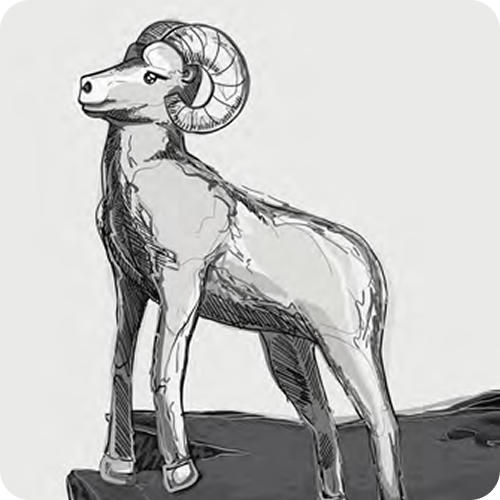
It looked like a mountain goat!

  1. Kirigami is a Japanese art form that combines folding and cutting a piece of paper. The simplest of these is to fold a piece of paper once and cut out a shape such as a face, tree, or flower.
  2. There are many ways for something to be symmetrical. Perhaps the most common way is to have mirror symmetry. If you fold a piece of paper once and cut it, the resulting design will always have mirror symmetry. Many things in the world have mirror symmetry– can you think of some examples? (faces, bodies, some tiling patterns, most chairs)
  3. The folded paper that Aiyana is making does not have mirror symmetry. However, if you take half of the design and rotate it a quarter turn, you will get the other half of the design. Try it!
content-image

She followed the road, climbed the mountain, held the flower high in the air, and smiled at the mountain goat.

  1. The flower she is holding looks different than the flower she held before. Without looking back, how is it different and how is it similar?
  2. Does the flower Aiyana is holding have mirror symmetry?
  3. If you rotate Aiyana’s flower a little bit around its center, does it look the same? This is another kind of symmetry called rotational symmetry. Do you see things around you with rotational symmetry?
content-image

Aiyana watched the mountain goat balance on the rocky cliff. “How much higher can he climb?” Aiyana was curious now! What else could she discover?

  1. How good is your balance? Can you balance on one foot? Can you balance on the top of a big rock?
  2. An even number is a number that can be split into two whole even pieces. Name some even numbers. Name some parts of the mountain goat that there are an even number of. (eyes, horns, legs)
  3. If you look directly head on at the mountain goat it has mirror symmetry. When there is mirror symmetry, the things not on the center line appear an even number of times. Which parts of the mountain goat are on the center line?
content-image

She folded her mountain goat back up and folded it in half again. Then she opened it …

  1. How many folds is this and how many line segments will the paper be in? (4, 16)
  2. Each time the paper is foldeed, what happens to the number of line segments it has? (doubles)
  3. Are the flowers she is holding now the same as any of the earlier ones? Describe how they are different.
content-image

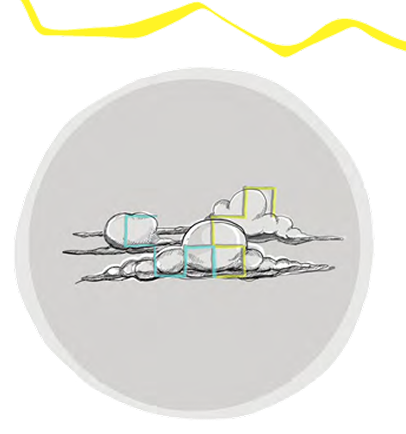
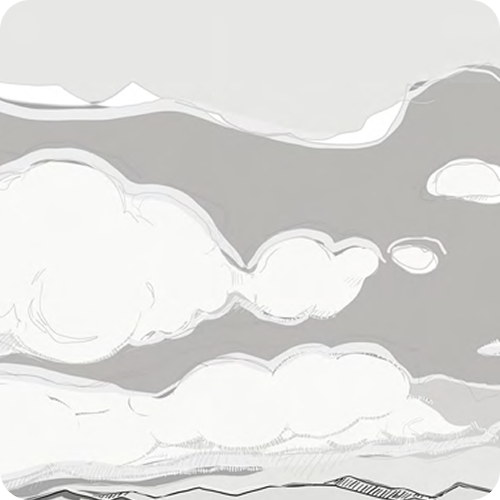
It looked like a cloud!

  1. Each time a new shape is shown, it is shown inside a circle. Why do you suppose the artist does that?
  2. How many circles can you find around where you are now?
  3. Circles may have different sizes, but they all have the same shape. When two figures have the same shape, they are said to be similar. Are some of these clouds similar to each other?
content-image

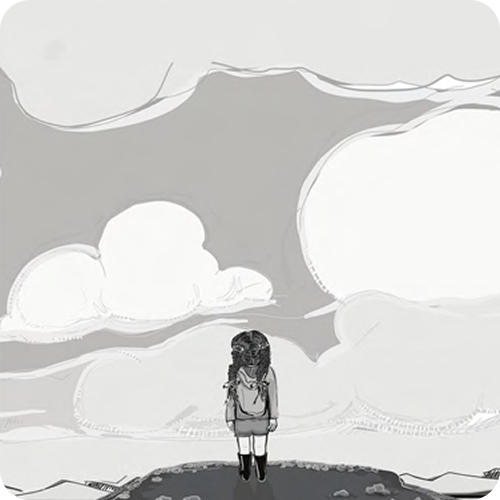
She followed the road, climbed the mountain, held the flower in the air, smiled at the mountain goat, and looked up at the clouds.

  1. A pattern is a sequence of things that obey some rule. In this case, the rule is that the actions follow the sequence of shapes from folding the paper. There are five things in the pattern so far. What do you think will be next?
  2. Patterns can be created in very many ways. Create a repeating pattern of sounds. An example would be: clap clap stomp, clap clap stomp.
  3. Can you create a pattern with numbers? Here are the beginnings of two patterns - can you extend them further? 2, 4, 6, 8, 10 and 1, 4, 2, 5, 3, 6, 4, 7.
content-image

Aiyana imagined all the different shapes she could find in the sky as the heat from the afternoon sun started to fade.

  1. Have you ever looked at the clouds and imagined that they had the shapes of animals or other things you know? If so, what did you see?
  2. Do you see any familiar shapes in these clouds? What do you think Aiyana is seeing?
  3. Aiyana is imagining that this is a sunny day. If it’s in her imagination, why can’t the sun stay up all the time?
content-image

She folded her cloud back up and folded it in half again.

Then she opened it …

  1. Did you pick a long enough piece of paper for yourself that you are still able to fold it? If not, you can always start over with a longer piece. You can make one long piece by attaching several smaller ones together.
  2. If you keep folding a piece of paper in half over and over again, how many times do you think you can do it before it is too hard to fold? Five, six, seven, eight, nine, ten? What is the most you have been able to do?
  3. Each time you fold a piece of paper it gets twice as thick. If it starts out 1 mm thick, how thick is it after 4 folds? (16 mm). How thick is it after a total of 8 folds? (256 mm - over a quarter of a meter!)
content-image

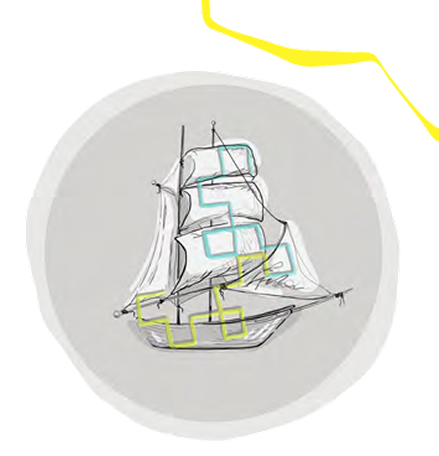
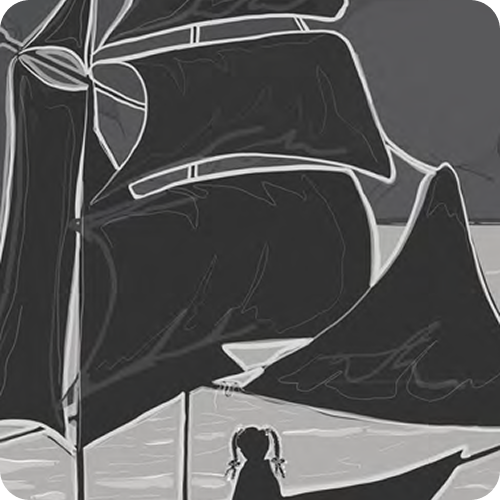
It looked like a sailboat!

  1. Have you ever been on a boat floating across some water? Have you ever been on a sailboat? Sailboats can go very fast on a windy day, but they can have trouble if the air is still.
  2. The sails on a sailboat are like kites. Have you ever flown a kite or seen someone flying a kite?
  3. How many sails are there on this sailboat? Why do you think it has so many?
content-image

She followed the road, climbed the mountain, held the flower high in the air, smiled at the mountain goat, looked up at the clouds, and boarded the sailboat.

  1. The sailboat has been added to the end of the list. Can you recite this list of six steps without looking at the story?
  2. It can be fun to recite something from memory. Can you recite any stories or poems, or sing any songs, from memory?
  3. Do you have a favorite song you like to sing? How do you feel when you sing that song?
content-image

Aiyana was excited to see where the sailboat would take her.

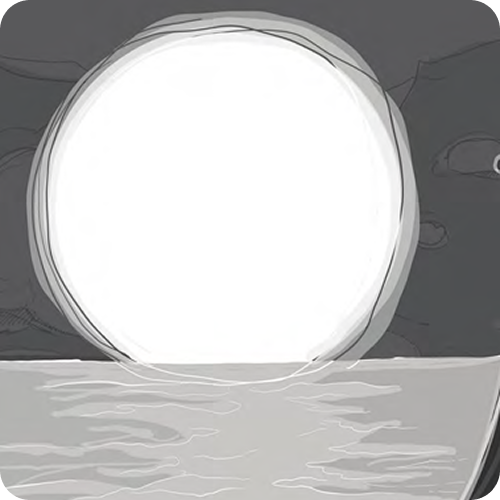
The moon peeped over the horizon as the day began to turn into night.

  1. The sun is not visible at night. Is the moon always visible at night? Have you ever seen the moon during the day?
  2. When there is a full moon shining at night, the nighttime can be lit up enough to see pretty well. Do you like to go for walks at night during a full moon?
  3. What happens with the sun at night? Is it destroyed, or can it still be seen by some people?
content-image

She folded her sailboat back up and folded it in half again.

Then she opened it …

  1. How many folds have there been and how many line segments will there be? (6, 64)
  2. Write out the sequence of counts for the line segments so far: 1, 2, 4, 8, 16, 32, 64. Making a list or table of your data is a good way to see patterns in the data.
  3. When you multiply a number by itself several times, that is called taking it to a power. The list of numbers - 1, 2, 4, 8, 16 - are powers of 2. For example, 2 x 2 x 2 x 2 is 2 to the fourth power, which is 16.
content-image

It looked like a river!

  1. Look at how curvy this river is. Natural rivers are always curvy because they need a way to get rid of all the energy of the water flowing downhill. Imagine how fast the water would flow if it just went in one straight line!
  2. Having the river run all around is a lot like your needing to run around. You need to run around from time to time to get rid of your excess energy. What do you do when you feel too full of energy?
  3. Do you live near a pool, river, pond, or larger body of water? Do you like to go swimming or floating in the water?
content-image

She followed the road, climbed the mountain, held the flower high in the air, smiled at the mountain goat, looked up at the clouds, boarded the sailboat, and cruised down the river.

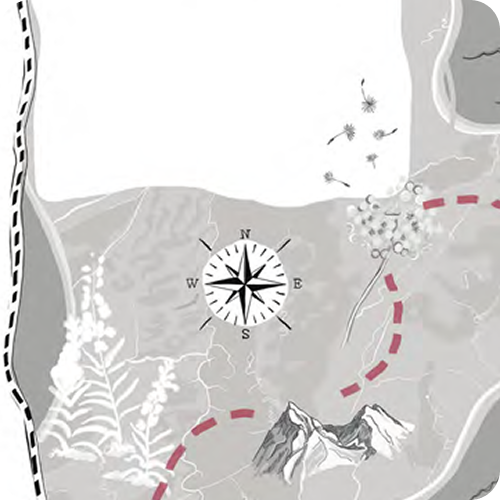
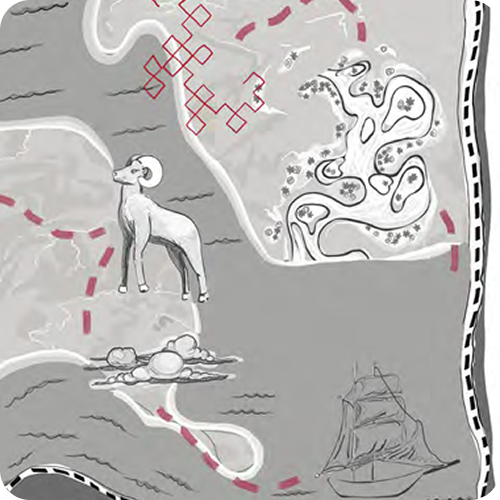
  1. Aiyana has imagined a long story made up of all the shapes from her folded paper. Find some objects near you and make up a story involving them.
  2. She has a map that starts with the straight road and goes through the various steps. Have you ever tried to find your way to something using a map?
  3. A map is a smaller version of the real world. It usually has the same shape as what it is showing you, but it is much smaller. To use our earlier word, that means the real world and a map are similar shapes.
content-image

Aiyana enjoyed the wild rush of the water and the wind in her hair as the last bit of daylight slipped away.

  1. Where does the mountain goat belong on this map? Has the map placed the mountain goat in the wrong place?
  2. Rivers flow from a higher place to a lower place. Do you think the river should be flowing out of the mountains?
  3. Do you think the river is big enough for that large sailboat to sail on?
content-image

She folded her river back up and folded it in half again.

Then she opened it …

  1. Will a folded river create two rivers, a longer river, or something else?
  2. Make some guesses about what the shape will be this time.
  3. Do you think she will be able to keep folding her piece of paper forever? Will she be able to keep creating new shapes? What might stop her?
content-image

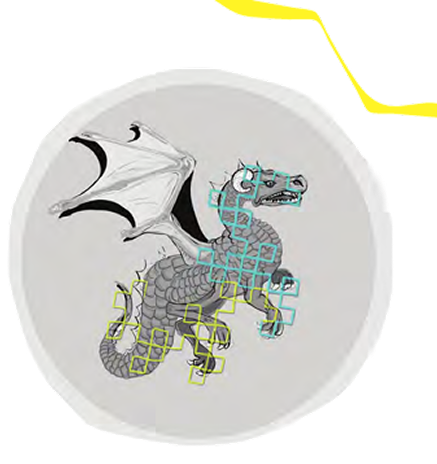
It looked like a dragon!

  1. If you look very carefully, you can find each of the earlier shapes as part of the curves in this dragon.
  2. If you count the earlier shapes that make up this dragon, you will find 2 rivers, 4 sailboats, 8 clouds, 16 mountain goats, 32 flowers, and 64 mountains. Why does the number keep doubling? (Each time you fold, you are creating twice as many of the shapes you already have.)
  3. Have you seen pictures of dragons before? Describe the things you know about dragons. Are dragons real or imaginary?
content-image

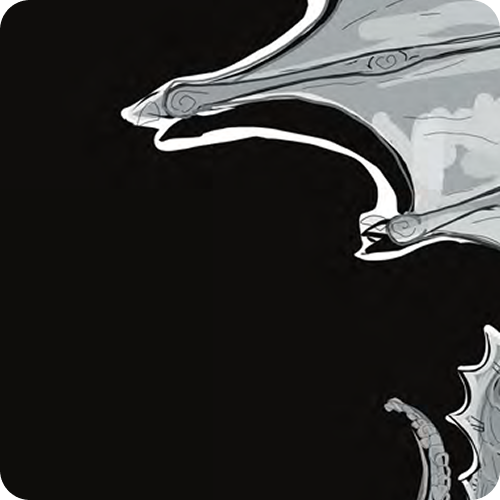
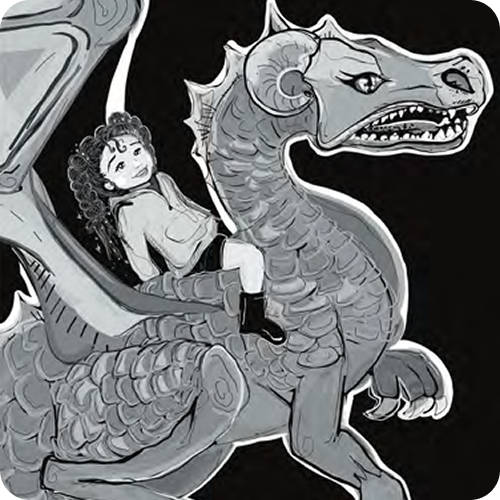
She followed the road, climbed the mountain, held the flower high in the air, smiled at the mountain goat, looked up at the clouds, boarded the sailboat, cruised down the river, and jumped on the back of the dragon.

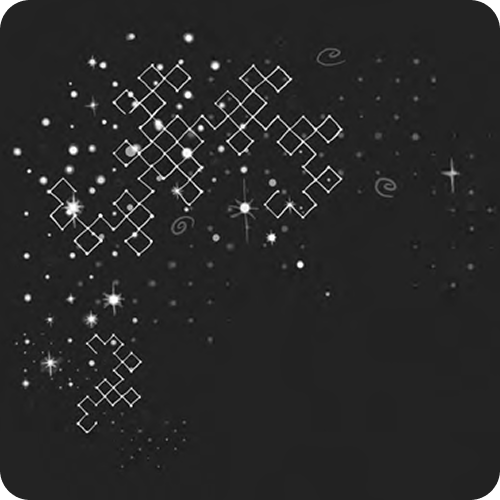
Aiyana and the dragon soared through the starry night sky.

She could see the world far below, full of beautiful patterns.

  1. Which parts of the dragon can we see in this picture?
  2. Have you ever imagined what it would be like to be able to fly?
  3. Imagine a bird large enough that you could lie on its back and fly through the sky!
content-image
  1. She looks happy riding on her dragon. Do you think you would like riding on a dragon, or would it be scary, or perhaps it would be both?
  2. How do you think the dragon feels having a person on its back?
  3. Dragons are known to breathe fire. That would be an amazing thing to see in the night sky! Do you think this one can do that?
content-image

Aiyana grabbed both ends of her dragon and folded it back up. She tried to fold it in half again, but it was too hard!

  1. For Aiyana, 7 folds of her paper was all she could do. How many folds were you able to do with your paper?
  2. Two to the seventh power is 128, so there are 128 line segments in Aiyana’s dragon.
  3. Imagine how big the powers of three would be. What are the first fiew powers of three? (1, 3, 9, 27, 81)
content-image

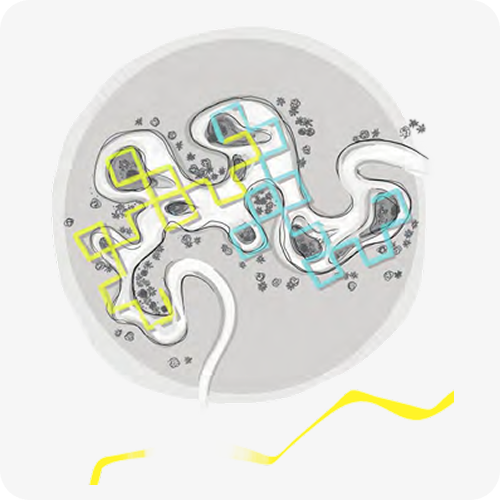
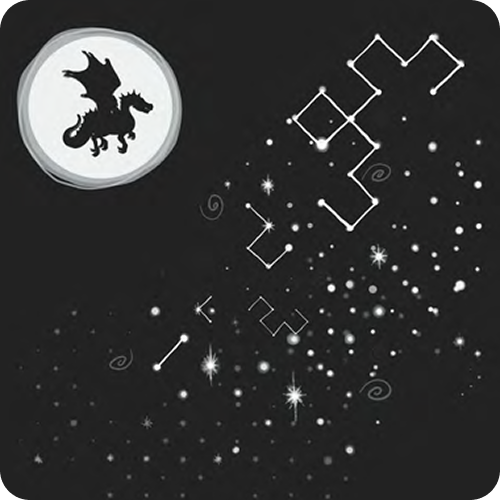
Aiyana and her dragon turned around and started for home. She looked down at the river, caught a glimpse of the sailboat, floated through the clouds, waved to the mountain goat, admired the fields full of flowers, gazed in awe at the mountains, and, far off in the distance, spotted the tiny strip of road where her adventure had begun.

  1. The pictures on the previous page and this one show all but one of the shapes that we have heard about in this story. Which one is missing?
  2. In the shapes on this page, some of the squares are completed and some of them are partial. Do you suppose there is a pattern to how many completed squares there are?
  3. Think of more questions about these line segments – that’s a new kind of adventure!
content-image

Aiyana heard her mom calling for her.

“Aiyana, it’s time to get ready for bed.”

She climbed the steps to her front door and watched the dragon fly away in the light of the moon.

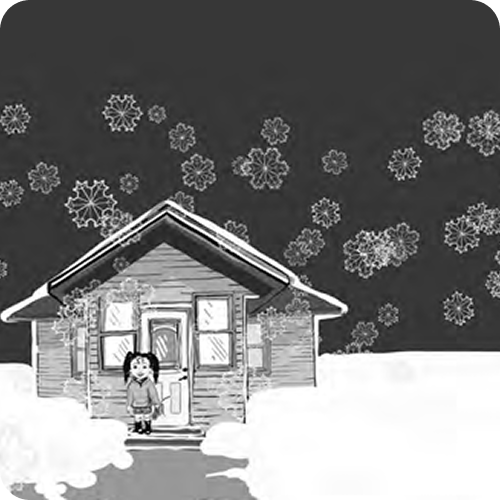
Snowflakes swirled to the ground as Aiyana slipped the strip of paper into her pocket to save it for another day.

  1. It is no longer warm outside. What changed?
  2. When she pulls out her piece of paper next time, do you think she will find new ways to fold it, or will she choose to visit her familiar shapes?
  3. When you go on adventures, do you like going to places you know you enjoy, or do you try your luck going to new places with new experiences?
content-image

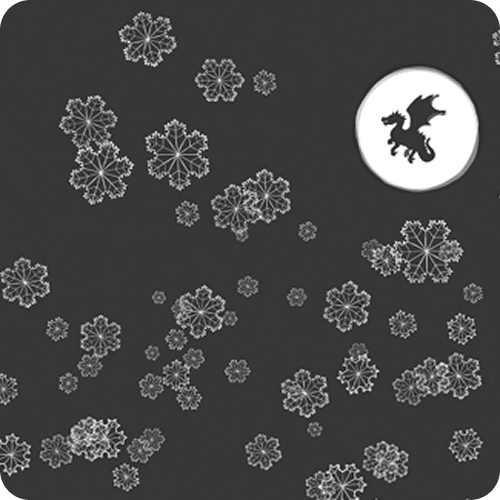
Then she took a really good look at one of the snowflakes …

  1. Name some things you notice about these snowflakes. (they have six bumps, they have mirror symmetry, they have rotational symmetry, some of them are similar to others)
  2. Do you think there might be a way to create these snowflakes that is similar to the way the Dragon Curve was made?
  3. Finding new ways to look at familiar things wakes you up to just how much the world has to offer you. Keep a fresh eye and an open mind to enjoy many magical math journeys!
content-image

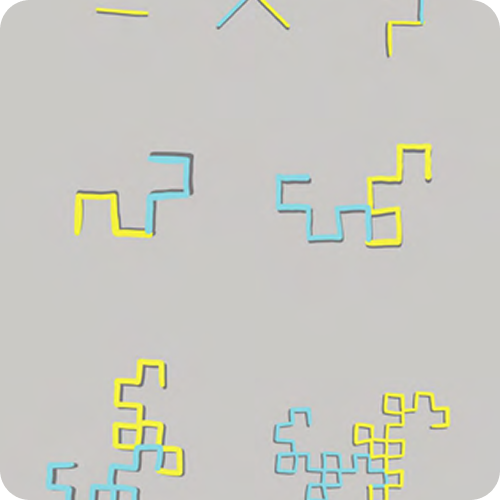
Here are the shapes created by doing 0, 1, 2, 3,4, 5, and 6 folds.

You can do this yourself. Get a long strip of paper and fold it in half, folding the left end over to the right, for example. Then open it up to make a 90-degree angle. Now look at your paper — it has a fold in it. Refold your paper and then fold it in half again
the same way, left end over to the right. Now, when you open it back up, keeping all angles 90 degrees (looking like floors and walls), you have different folds going in different directions.

When you stand your strip of paper on its edge, you will see an exciting pattern, full of squares and 90-degree angles, going every which way.

content-image

These are the shapes created by doing 7, 8, 9, 10, 11, and 12 folds.

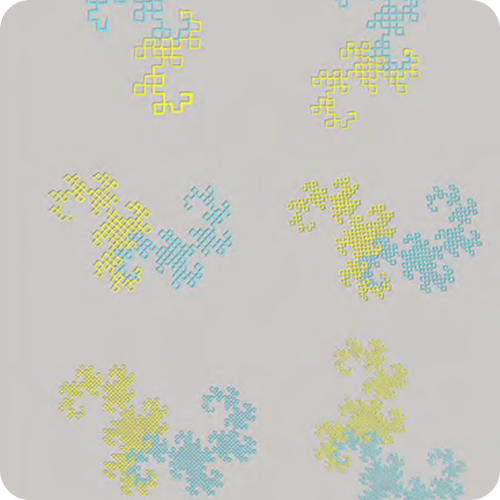
After five or six folds, your folded paper starts to look like a dragon. If you were to keep folding your paper forever, each step would create a more complicated dragon. The Dragon Curve is a space-filling curve; with every new folding of the paper, the space between the folds gets shorter, and the pattern becomes more detailed.

Multiple dragons can be arranged to create exciting designs. Connect two dragons head-to-tail to make the next-sized dragon. Attach four dragons head-to-head to build a spiral. Connect multiple dragons by their tails to cover a surface. There are many ways to rotate, reflect, and slide dragons to make beautiful geometric art.

Copyright and Acknowledgments

Author: Alicia Burdess
Illustrator: Katrina Shirley
Annotations: Chris Wright

©Copyright 2021 by Alicia Burdess. Permission is hereby granted to make and distribute digital electronic copies of this work without modification and without any commercial benefit. No other form of reproduction of any part of this work is allowed without permission in writing from the copyright holder.

Author’s acknowledgments: An extraordinary thank-you to my math heroes who changed my life by showing me what learning and teaching math can be: Norma Lachance, Jessie Shirley, Marj Farris, Geri Lorway, Grayson Wheatley, Peter Liljedahl, Annette Rouleau, James Tanton, Nathalie Sinclair, Rina Zazkis, David Pimm, Sunil Singh, Jo Boaler, and David Martin. You introduced me to the beauty and joy of patterns and problem solving, deep learning, collaborative group work, and “Thinking Classrooms.” Thank you for being integral parts of my math journey!

A final thank-you to Katrina Shirley. Without you, Aiyana and her story would never have been brought to life.

Illustrator’s acknowledgments: For the two most influential women in my life — my mother and grandmother. Thank you.

Prev
Page 1 of 39
Next