
Creating Order
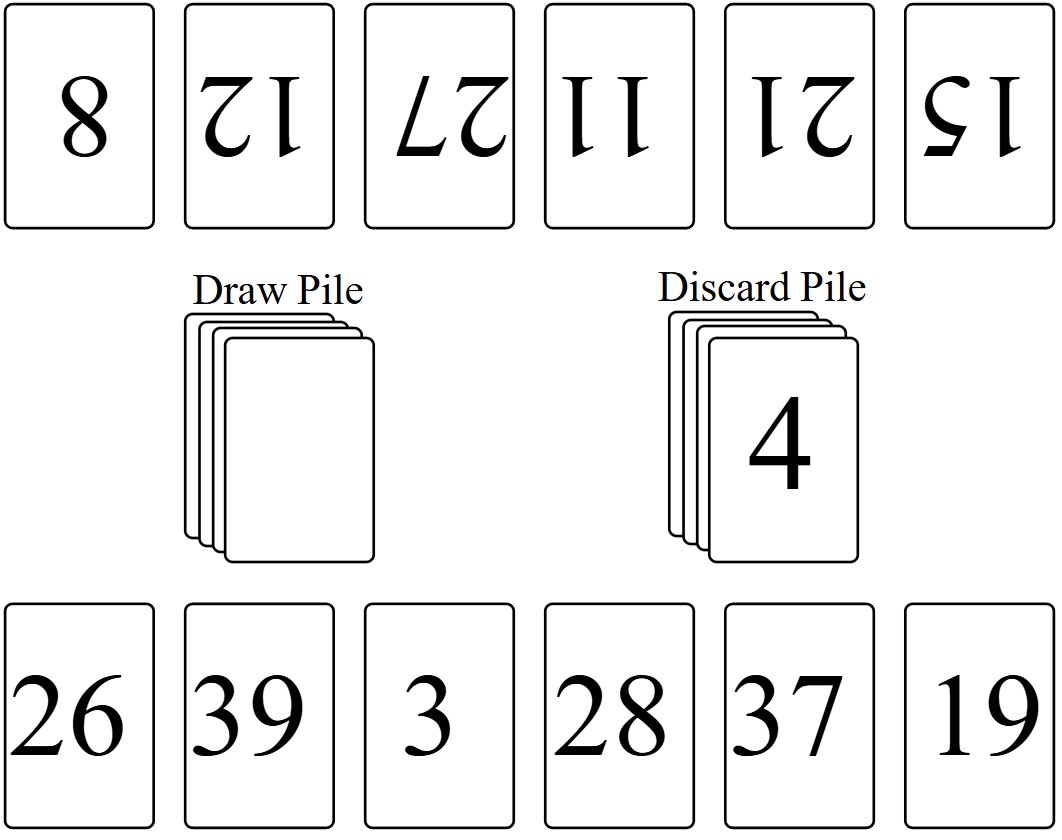
The setup
Start with a deck of Number Cards that goes from 0 to 40 (higher with more players). Deal ten cards to each player (as few as four for younger players). The dealt cards are placed in front of each player in the order dealt. The remaining cards are placed face down in a draw pile. Place the top card face up as the first card in a discard pile.
How to play
During a turn, a player may select either the top card of the discard pile or the draw pile – this card must be used to replace one of the cards in front of the player, and the replaced card is put face up on the top of the discard pile.
How to win
The goal of the game is to get the cards in increasing order from left to right.
Scoring variations
You can play that the first player to get their cards in order wins. Or, you can use a point system for each round of play. In this system, the winner receives 15 points. The other players receive one point for every card they have in order starting with their lowest card.
Helping your child
First and foremost, playing math games should be fun, like any other game your family plays together!
Please let your child make poor plays (mistakes) without correction, and resist the urge to tell them the best ways to play. Bit by bit, your child will get better at the game, and they will learn so much more if you let them figure things out. There is no hurry.
If you see your child make a mistake, ask them to describe why they decided to do what they did. If your child is stuck and doesn’t know which play to make, ask them to describe the pros and cons of their choices, or ask them about how they solved a similar situation in the past. If your child doesn’t remember how to do a calculation, discuss with them the methods they know for figuring it out. These conversations are important for helping your child to develop mathematically.
Through math game play and math conversations, you are helping your child learn to enjoy math and develop important problem solving skills!