
Memory Challenge
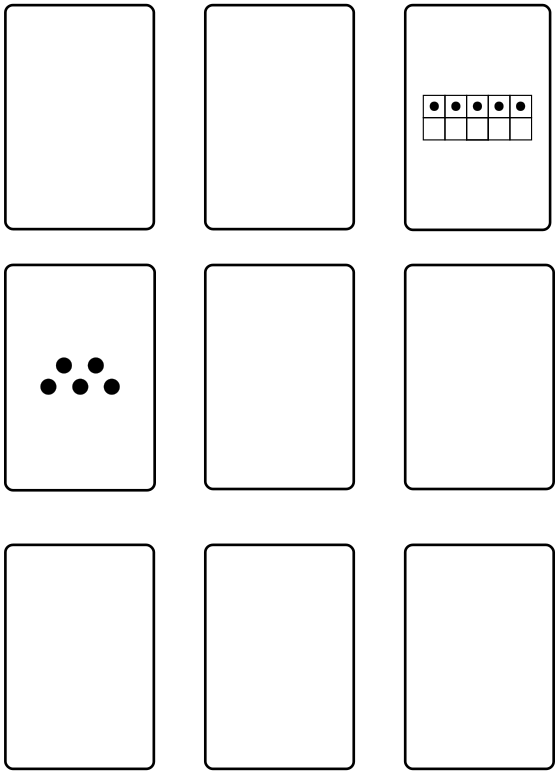
The setup
Select two or four sets of Number Cards and remove numbers above your child’s comfort level. Place the cards face down in a 3 by 3 grid, with the remaining cards put in a draw pile.
How to play
Take turns flipping two cards face-up. If the cards match, the player gets to keep the cards, replaces the two cards from the draw pile, and continues their turn. If the cards don’t match, the player flips the cards back over and ends their turn.
How to win
The game ends when the last pair is taken. The player with the most cards wins.
Variations
- Allow at most one match per turn.
- Use a target sum larger than the largest card. Two cards match if their sum is the target.
Helping your child
First and foremost, playing math games should be fun, like any other game your family plays together!
Please let your child make poor plays (mistakes) without correction, and resist the urge to tell them the best ways to play. Bit by bit, your child will get better at the game, and they will learn so much more if you let them figure things out. There is no hurry.
If you see your child make a mistake, ask them to describe why they decided to do what they did. If your child is stuck and doesn’t know which play to make, ask them to describe the pros and cons of their choices, or ask them about how they solved a similar situation in the past. If your child doesn’t remember how to do a calculation, discuss with them the methods they know for figuring it out. These conversations are important for helping your child to develop mathematically.
Through math game play and math conversations, you are helping your child learn to enjoy math and develop important problem solving skills!