
Pan Balance – 3
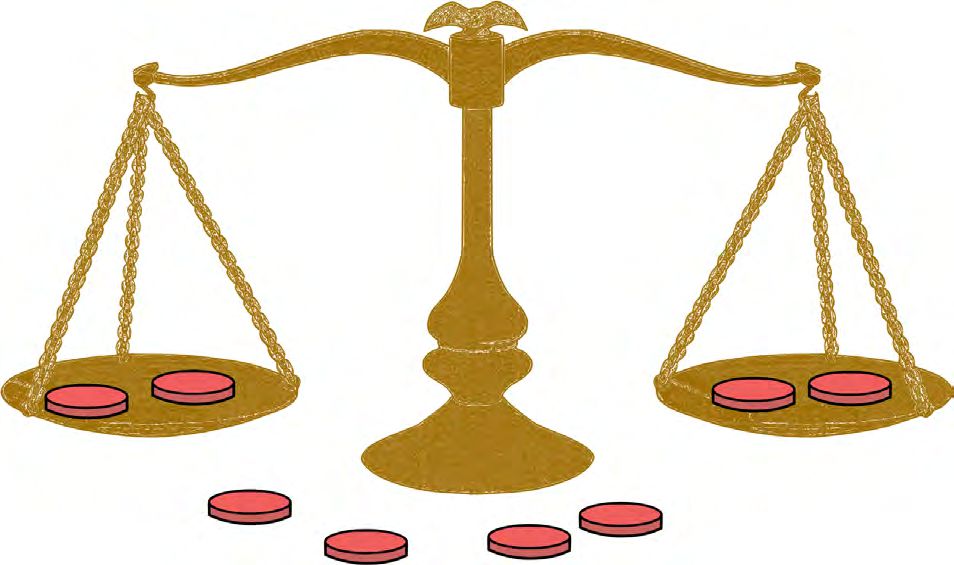
A pan balance tells you when its two sides are carrying the same amount of weight or whether one side is heavier than the other.
THE CHALLENGE
You have 25 coins. All the coins but one weigh the same amount. The remaining coin is a counterfeit and is just a tiny bit lighter or heavier (you don’t know which). Using just two weighings, determine whether the counterfeit is lighter or heavier.
EXPLORATION
How does your strategy change if you start with a different number of coins? Is two weighings always enough? Is the strategy different for different numbers?
Notes
THE CHALLENGE
Start by forming two groups of coins of equal size 7 (8 will also work). Weigh these two groups against each other.
If the two groups balance, then the counterfeit must be in the remaining group of coins that has size 11. Put together any group of 11 coins from the first two groups and weigh those against the remaining coins.
If the two groups do not balance, then all the remaining coins must be normal. Pick any 7 of the remaining coins and weigh them against either of the two original groups. If they balance, then the counterfeit was in the other group. If they don’t balance, then the counterfeit was in that group from the original two groups. Either way, you will then know whether it was lighter or heavier.
EXPLORATION
This approach will always work. Start by forming two groups of equal size x. Suppose this leaves out y coins. To be able to follow the procedure described above, x + x must be at least as big as y (in case the two groups balance), and y must be at least as big as x (in case they don’t balance). This is easily achieved for any number other than five coins by letting x be the original number of coins divided by four and rounding up if it doesn’t divide evenly.
Surprisingly, I believe that five coins requires three weighings!