Welcome to EFM's September Newsletter!
Read, Count, Play – Every Child, Every Day!
It is essential that every caregiver in the world reads books and does math with their young children!
EFM believes in every child’s mathematical right to equity, opportunity, and personal fulfillment.
News
Sign the AAP Petition – A Call for National Guidance on Early Numeracy
Join governors, researchers, educators, and pediatric professionals calling on the American Academy of Pediatrics and the U.S. Surgeon General to give families guidance on early math — the everyday counting, comparing, and game-playing that millions of families already do.
Weekly Wonder – Join the over 2000 teachers enjoying the Weekly Wonder program. If you’ve been looking for an effortless way to send some math home to the families of your students or bring a Puzzle of the Week into your classroom, this is it! Go to the Weekly Wonder web page and sign up for one or more of the grade level ranges. Get set to have a bit of math wonder come to your mailbox each week.
What happens after 29? – Ask a 4-year-old
I’ve been tuning in to my own two daughters’ math thinking for as long as they could talk. This year, I’m getting the chance to take this curiosity into a classroom of four-year-olds.
I jumped in with Jonylah’s Pre-K class and did individual counting interviews with 20 children. What happened is endlessly fascinating.
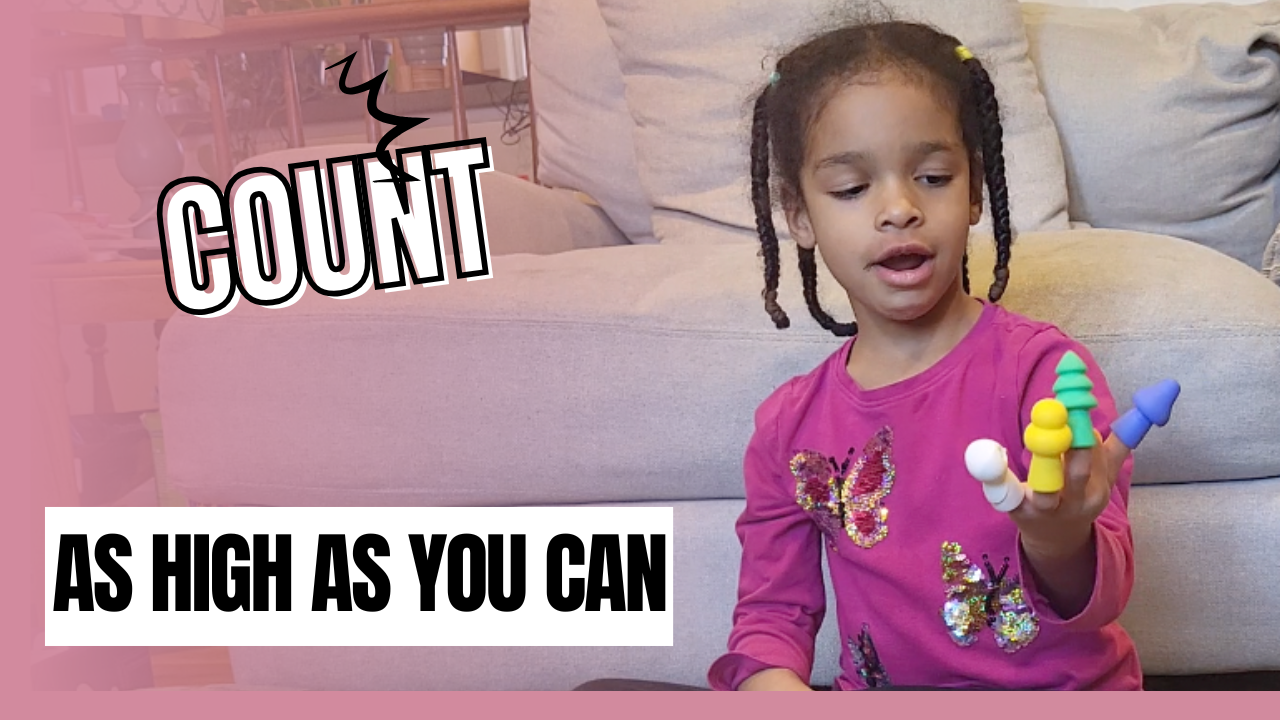
In my pages of frantic notes and observations, some common trends among more than half the children emerged from the very first prompt — count as high as you can out loud.
It turns out some kids automatically interpret this to mean count fast, and count LOUD! As I had a barrage of number words belted out at me over and over, a few things stuck out.
First, many kids made mistakes in the teen numbers but could continue counting accurately once reaching twenty. If this feels surprising, stop and consider the way we write two-digit numbers and the words that go with them. Consider the table below:
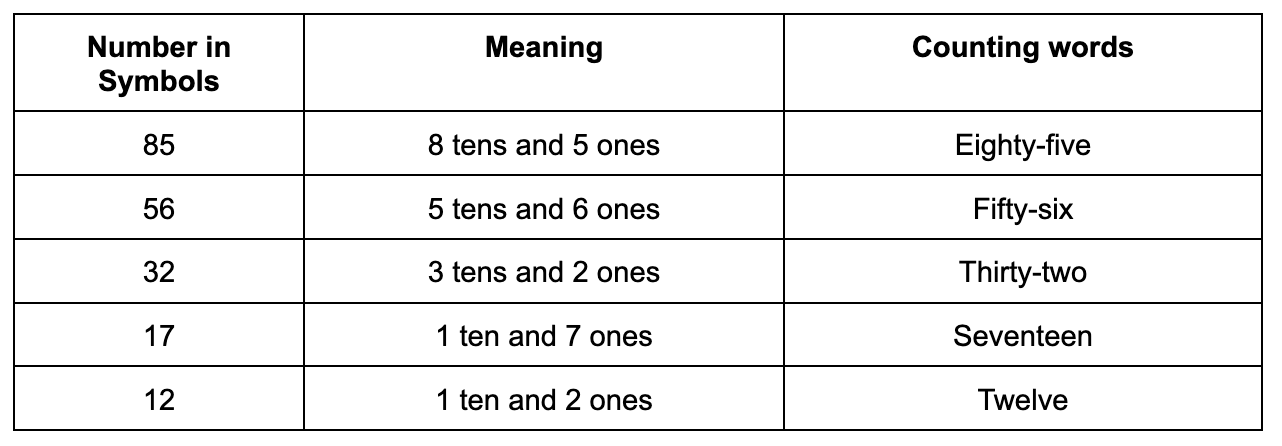
For the first three rows, there’s some consistency and some logic tying the meaning of the digits in the tens and ones places to the words that go with them.
But seventeen? Now we’re reversing and saying the ones first, and the one ten at the end?
And don’t get me started on “twelve,” a word that appears to have no reference to the fact that the number includes one ten.
So the teens are hard for good reasons. But it turns out they’re not the only bump in the counting road.
And, there was a second trend: for the majority of kids, their accuracy in the verbal counting sequence ended at 29. And, I was surprised by the variety of things that happened after they reached 29.
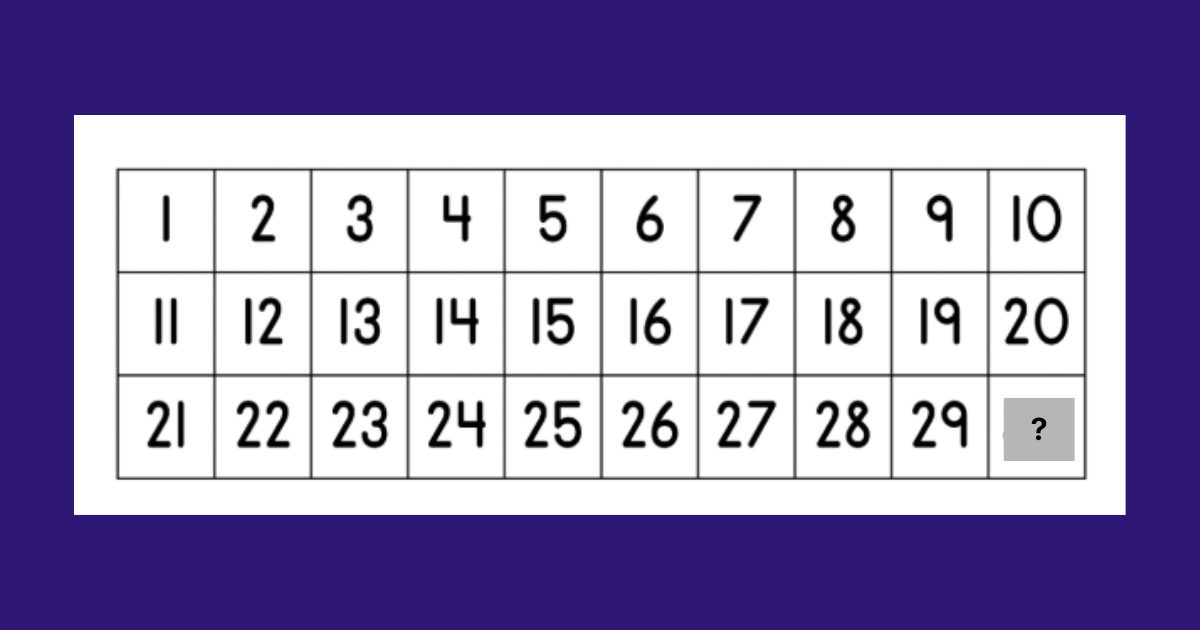
Stop for a moment to make a prediction. What do you think a four-year-old might say next?
Watch this twenty-second video for one of the more common responses.

In addition to twenty-nine, one hundred, other responses included:
- Twenty-nine, forty!
- Twenty-nine, sixty!
- Twenty-nine… that’s as high as I can go!
- Twenty-nine, twenty-ten!
- Twenty-nine, twenty-eight, twenty-seven, twenty-nine, thirty!
Did you anticipate any of these? Are there any that surprise or puzzle you? Or, are there any that feel logical to you, despite being incorrect?
Before this experience, I had noticed that my own daughter had stalled out at 29 for several months. But it was a surprise to me that this observation of one child was truly a pattern among her peers, and it has me thinking about why that might be. Maybe it’s rare that we give opportunities to count higher both at home and at school, so there are fewer exposures to the number words past 29?
Why This Matters
While counting with understanding involves much more than being able to recite the number words, knowing the accurate verbal counting sequence is a critical piece. Now I can keep my eye out for authentic opportunities to count into the thirties both in my home, and in the Pre-K classroom.
Try It This Week
Prompt a young child in your life to count as high as they can out loud. You might just catch a twenty-ten of your own. I’d love to know, what did you notice?
Send a note to erin@rootsandwingsmath.com! You can also consider subscribing to either or both of my other ongoing newsletters:
- Roots and Wings Math Educator Newsletter (geared towards K-8 teachers)
- Roots and Wings Math Parent Newsletter (geared towards parents of preschool-age children)
Wishing you a continued math-y summer,
Erin, EFM board member
If you have any questions or comments, please send them our way! We would enjoy the opportunity to chat with you. Also, if you are interested in collaborating with us or supporting us in any fashion, we would love to talk with you about ways we can work together!
September 18, 2026
Erin Wahler-Cleveland
Chris Wright
Chris@EarlyFamilyMath.org
Twitter | Facebook | Instagram
Early Family Math is a California 501(c)(3) nonprofit corporation, #87-4441486.