Island Hopping – Counting
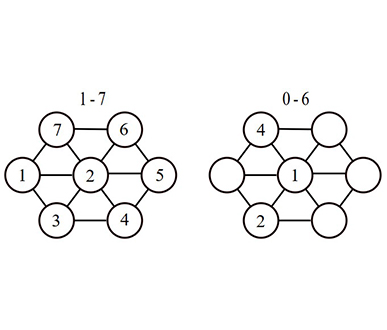
These puzzles use numbered islands (circles) connected by bridges (lines).
The challenge
Find a path that connects the islands in order. The easiest versions have numbers that go from 1 to the number of islands.
Adjust the challenge 1
Leave out some numbers so your child figures out what is missing and where it belongs.
Adjust the challenge 2
Instead of starting at 1, design the puzzles to start at 0 or other numbers. (Note the range at the top of the puzzle).
Another way to play
Make this into a physical puzzle by placing pieces of paper with consecutive numbers on the floor in some twisty path. Your child can solve this puzzle by walking along the path from the smallest to the largest number.
Add challenge: Replace some of the numbered pieces with blank ones. Also, have your child to start at the largest number and go downward.
Bonus Material
These puzzles have numbered islands (circles) connected by bridges (lines) drawn on paper. The challenge is to find a path that connects the islands in order.
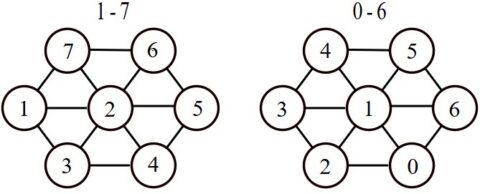
The easiest versions have all the numbers filled in and the numbers go from 1 to the number of islands. You can vary this activity by starting at some number other than 1 and by leaving out some of the numbers.
Puzzles with all the numbers are straightforward once your child is confident with counting. Those beginning puzzles are good counting practice and are also good for building up confidence in puzzle solving. The more challenging puzzles are the ones with numbers left out.
Ease your child into these harder puzzles by leaving out just a few numbers and slowly move to leaving out more.
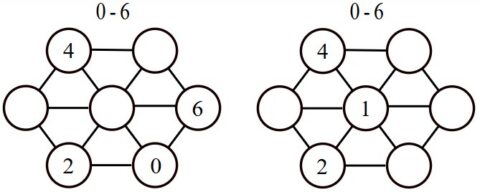
The first of these two puzzles has every other number left out. This makes it relatively easy to fill in the missing numbers. 1 must attach to 0 and 2, and there is only one place for that. 3 must attach to 2 and 4, and with 1 filled in there is only one remaining place for the 3. 5 must go in the remaining place between 4 and 6.
The second puzzle is a little bit harder. 3 must attach to 2 and 4, so there is only one place for it. 5 must attach to 4, so there is only one place for it now. 6 must attach to the 5. Finally, 0 must go in the remaining spot.
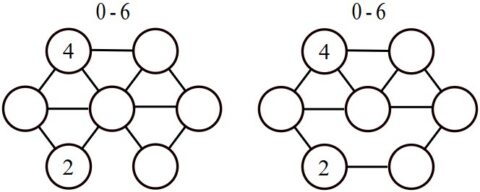
To make the puzzle harder still, we can remove the 1 and play with removing some of the bridges. Have fun with variations and let your child design some of them, too.
Helping your Child
Puzzles are meant to be challenging and to take time, so please don’t ruin the fun by telling your child how to do them. These puzzles are chosen so that you can create them easily and then have fun solving them together.
If your child gets stuck on a puzzle, you have several options. You can, of course, give very small hints, if you can think of things that won’t give away the puzzle. You can suggest looking at smaller or simpler versions of the puzzle. Encourage your child to be bold in their ideas, even if sometimes they lead to dead ends. We all learn a lot from our mistakes and dead ends! Let your child know that it is perfectly okay not to solve a puzzle on the first (or second or third) try, and that useful ideas may occur to them if they leave the puzzle alone for a day or two.
These puzzles are meant to be fun and to teach problem solving. One of the greatest mathematical pleasures is that AHA moment, after many false starts and much wrestling with a problem, when the answer is finally discovered – be sure to let your child experience that feeling of discovery as many times as you can!