
Pan Balance – 1
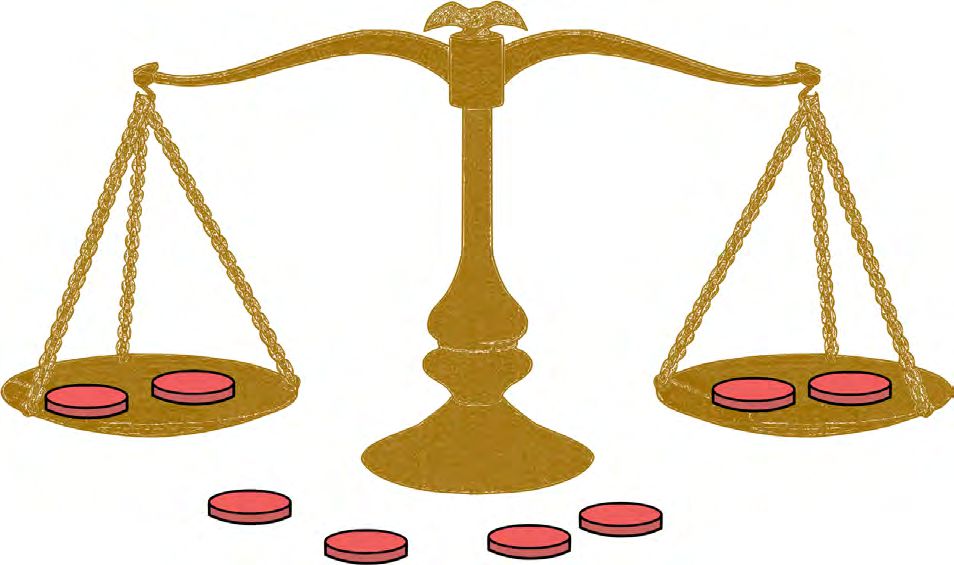
A pan balance tells you when its two sides are carrying the same amount of weight or whether one side is heavier than the other.
THE CHALLENGE
You have eight coins. Seven of the coins weigh the same amount. The eighth coin is a counterfeit and is just a tiny bit lighter than the others. Use two weighings on the pan balance to find the counterfeit coin.
EXPLORATION
Instead of having eight coins, suppose you had nine coins with one counterfeit – could you still identify it with two weighings? What is the largest number of coins you could have and still identify a counterfeit in two weighings? How about three weighings? Four weighings? See if you can find a pattern.
Notes
THE CHALLENGE
Encourage your students to experiment with simpler versions of this problem.
For two coins, one weighing tells the whole story in the obvious way.
For three coins, randomly choose two to weigh, one on each side. If they balance, you know the counterfeit is the third coin. If they don’t balance, the coin on the lighter side is the counterfeit coin.
For four or five coins, there is no way to do it in one weighing, and it is very easy to do it in two weighings.
For six or seven coins, you can start by weighing two groups of two, or by weighing two groups of three.
For eight coins, start by weighing two groups of three. If they balance, weigh the remaining two coins. If they don’t balance, weigh two coins from the lighter group of three.
EXPLORATION
The earlier experimentation shows the importance of splitting things up into three parts.
For nine coins, split them into three groups of three. Choose two of those groups and weigh them against each other. If they are equal, the counterfeit is in the remaining group of three. They are unbalanced, the counterfeit is in the lighter group of three.
This strategy of breaking things into three groups will continue to work for more weighings. For example, if you are allowed three weighings, you can start by breaking up 27 coins into three groups of nine. If you are allowed four weighings, you can start by breaking up 81 coins into three groups of 27