
Pan Balance – 2
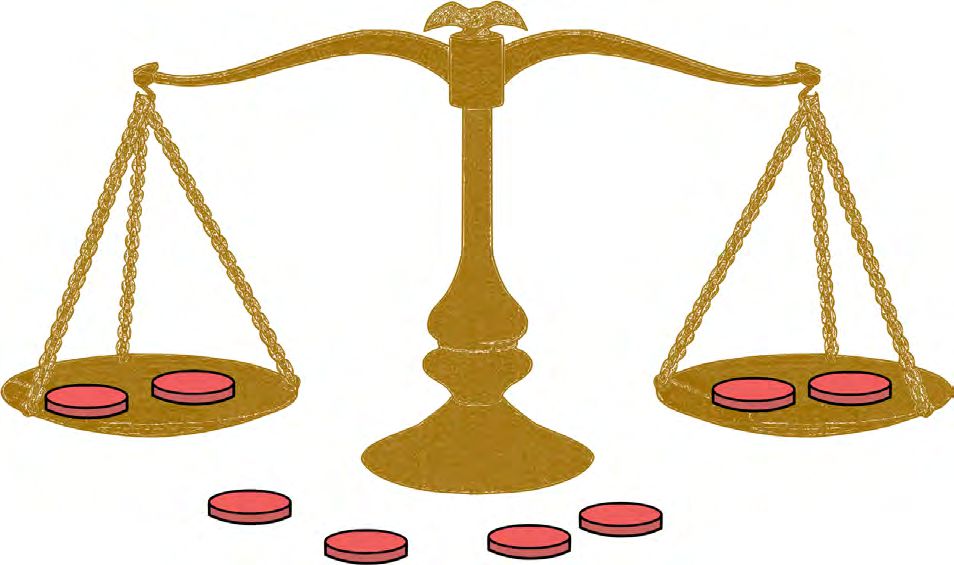
A pan balance tells you when its two sides are carrying the same amount of weight or whether one side is heavier than the other.
THE CHALLENGE
You have some coins. All the coins but one weigh the same amount. The remaining coin is a counterfeit and is just a tiny bit lighter or heavier (you don’t know which). What’s the maximum number of coins you can have and be able to decide which coin is the counterfeit with just two weighings?
EXPLORATION
Investigate using three weighings with more coins. How many coins can you have and still be able to find the counterfeit in three weighings? How about four weighings – can you determine the counterfeit out of 16 coins with four weighings?
Notes
THE CHALLENGE
The maximum number is four for two weighings.
Start by choosing two coins and weighing them against each other.
If they balance, the counterfeit is one of the two remaining coins. Choose one of the original two coins and weigh it against one of the two remaining ones. If they balance, then the last coin is counterfeit; if they don’t balance, then the coin being weighed that wasn’t in the original pair must be counterfeit.
If they don’t balance, then one of those two is counterfeit and the remaining two are normal. Choose one of the original two coins and one of the remaining two coins and weigh them against each other. The logic is then similar to the last case.
EXPLORATION
For three weighings, the maximum number is 13. The logic for doing three weighings for 12 or 13 coins is fairly involved. Rather than repeating it here, please see “Balance Puzzle” on Wikipedia. There is also extensive mathematical literature on pan balance problems.
To solve the puzzle of using 4 weighings to find the counterfeit coin among 16 coins, start by weighing two groups of four against each other. If they balance, use four of those coins to test four of the remaining coins. If they do not balance, use four of the remaining coins to test one of the first two groups of coins. In every instance, we have now narrowed down the possibilities to one group of four coins with two weighings remaining. Note we also know of 12 regular coins at this point.
Use two of the regular coins to test two of the coins in the special group of four – if they balance, the counterfeit is in the remaining two; if they don’t balance the counterfeit is one of those two from the group of four. Now use one normal coin to test one of the two coins. This will finally identify which of the two coins is the counterfeit coin.